Coat Colours
Every coat in the collection — the Kepler-442b originals worn only by Hyperion, and 73 mintable colours across the seven planet families.
Every ROX horse wears one coat, drawn at mint and never changed. It never affects speed — it affects how much everyone else wants your horse.
A horse's home planet decides which family it draws from. That one rule explains the whole palette: horses that stayed on Kepler-442b kept their natural coats, and horses that teleported out took on the colour of where they landed. It also survives breeding — a Kepler foal is born natural, and never turns Neptune blue.
The palette is closed. Breeding never invents a colour: a foal inherits from a parent or, on the rare mutation, re-rolls one of the published colours below. These are the only coats there will ever be.
A note on migrated ZED horses. Every coat on this page belongs to a ROX horse. A migrated ZED horse keeps its own coat — "Anti-Flash White", and the rest of ZED's palette — and those colours are not listed here and are not part of the ROX palette. They are a different species and their coats are their own.
What a mixed foal wears is genuinely not decided yet. Rather than invent an answer and quietly correct it later, we would rather say plainly that it is open: cross-species breeding is not switched on, and when it is, the colours a hybrid can wear will be published here first. Nothing above changes when that happens — the ROX palette is still closed, and still these coats.
Kepler-442b
The first world, and the only one whose horses never changed colour. Every Kepler coat is a real horse coat — bay, sorrel, dun, gray, cremello — with the white markings real horses carry: blazes, socks and pinto patches.
Kepler coats are worn only by Hyperions. That is what makes the elite tier recognisable on sight: among seven planets of invented colour, a Hyperion is the one that looks like an actual horse. No amount of breeding moves these coats onto another bloodline.
The King and the Queen
Two coats will never be minted and never be born: pure Black and pure White — the natural black and the natural white of Kepler, worn by exactly two horses, the founding DN0 pair. They are the purest horses in the game, and they wear the plainest coats.
Both stand for sale on the ROX marketplace, in dollars: the Black King at $3,000,000, and the White Queen at $5,000,000. The royal stud stands with the King, whose fee is published on his stud listing. Until they are bought, they race and stand for the house. If you ever see a white or black horse on a track, you are looking at royalty. There is no third.
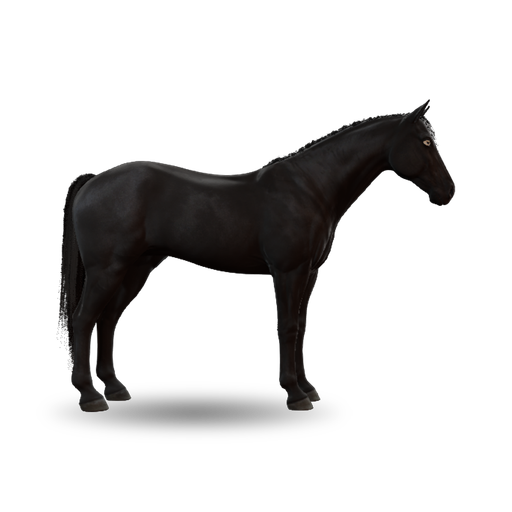 Obsidian Crown
Black coat · no markingsDN0 · Black King · $3,000,000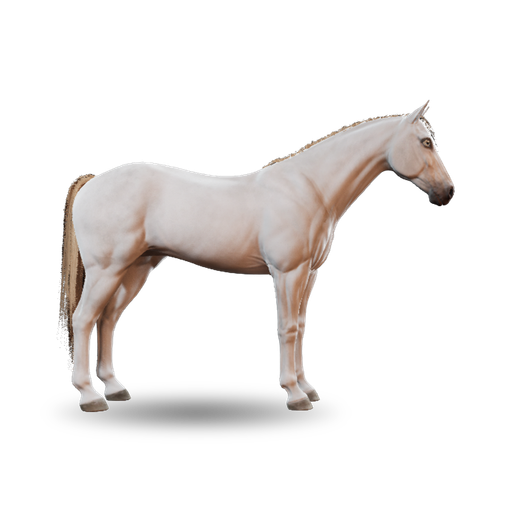 Minerva Crown
White coat · no markingsDN0 · White Queen · $5,000,000The originals · all 50, Hyperion only
These are not examples. These are the 50 original Hyperions, every one of them, exactly as it will be sold — tokens 3 to 52, the DN1 and DN2 ranks. The collection has since gained a fourth rung: 50 more Hyperions at DN3, which are not pictured here. With the King and the Queen that makes 102. Five Kepler coats across ten to twelve marking states, and no two are alike: where two horses share a coat and a marking, their mane and eye colour differ. On a racecourse you can tell every one of them apart, which is the point of an elite tier.
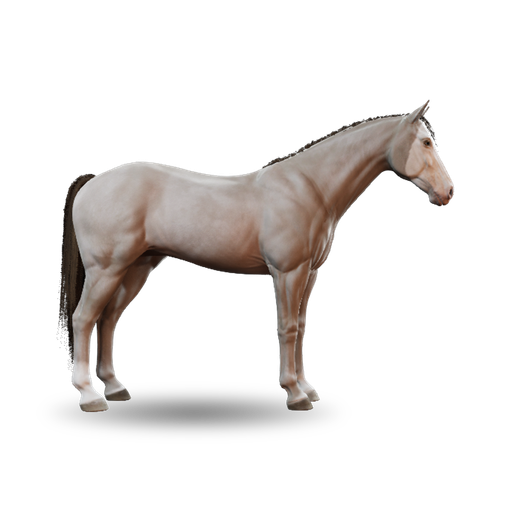 Sharp Pilgrim
Cremello coat · bald face + socksGray mane · Yellow eyes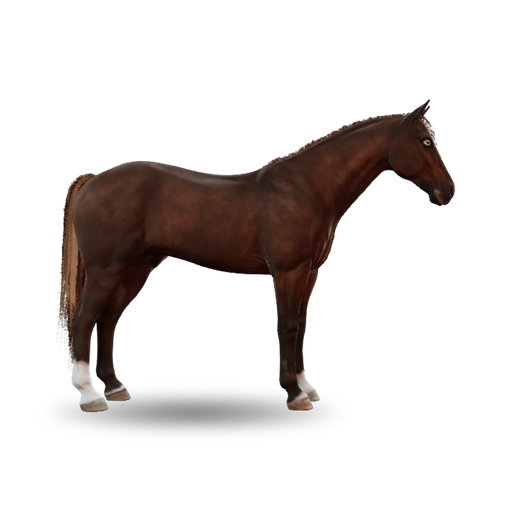 Bright Cirrus
Bay coat · blaze + socksPale mane · Pale eyes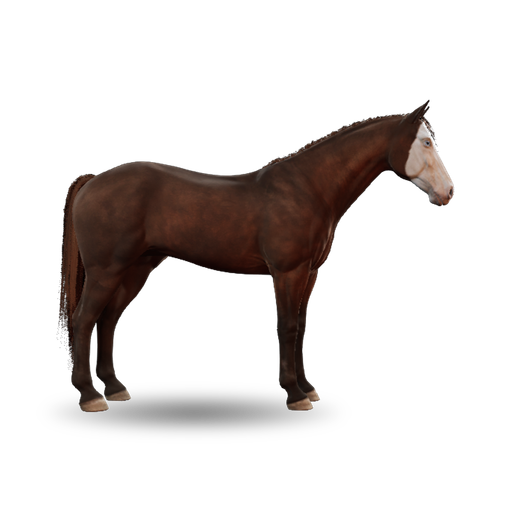 Silk Serval
Bay coat · bald faceSorrel mane · Blue eyes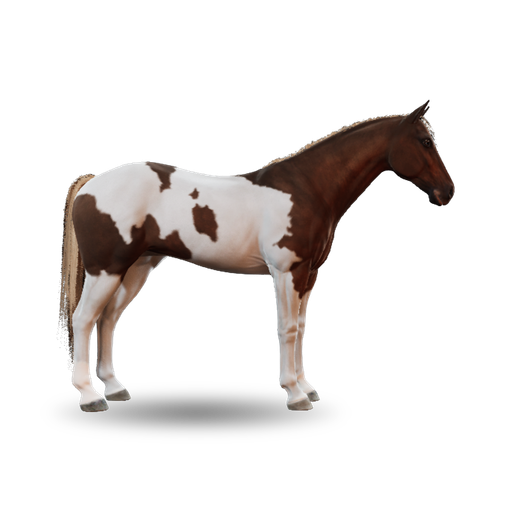 Resolute Magpie
Bay coat · body patch + socksCremello mane · Black eyes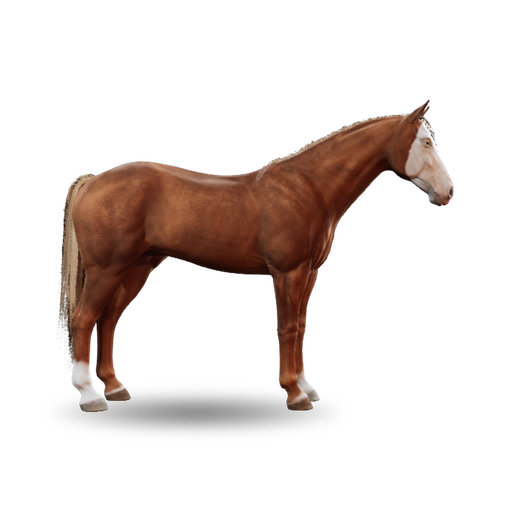 Ochre Serval
Sorrel coat · bald face + socksCremello mane · Pale eyes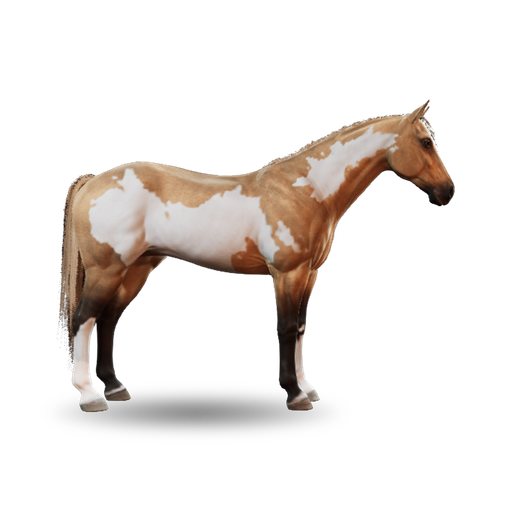 Violent Osprey
Dun coat · body splash + socksCremello mane · Black eyes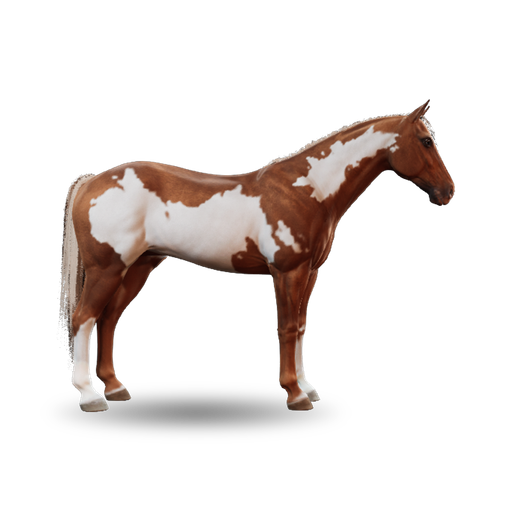 Chasing Prism
Sorrel coat · body splash + socksWhite mane · Black eyes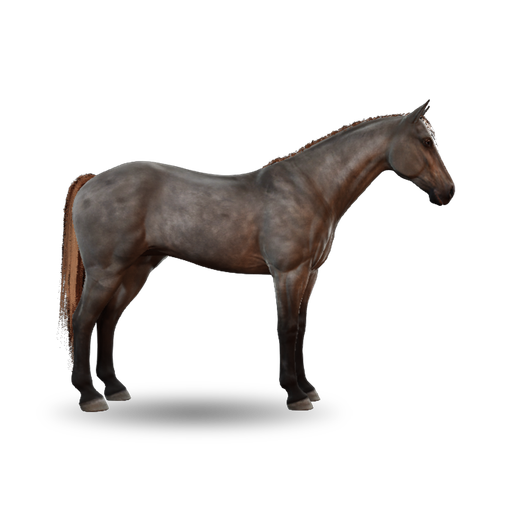 High Cheetah
Gray coat · blazePale mane · Black eyes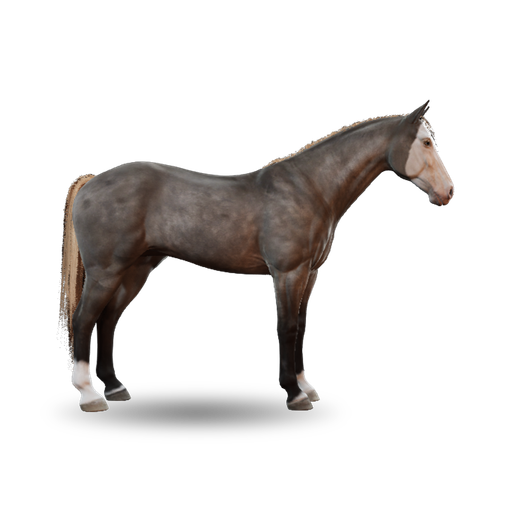 Charging Bluff
Gray coat · bald face + socksCremello mane · Yellow eyes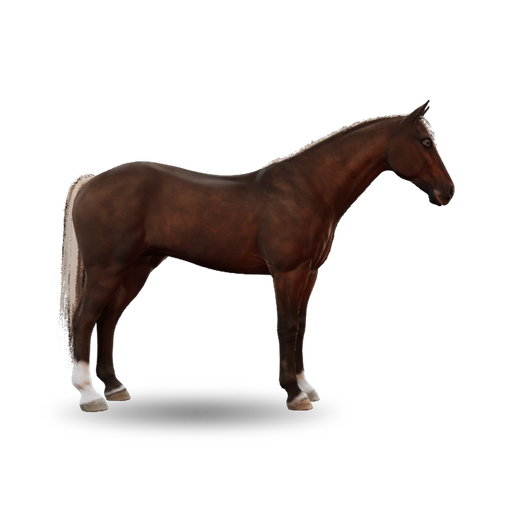 Momentum Honour
Bay coat · star + socksWhite mane · Yellow eyes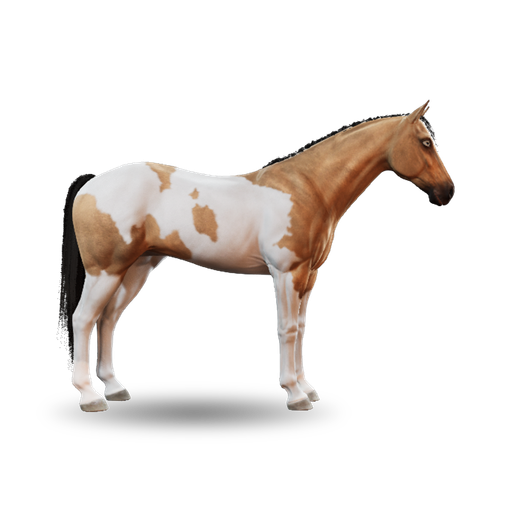 Gravity Furnace
Dun coat · body patch + socksBlack mane · Pale eyes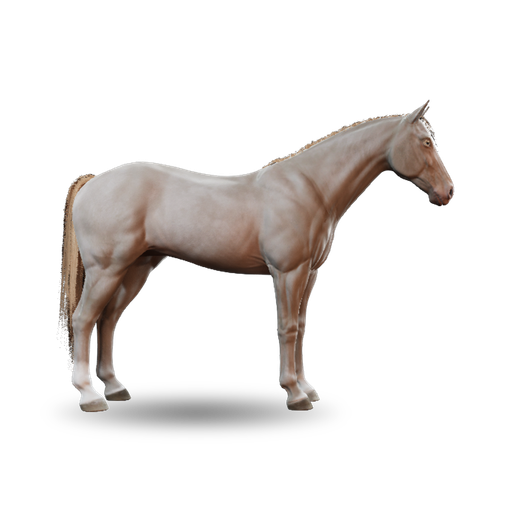 Cyclone Legacy
Cremello coat · socksCremello mane · Pale eyes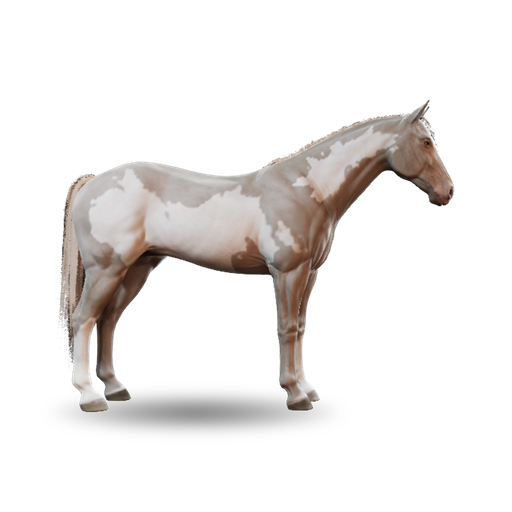 Audacious Harrier
Cremello coat · body splash + socksWhite mane · Yellow eyes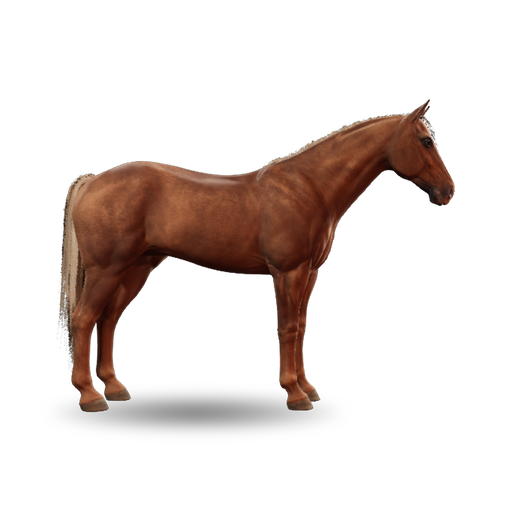 Centauri Spire
Sorrel coat · no markingsCremello mane · Black eyes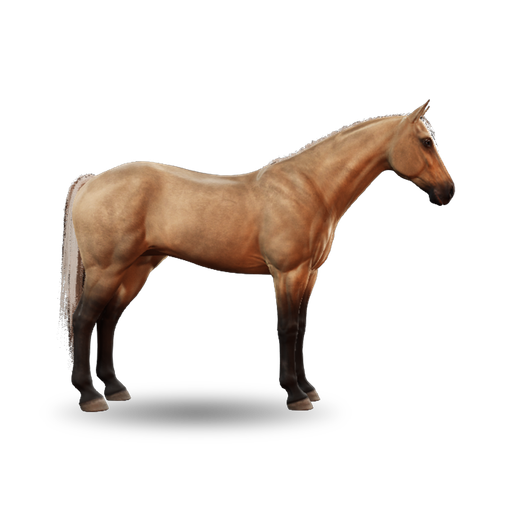 Basalt Rapids
Dun coat · blazeWhite mane · Black eyes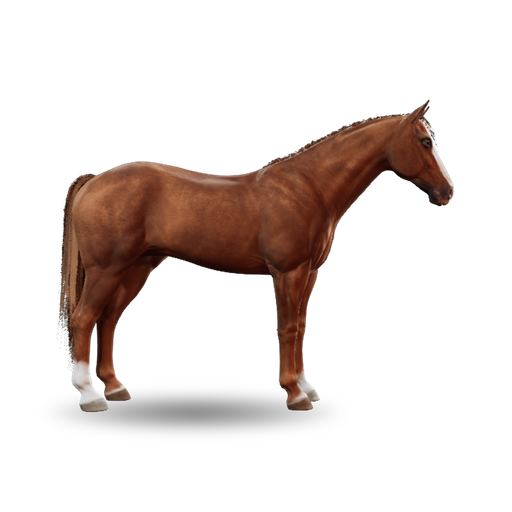 Jove Herald
Sorrel coat · snip + socksPale mane · Yellow eyes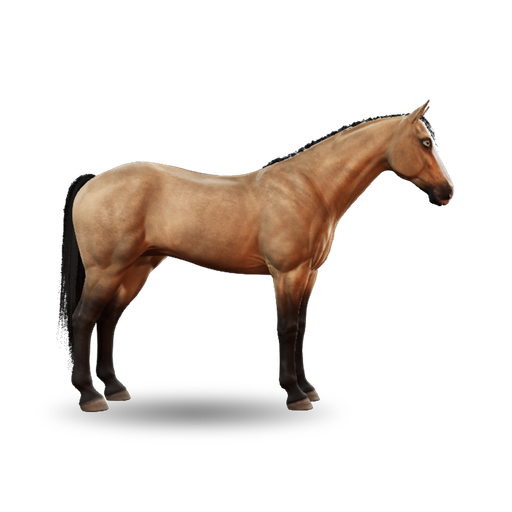 Cyclone Triumph
Dun coat · snipBlack mane · Pale eyes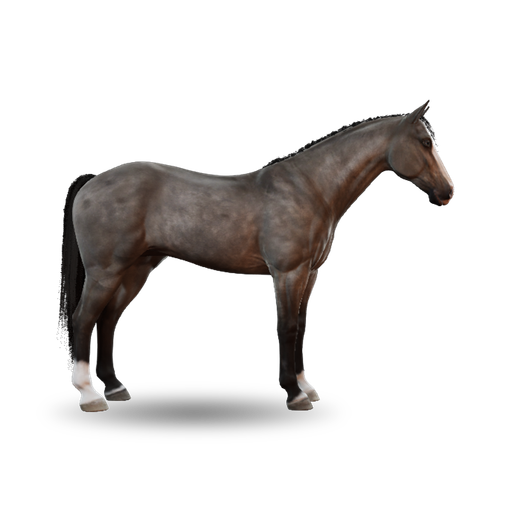 Valley Republic
Gray coat · snip + socksBlack mane · Gray eyes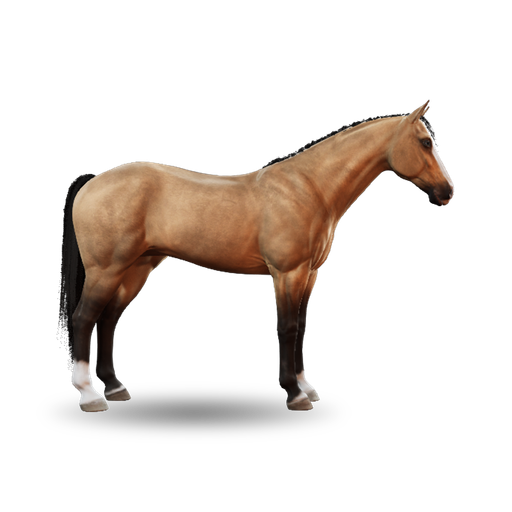 Solar Bullet
Dun coat · snip + socksBlack mane · Gray eyes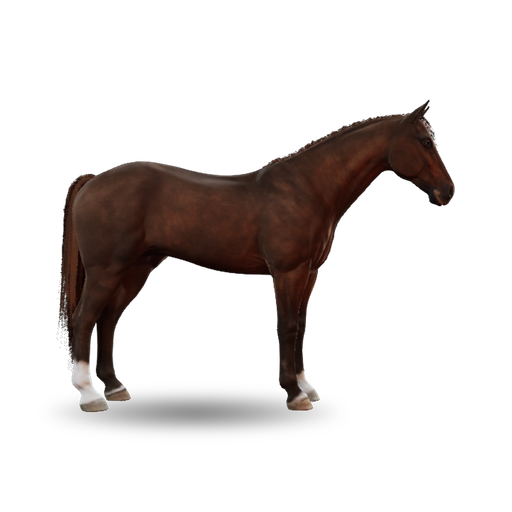 Platinum Glory
Bay coat · socksSorrel mane · Black eyes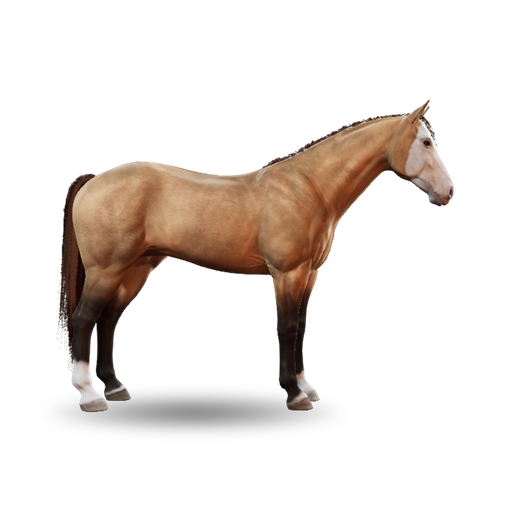 Graviton Strider
Dun coat · bald face + socksSorrel mane · Black eyes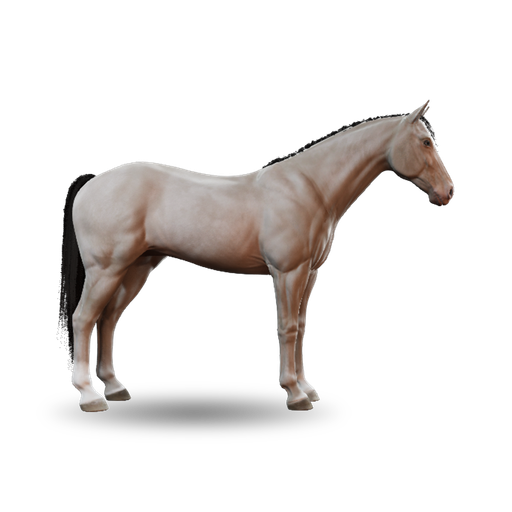 Sharp Serval
Cremello coat · star + socksBlack mane · Gray eyes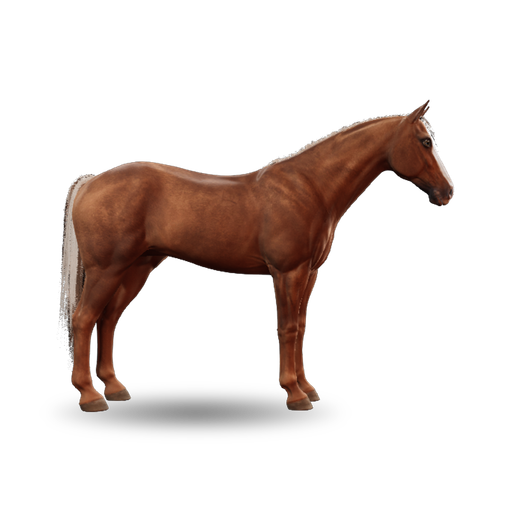 Spectre Arrow
Sorrel coat · snipWhite mane · Yellow eyes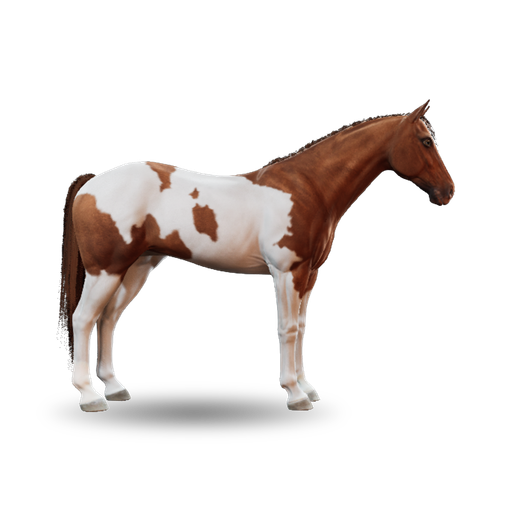 Lunar Journey
Sorrel coat · body patch + socksSorrel mane · Yellow eyes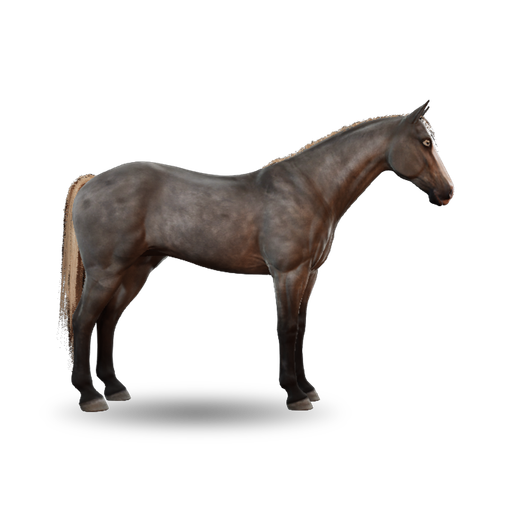 Sharp Riddle
Gray coat · snipCremello mane · Pale eyes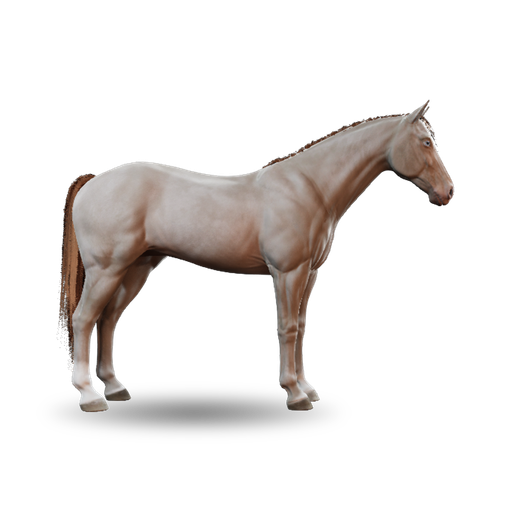 Sheer Journey
Cremello coat · blaze + socksPale mane · Blue eyes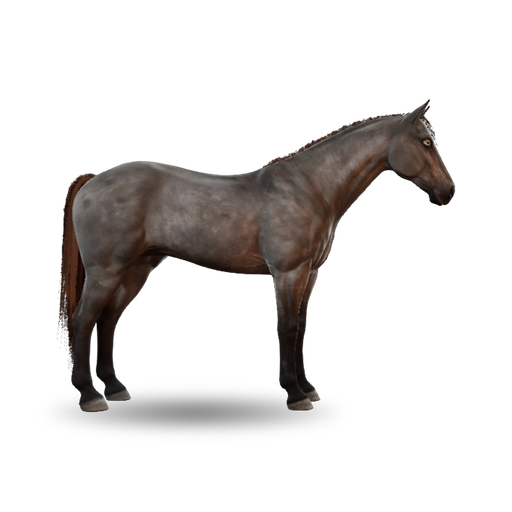 Royal Guardian
Gray coat · no markingsSorrel mane · Pale eyes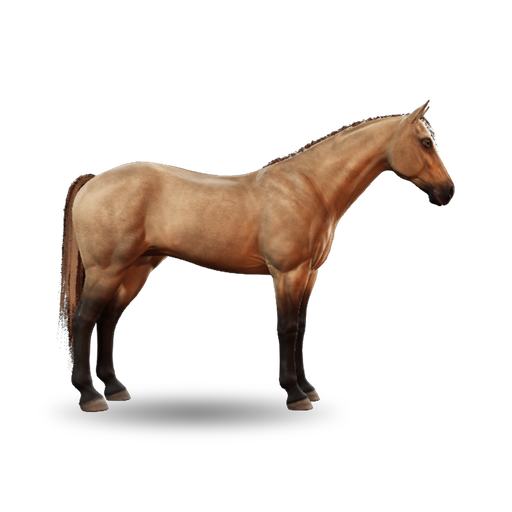 Apogee Empire
Dun coat · no markingsPale mane · Yellow eyes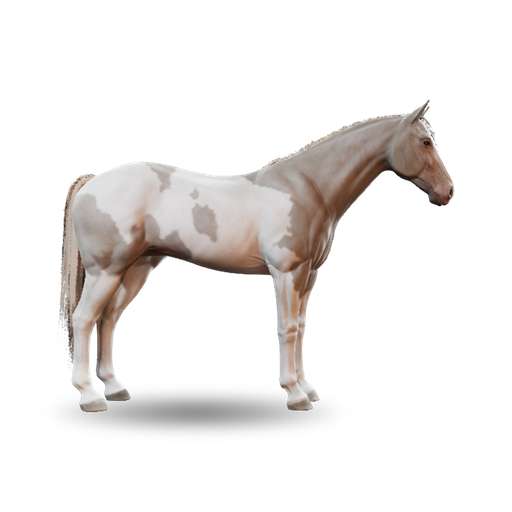 Silk Sigil
Cremello coat · body patch + socksWhite mane · Black eyes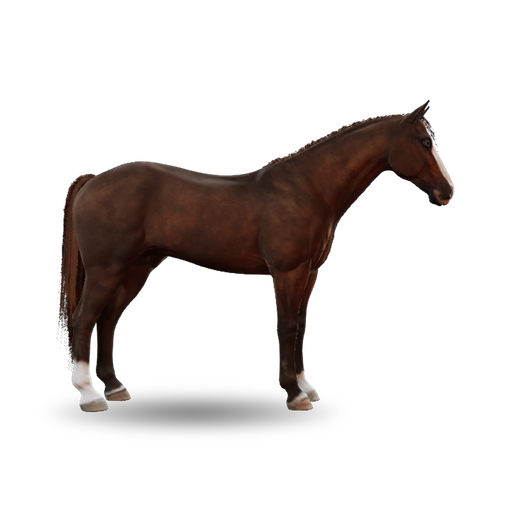 Ancient Sail
Bay coat · snip + socksSorrel mane · Gray eyes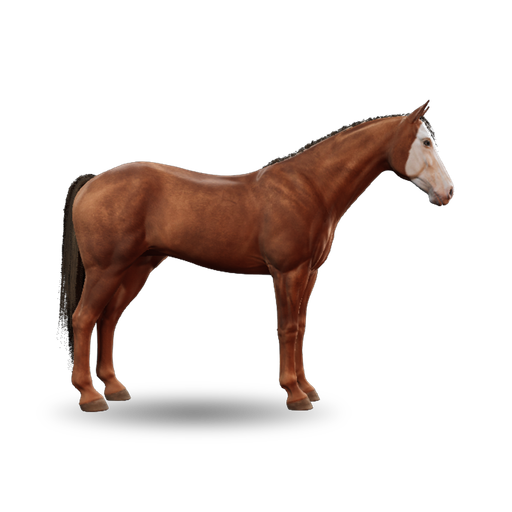 Intrepid Odyssey
Sorrel coat · bald faceGray mane · Gray eyes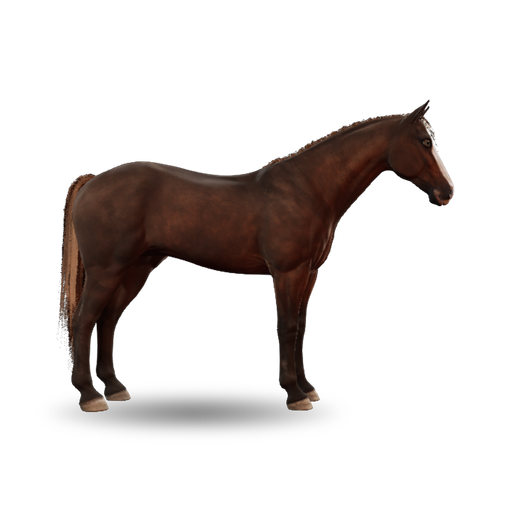 Ash Banner
Bay coat · snipPale mane · Yellow eyes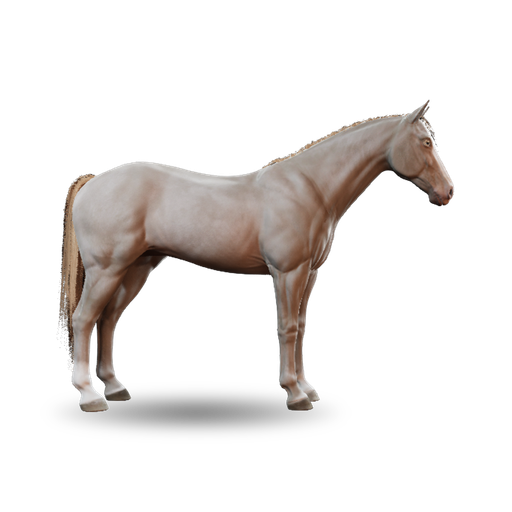 Echo Chalice
Cremello coat · snip + socksCremello mane · Pale eyes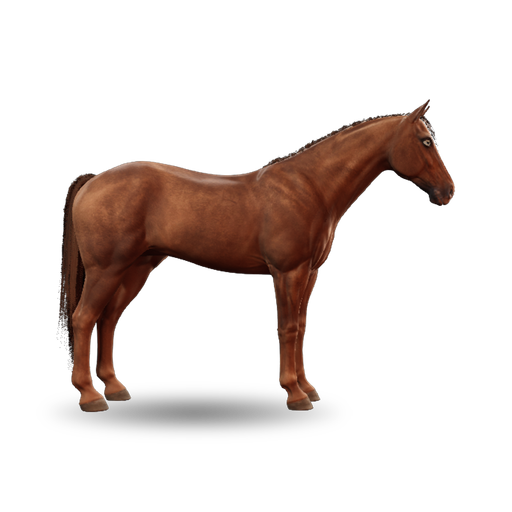 Great Reactor
Sorrel coat · blazeSorrel mane · Pale eyes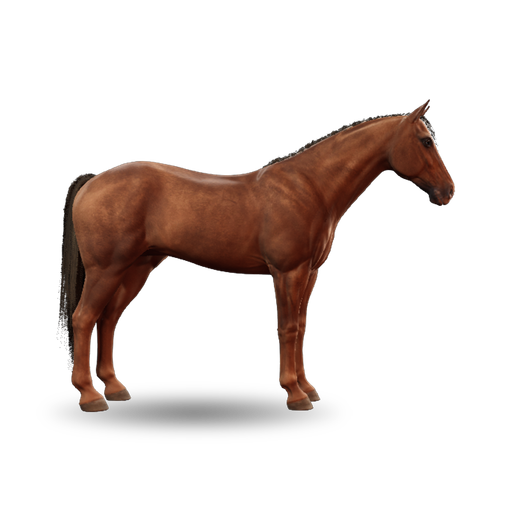 Volatile Pursuit
Sorrel coat · starGray mane · Black eyes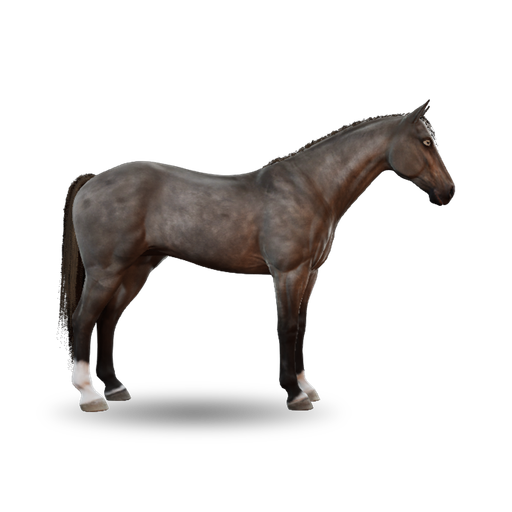 Storied Destiny
Gray coat · socksGray mane · Pale eyes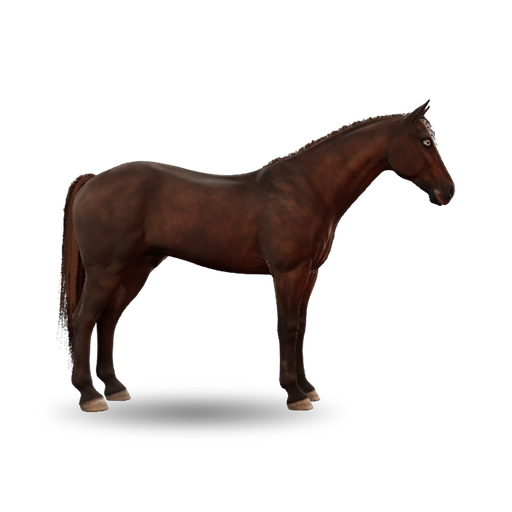 Storied Dancer
Bay coat · blazeSorrel mane · Pale eyes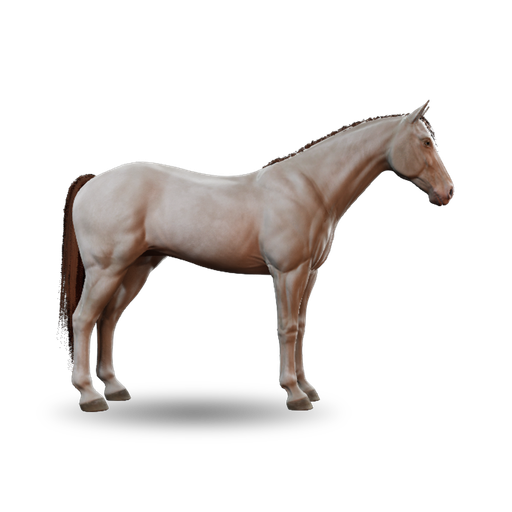 Moonlit Albatross
Cremello coat · no markingsSorrel mane · Yellow eyes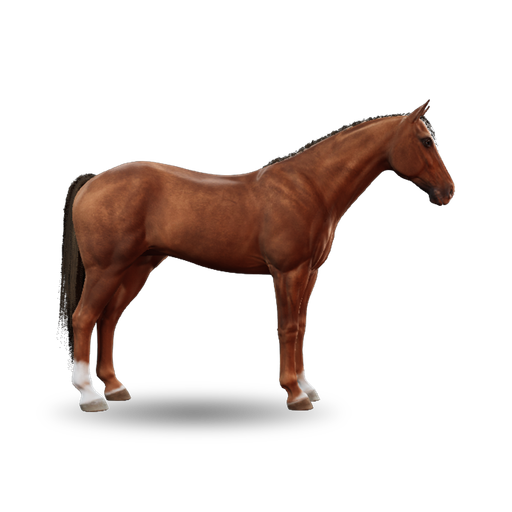 Shining Nugget
Sorrel coat · socksGray mane · Black eyes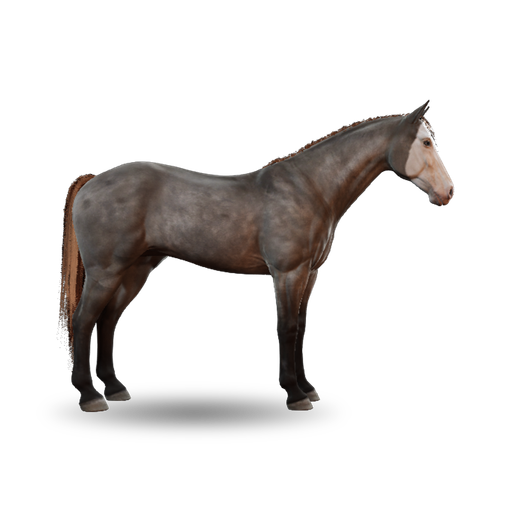 Inertia Spectrum
Gray coat · bald facePale mane · Gray eyes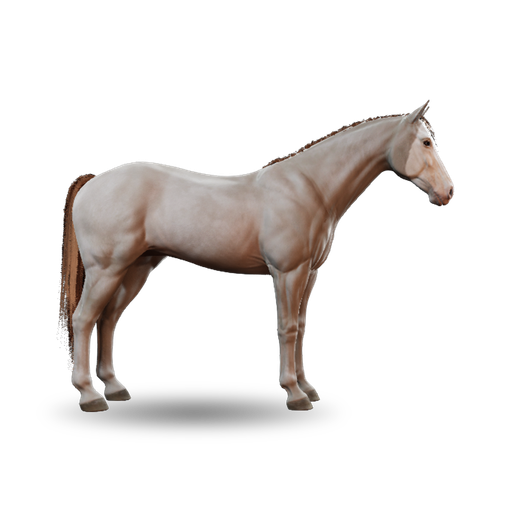 Prime Bullion
Cremello coat · bald facePale mane · Black eyes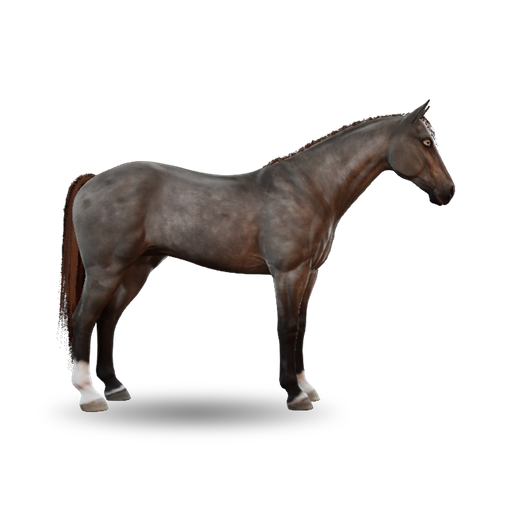 Frost Mesa
Gray coat · star + socksSorrel mane · Pale eyes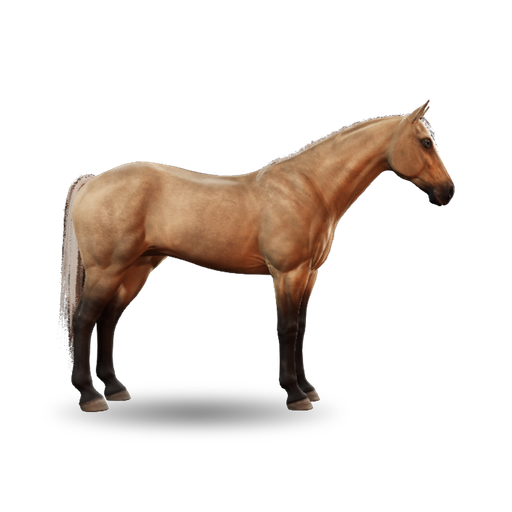 Ultimate Anvil
Dun coat · starWhite mane · Gray eyes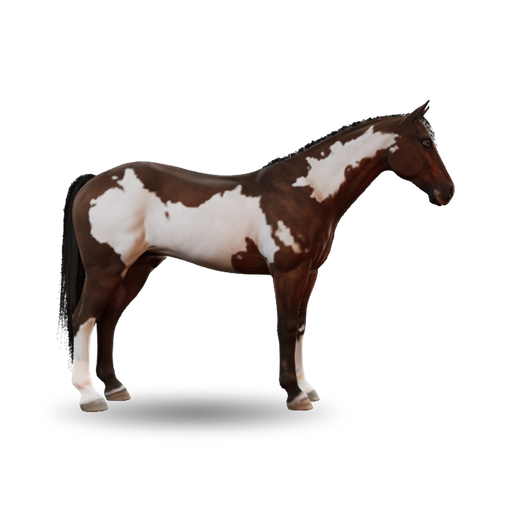 Proton Paradox
Bay coat · body splash + socksBlack mane · Yellow eyes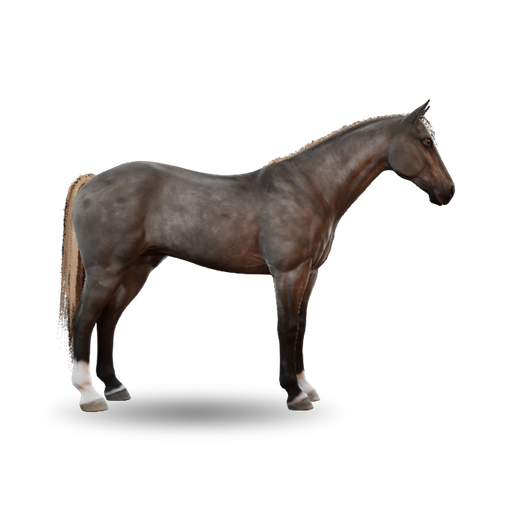 Gleaming Turbine
Gray coat · blaze + socksCremello mane · Yellow eyes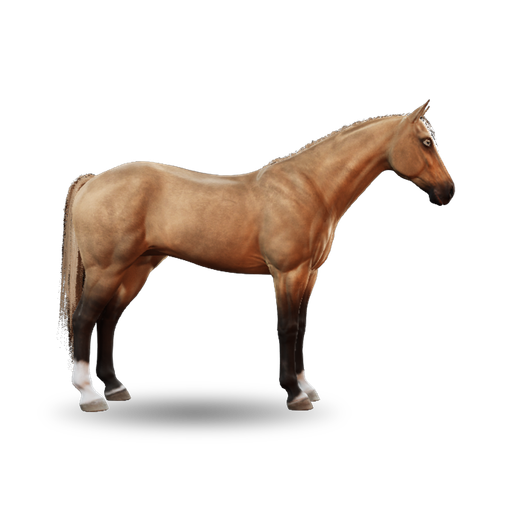 Neutron Empire
Dun coat · blaze + socksCremello mane · Pale eyes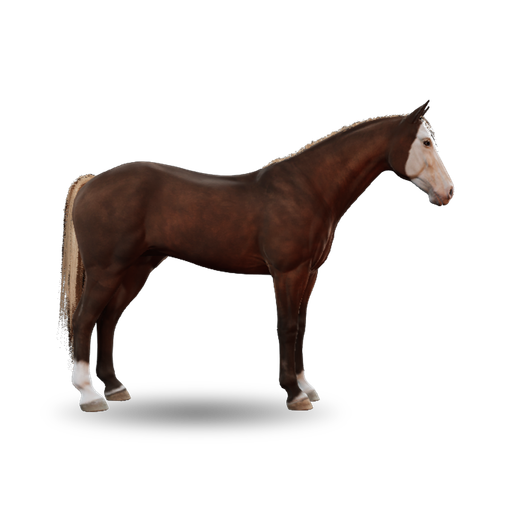 Centauri Caracal
Bay coat · bald face + socksCremello mane · Black eyes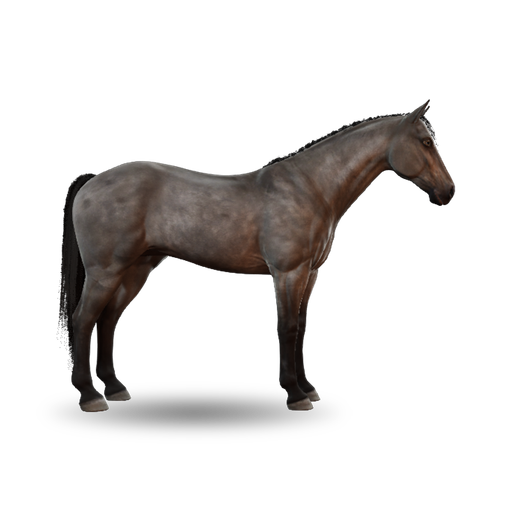 Peerless Emblem
Gray coat · starBlack mane · Yellow eyes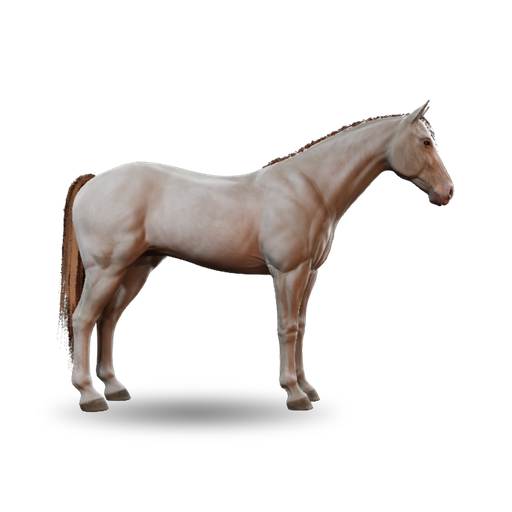 Ash Chaser
Cremello coat · starPale mane · Black eyes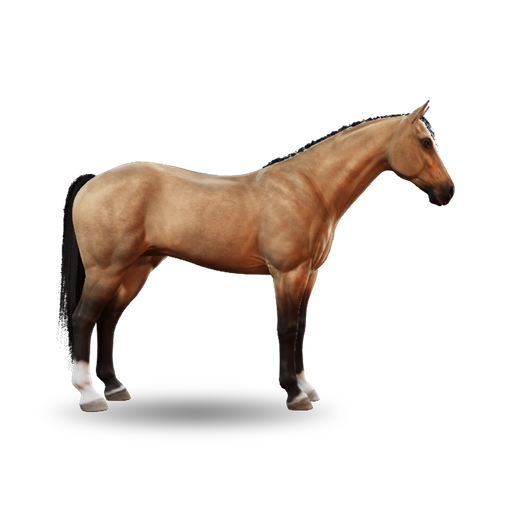 Nickel Wolf
Dun coat · star + socksBlack mane · Black eyesMarkings & patterns · 96 masks
A coat is the colour. A marking is what goes on top of it, and the two are independent — any marking can appear on any coat. A horse wears at most two at once, which gives 186 pattern states in total: 96 single markings, 89 pairs, and one clean coat.
Markings are white — with one exception, and it is a deliberate one. A coloured marking arrives in two ways: through breeding, or on a crown-tier genesis horse. The 50 Hyperion DN3 horses each wear a body splash in a second Kepler colour, and that splash is the rung showing: it is the only place in the collection where colour sits on colour without a pedigree behind it. Anywhere else, a coloured spot means somebody bred for it.
Pure blood shows as one colour. The King and Queen are solid black and solid white — the purest horses in the game wear the plainest coats. Body patterns signal diluted blood, so no genesis horse on a colour planet carries one. Most Hyperions carry none either — and where one does appear it is a splash or a patch, never a pinto, a leopard or a blanket. Every generation you breed away from the crown, broken colour becomes more likely.
Face and leg markings are different: a blaze or a pair of socks is an ordinary breed characteristic that says nothing about ancestry, and any horse may carry them.
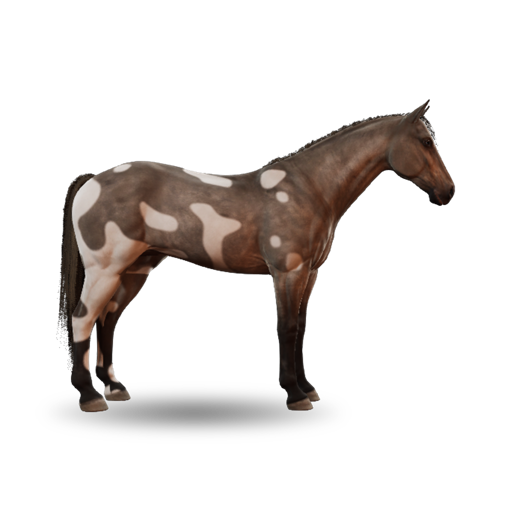 Blanket I
on GrayBody pattern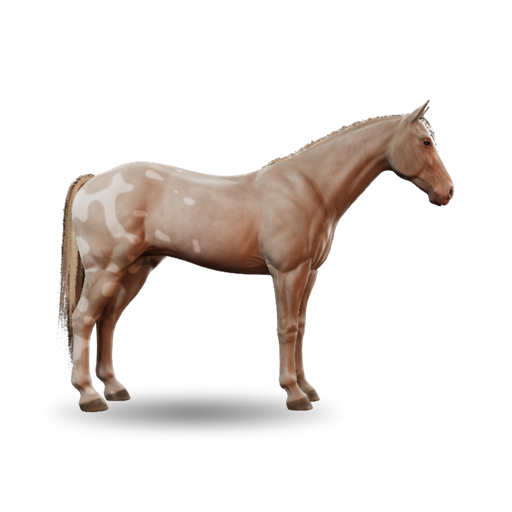 Blanket II
on CremelloBody pattern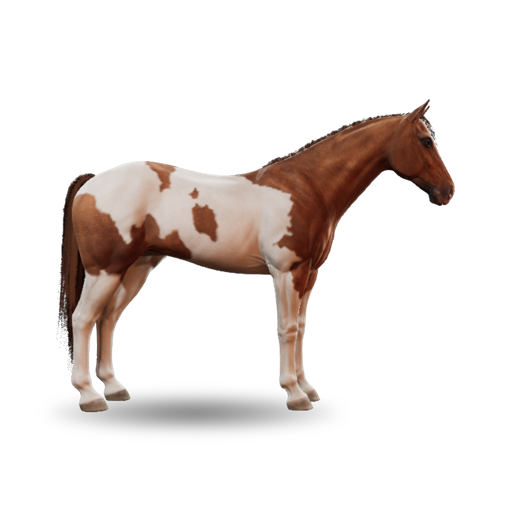 Body Patch
on SorrelBody pattern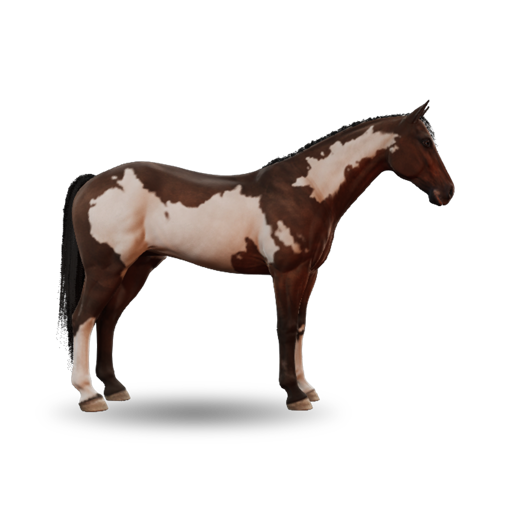 Body Splash
on BayBody pattern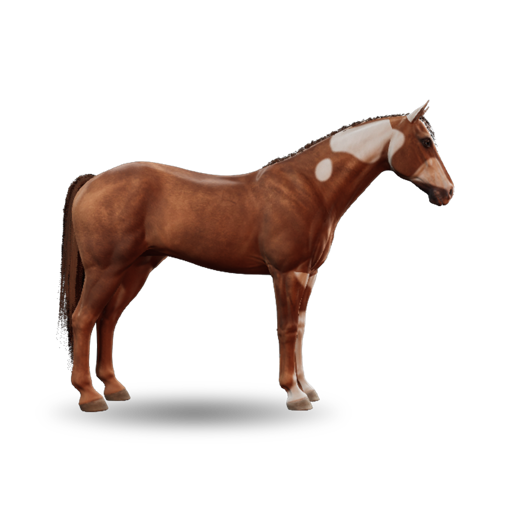 Frosted I
on SorrelBody pattern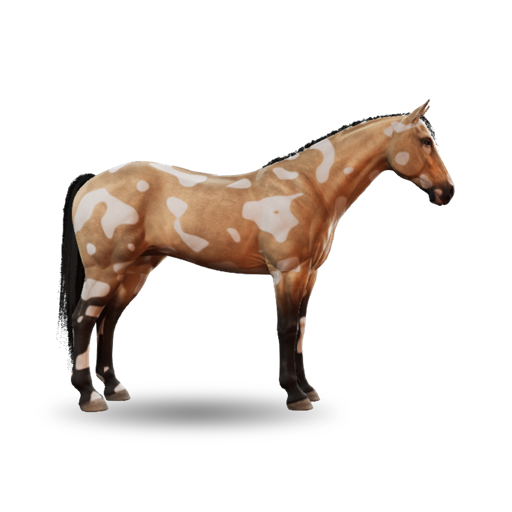 Leopard I
on DunBody pattern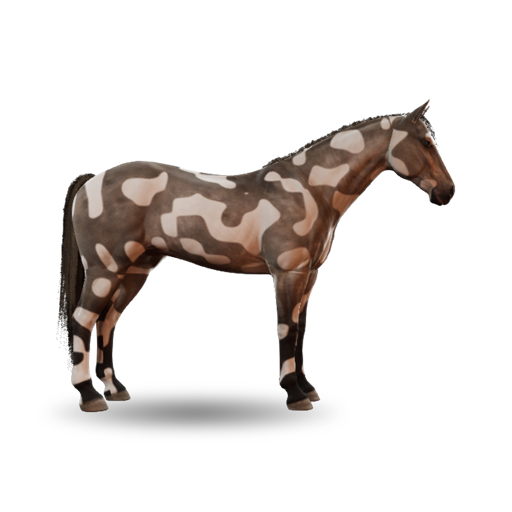 Leopard II
on GrayBody pattern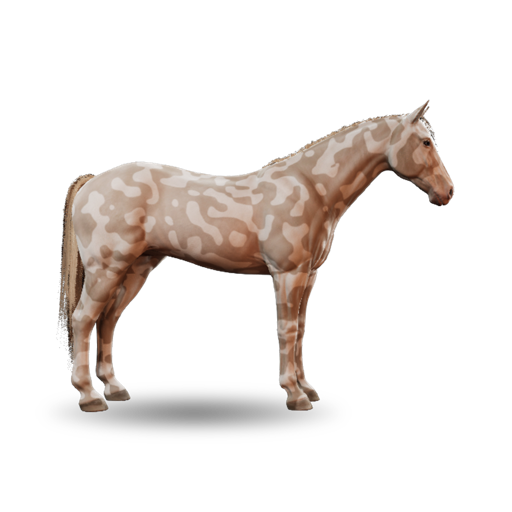 Leopard III
on CremelloBody pattern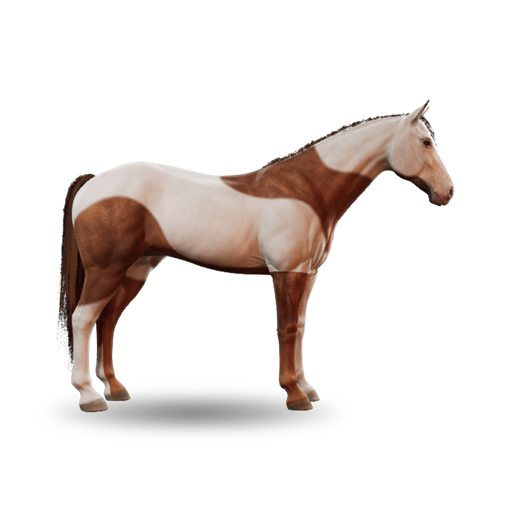 Pinto I
on SorrelBody pattern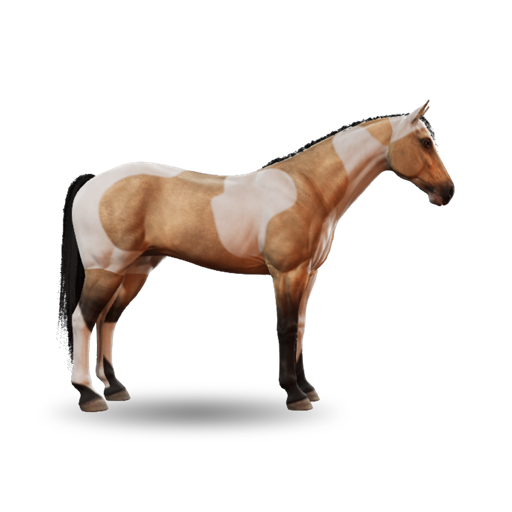 Pinto II
on DunBody pattern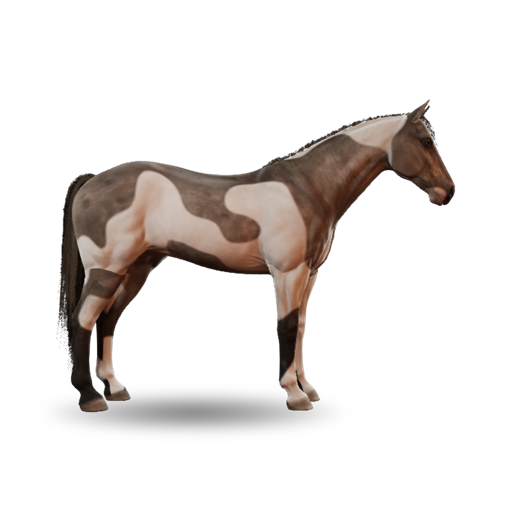 Pinto III
on GrayBody pattern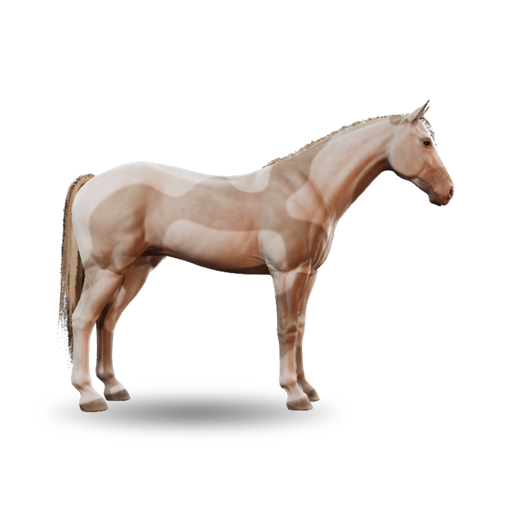 Pinto IV
on CremelloBody pattern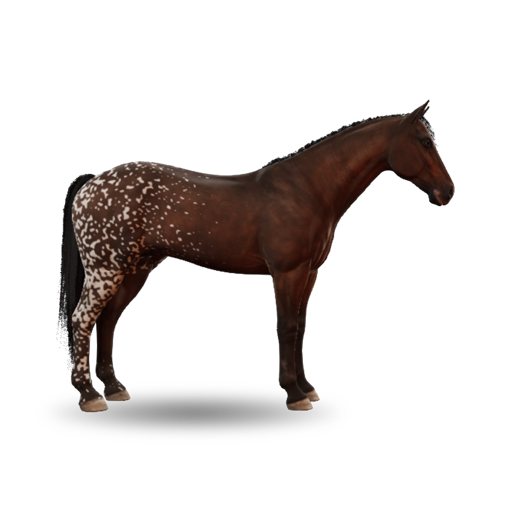 Rabicano I
on BayBody pattern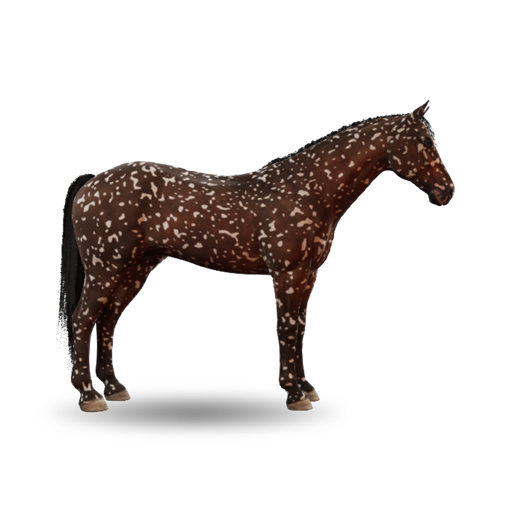 Roan I
on BayBody pattern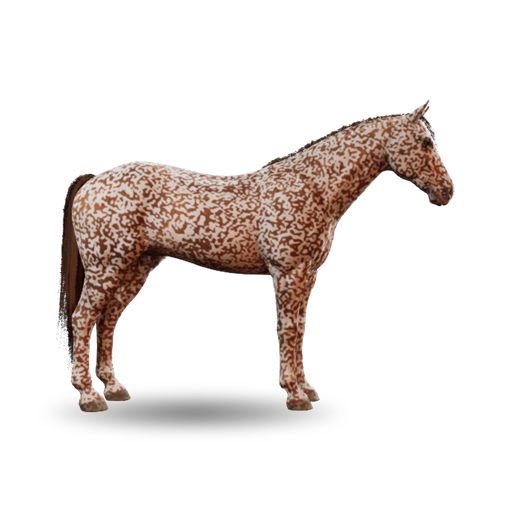 Roan II
on SorrelBody pattern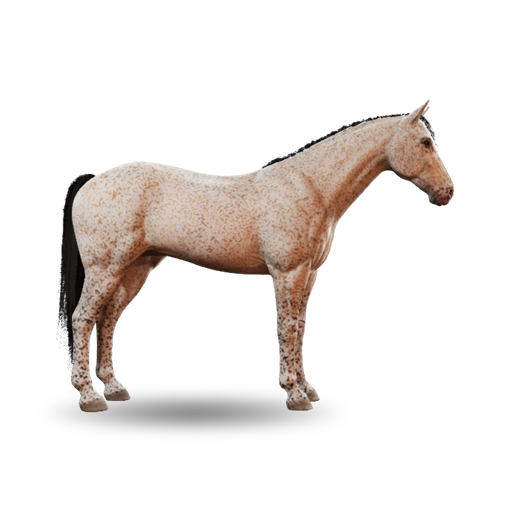 Roan III
on DunBody pattern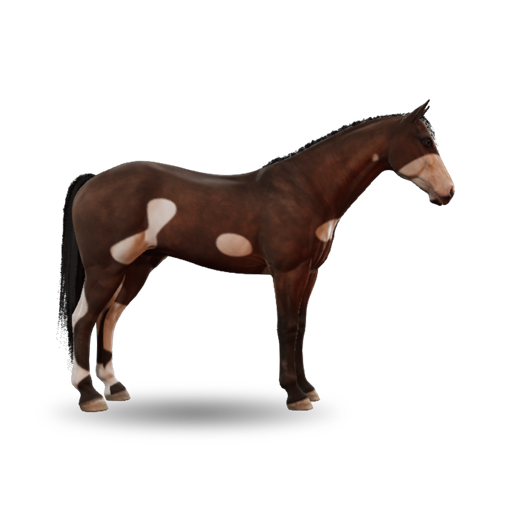 Splash I
on BayBody pattern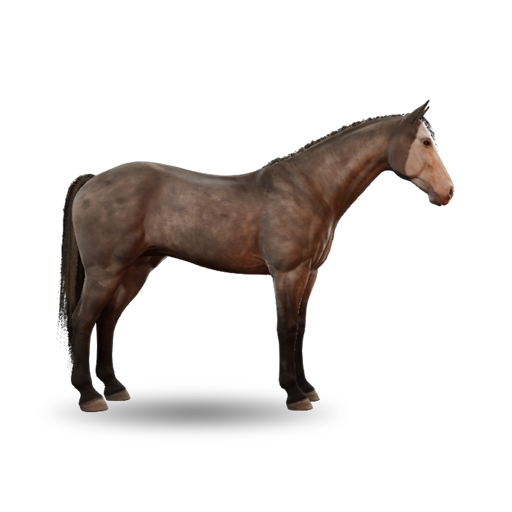 Bald Face
on GrayFace marking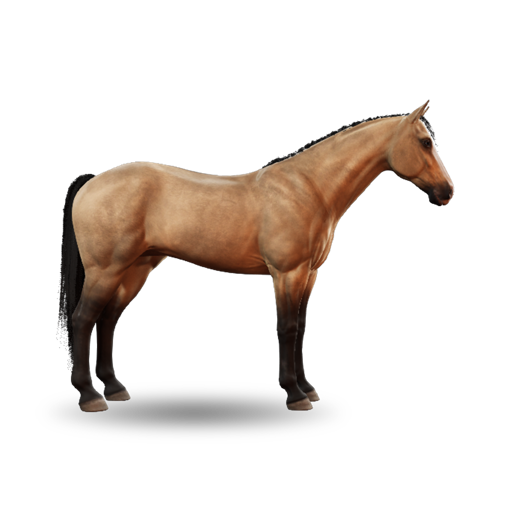 Snip
Snipon DunFace markingThe same markings, on a coat you cannot buy
Every example above sits on a Kepler natural, because that is all the genesis mint contains. Breeding puts the same markings on invented colour, in a second colour drawn from the other parent — and that is a horse that exists only because somebody made it.
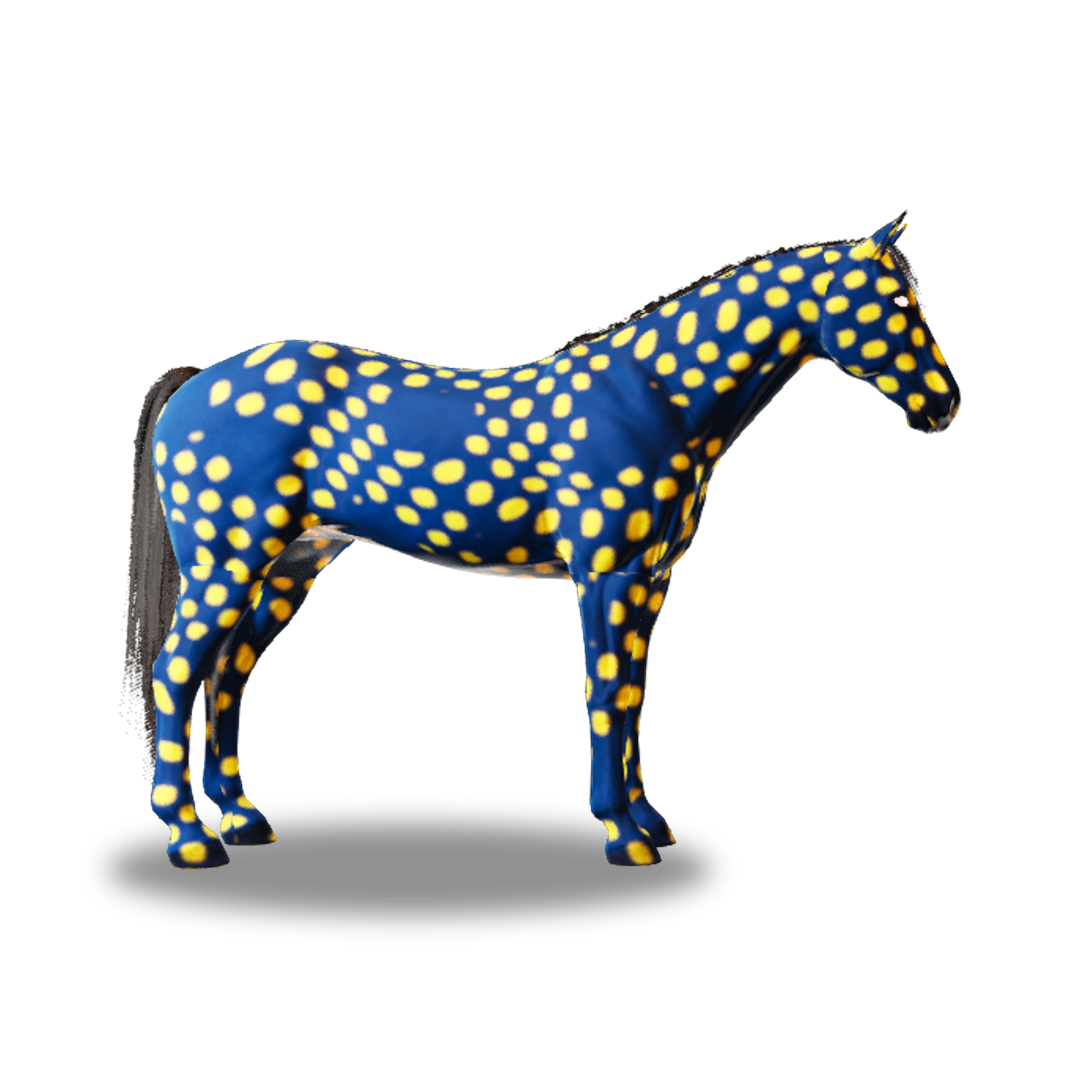 Body Splash
Canary Yellow on Congress BlueBred, not minted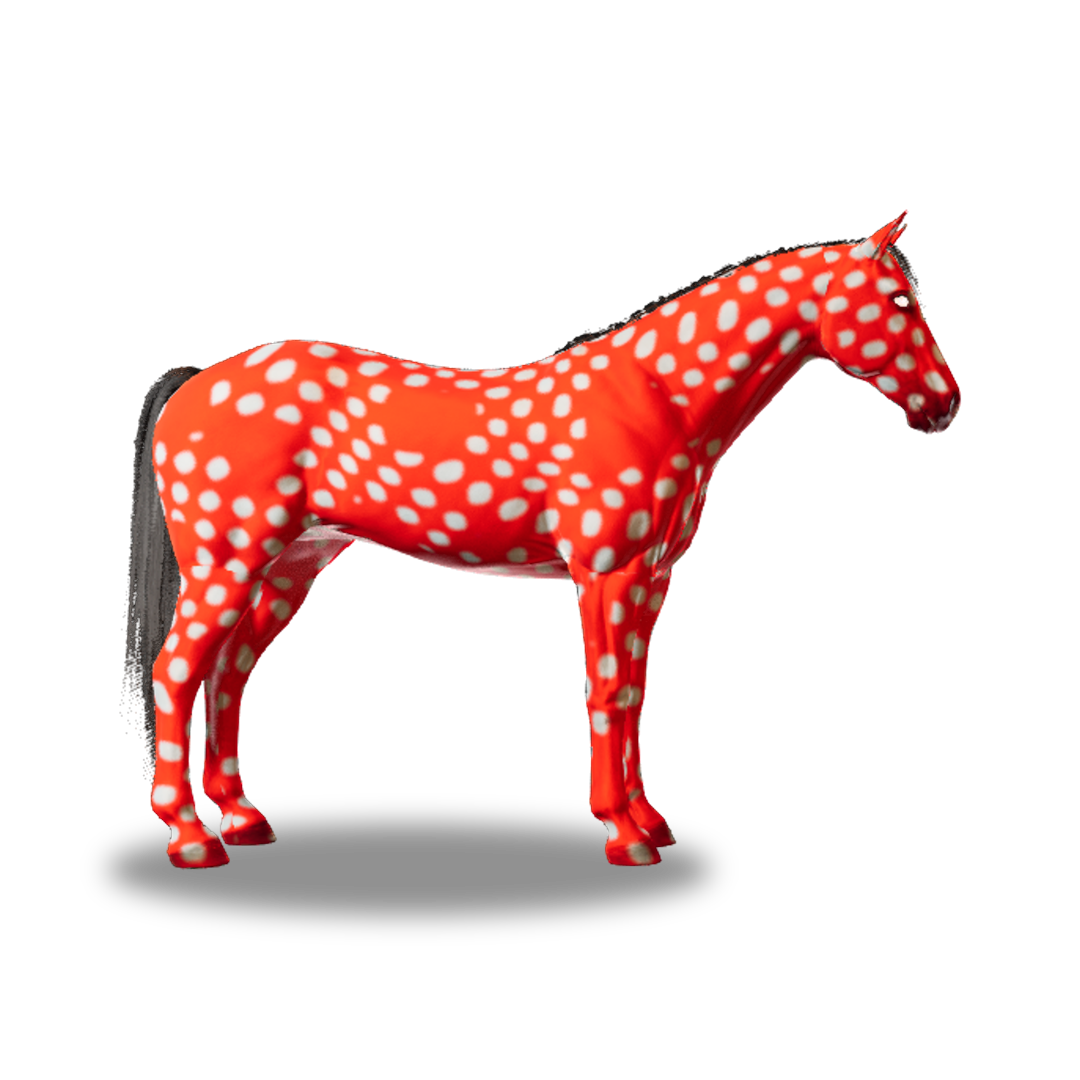 Body Patch
Mint Tulip on Signal RedBred, not minted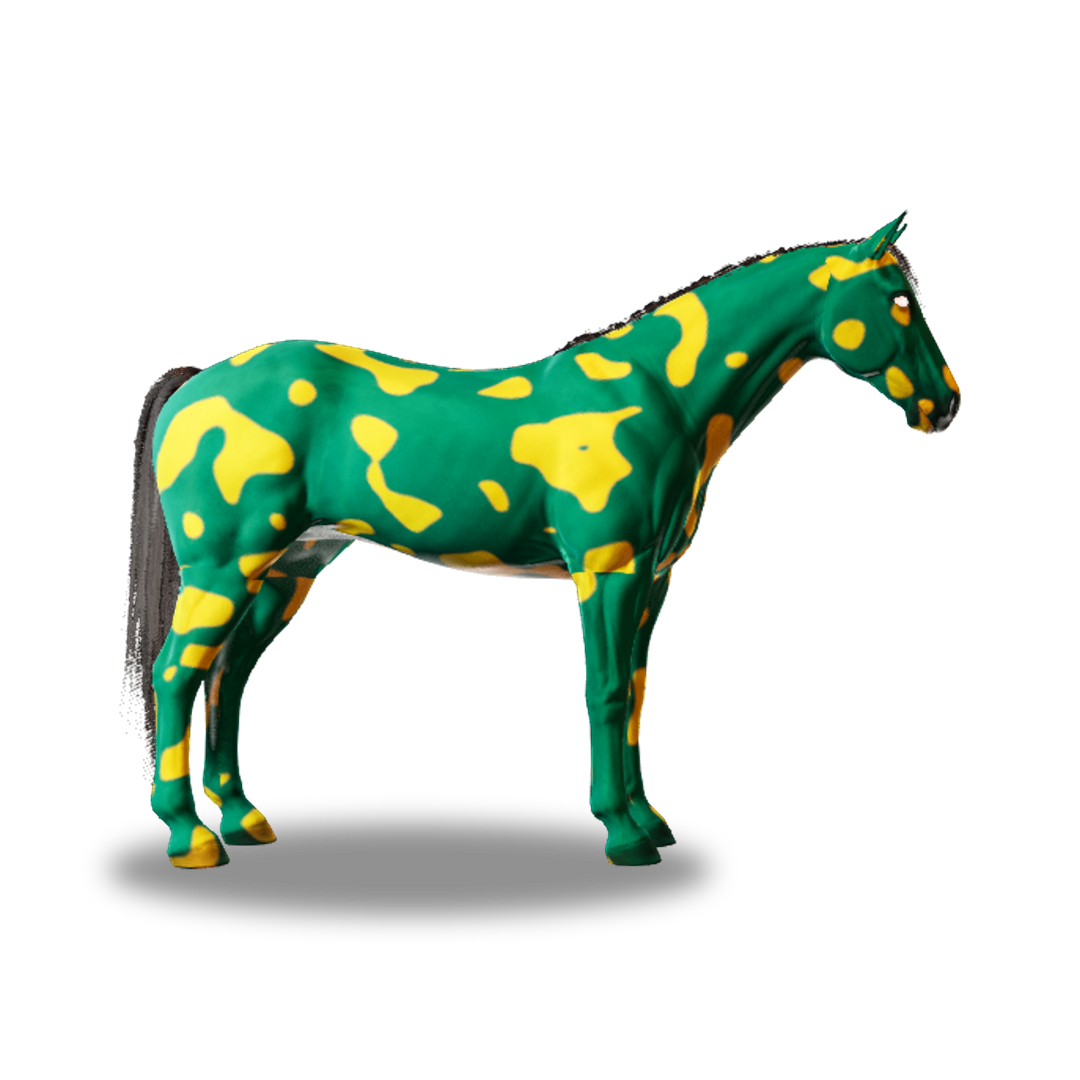 Leopard I
Solar Flare on Deep SeaBred, not minted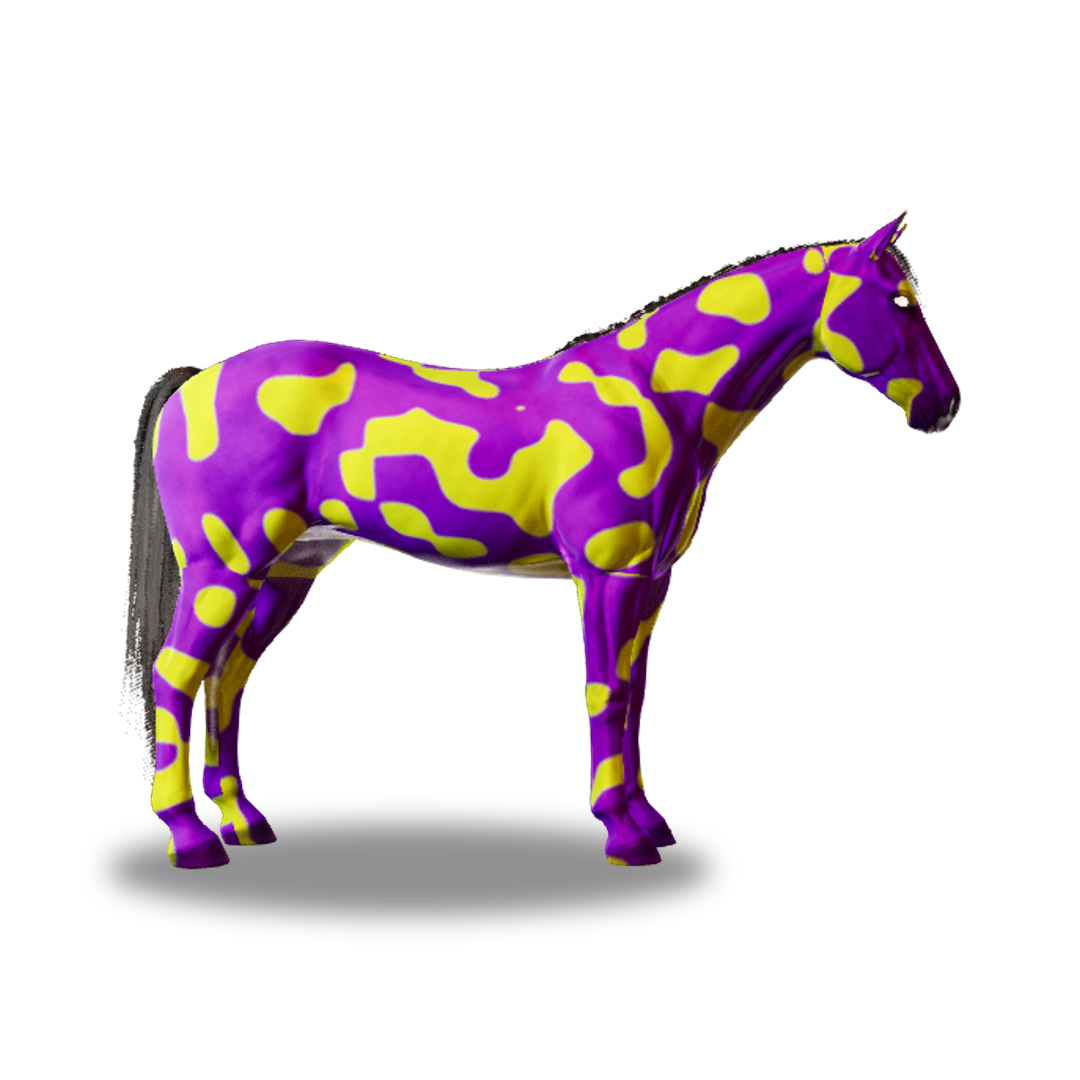 Leopard II
Citrine on Violet BlueBred, not minted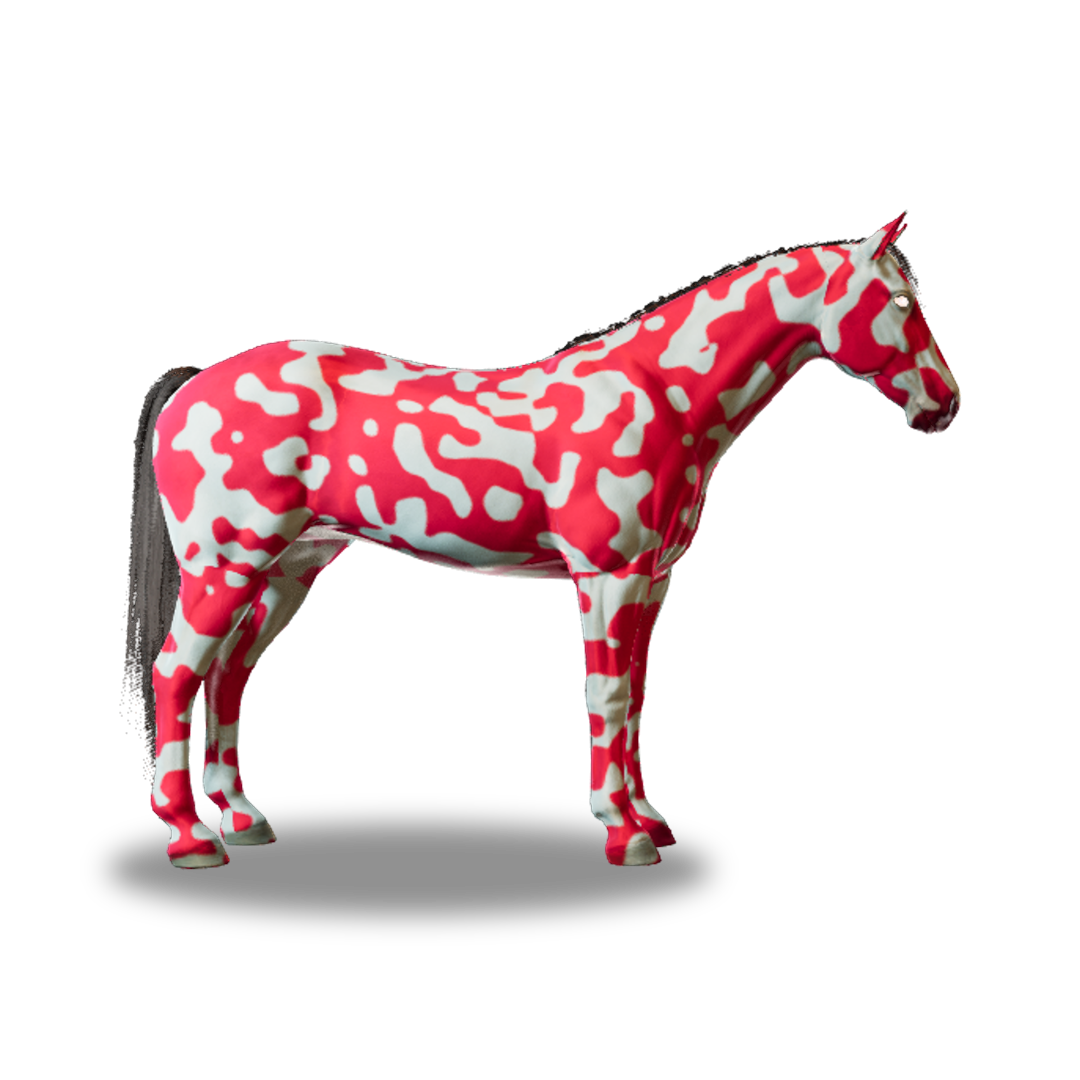 Leopard III
Blizzard Blue on Bright MaroonBred, not minted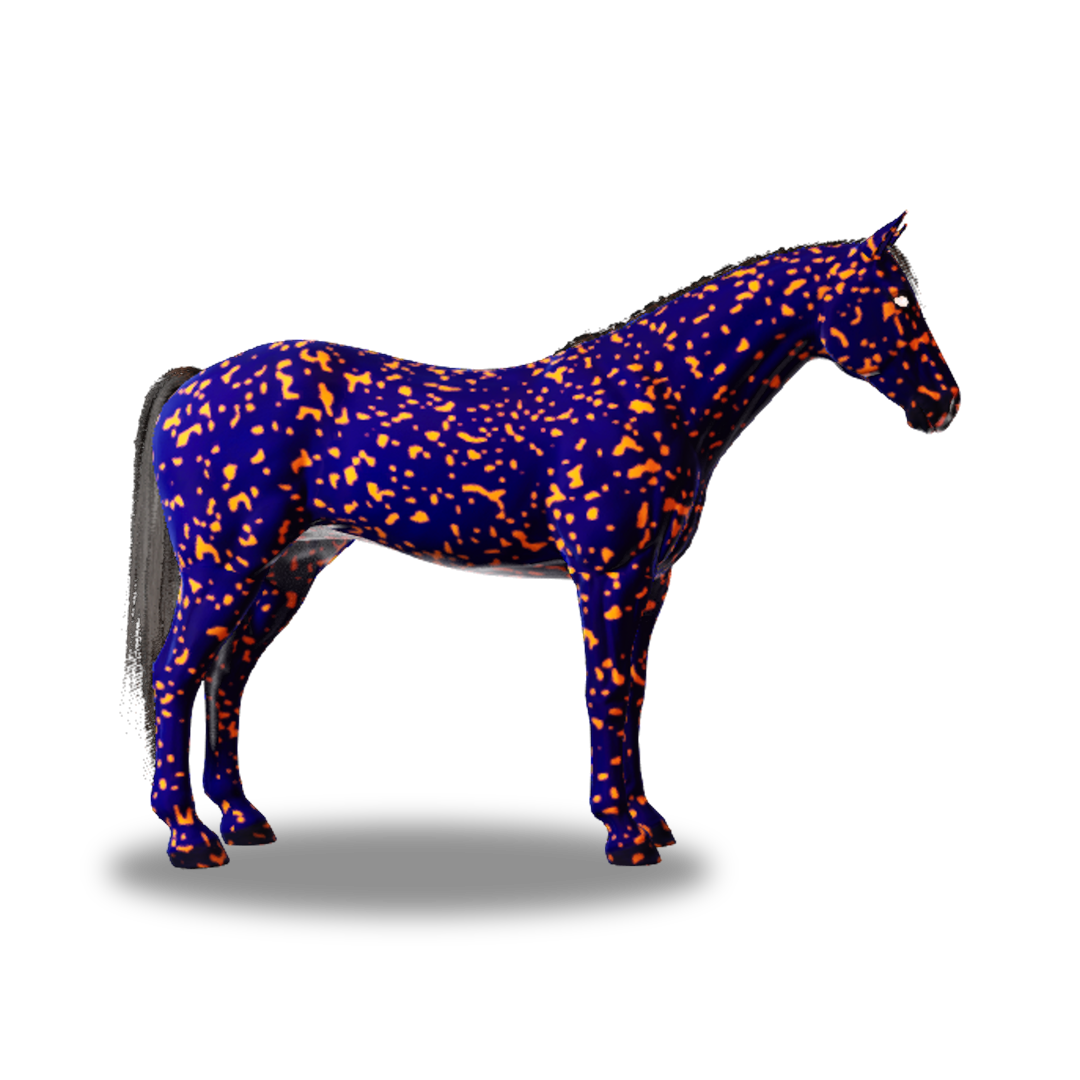 Roan I
Orange Peel on Dark BlueBred, not minted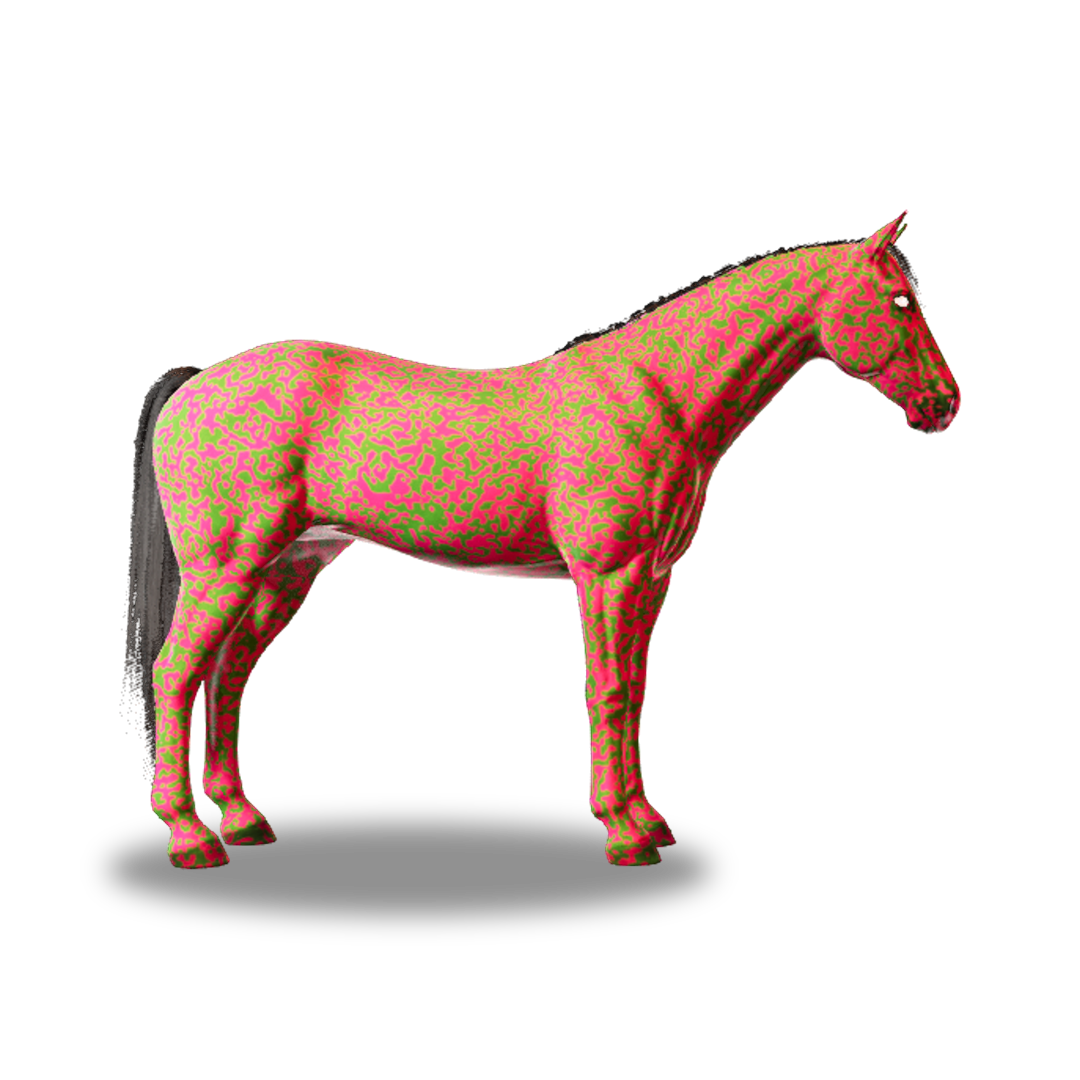 Roan II
Deep Pink on AppleBred, not minted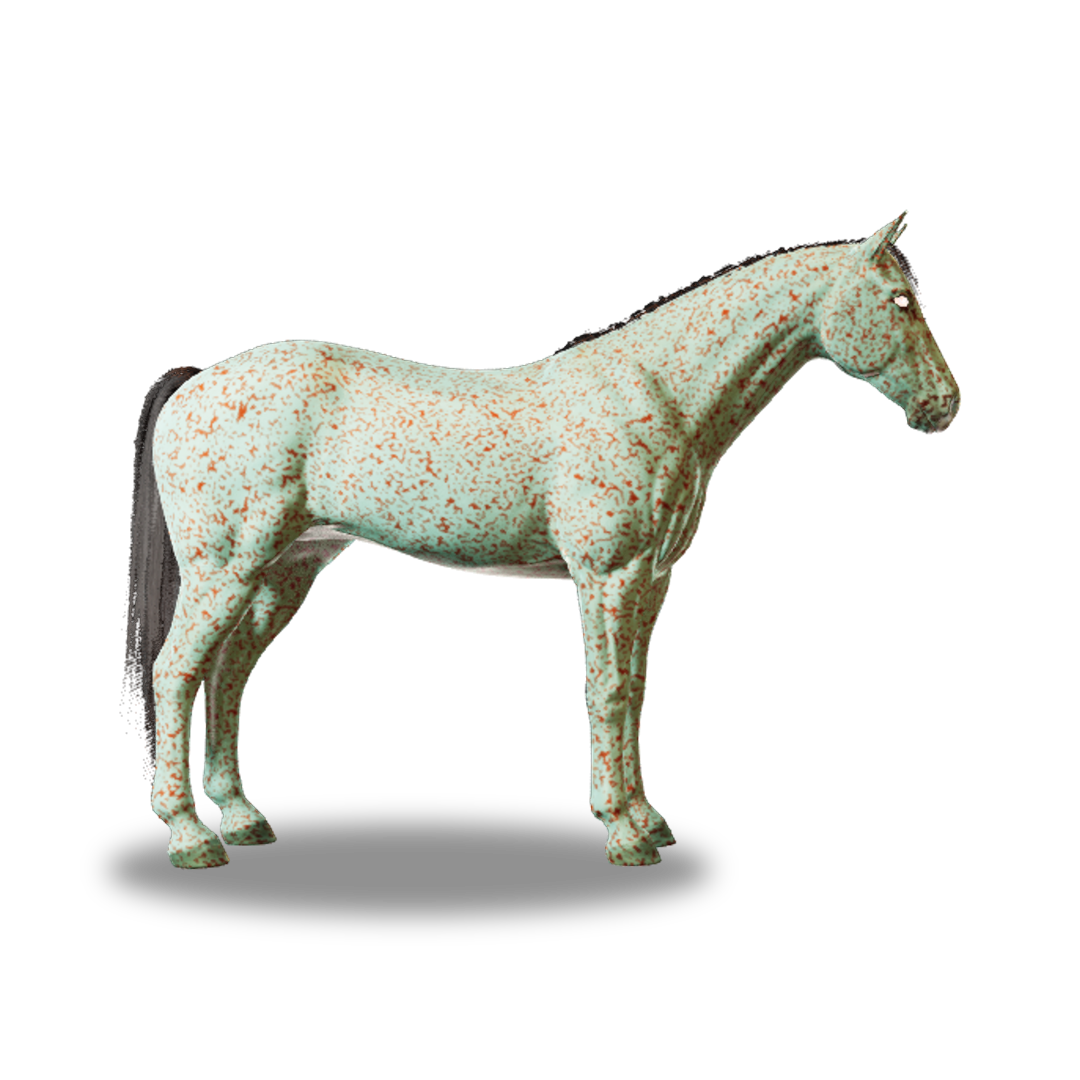 Roan III
Magic Mint on Iron OxideBred, not minted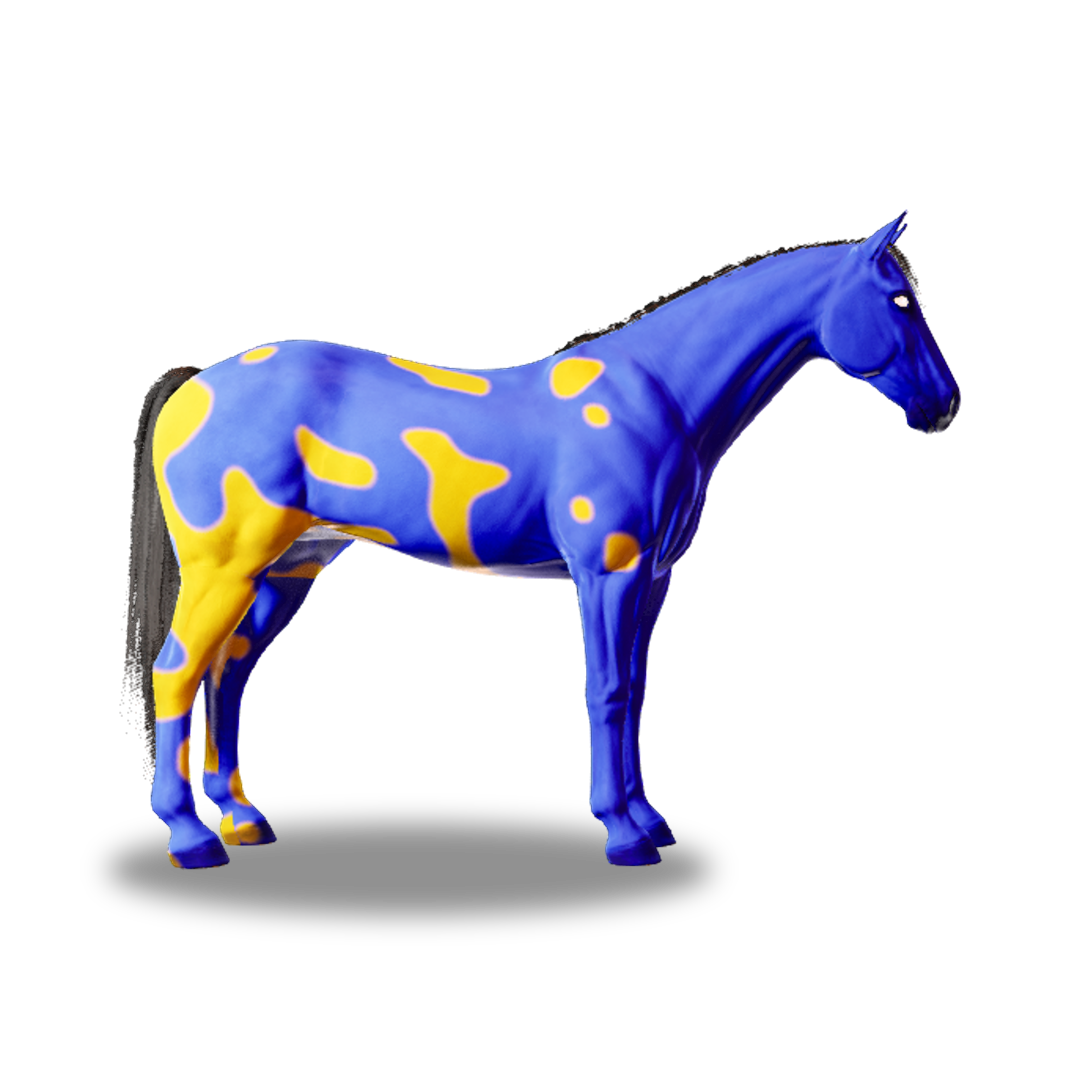 Blanket I
Golden on Ultramarine BlueBred, not minted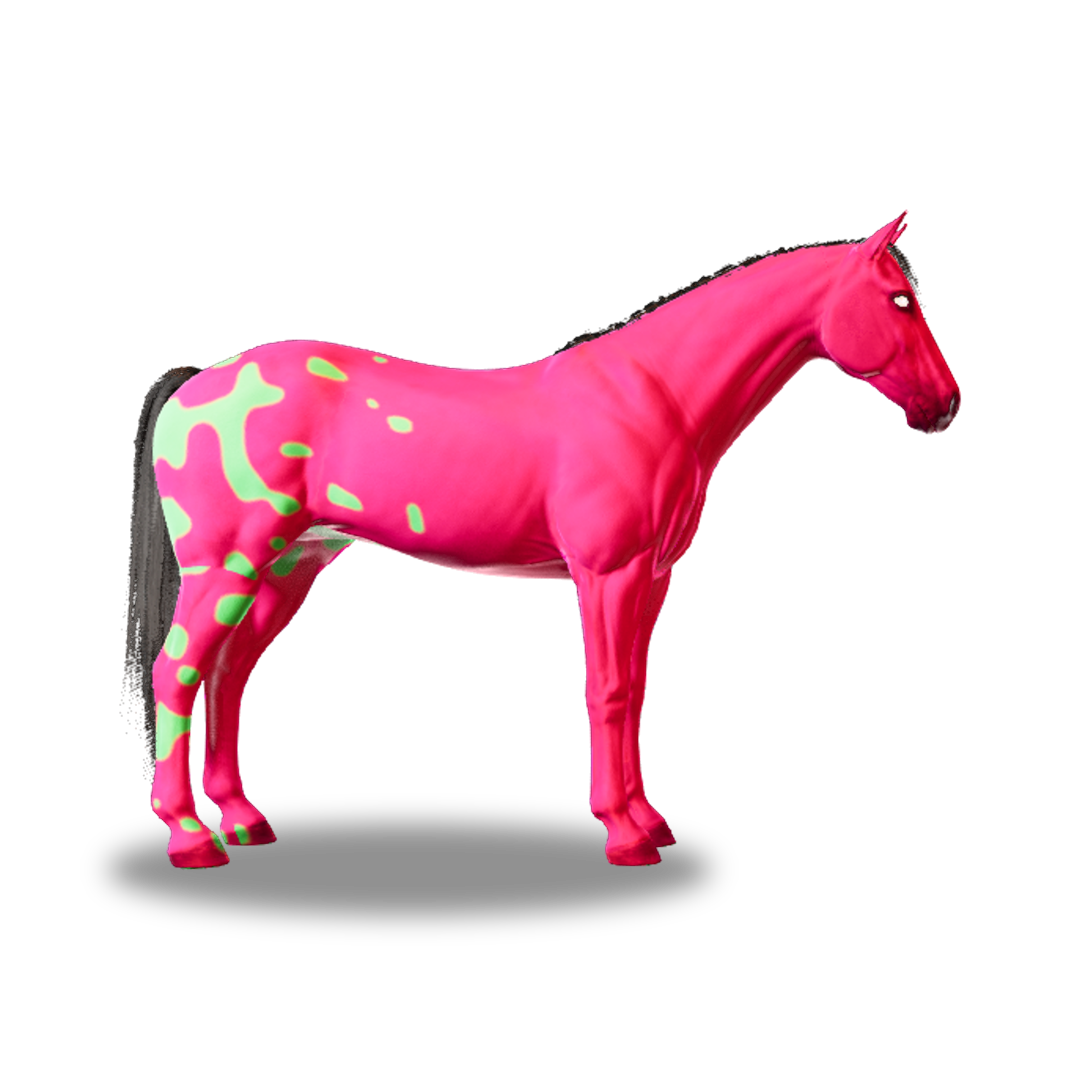 Blanket II
Algae Green on Deep PinkBred, not minted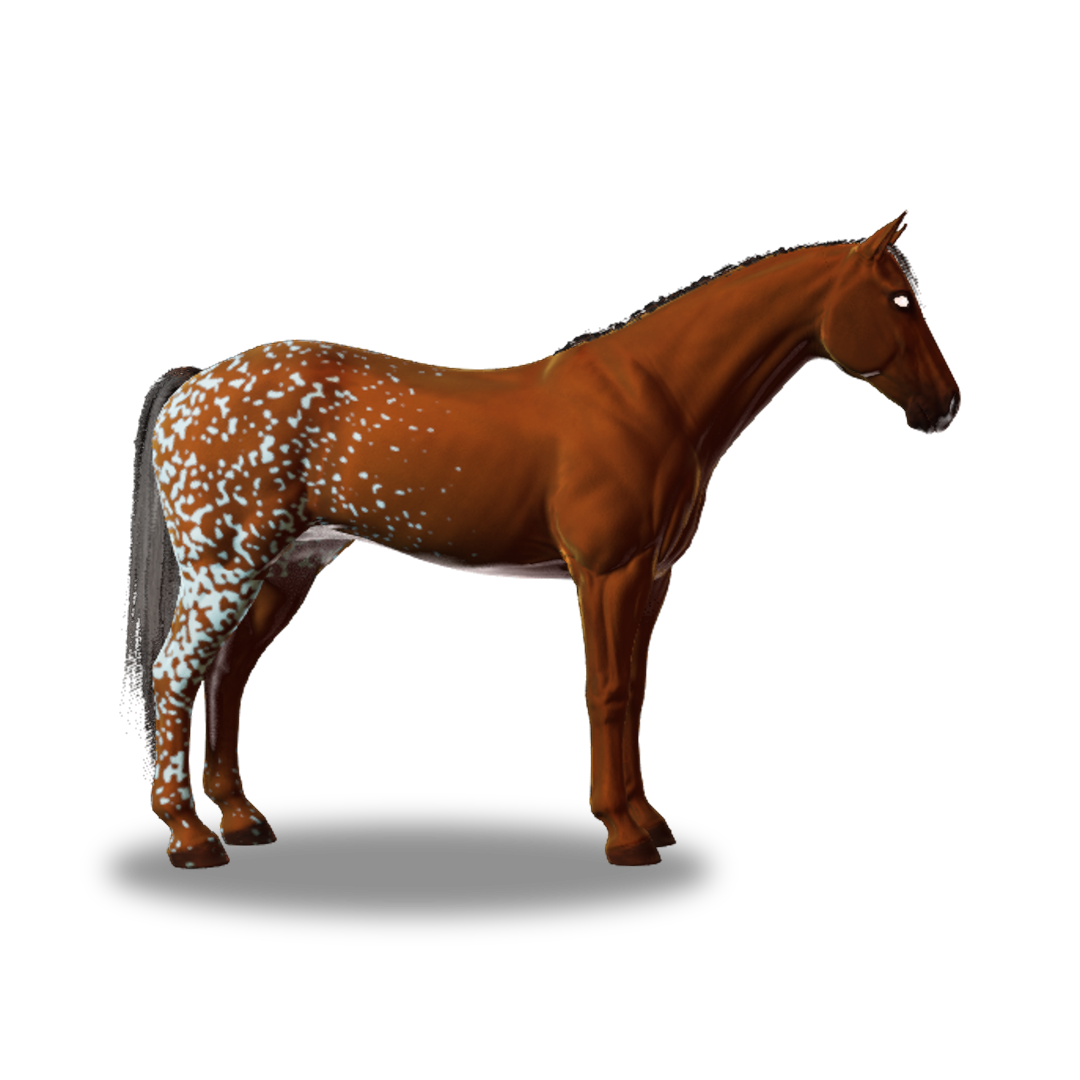 Rabicano I
Cloud Blue on Saddle BrownBred, not minted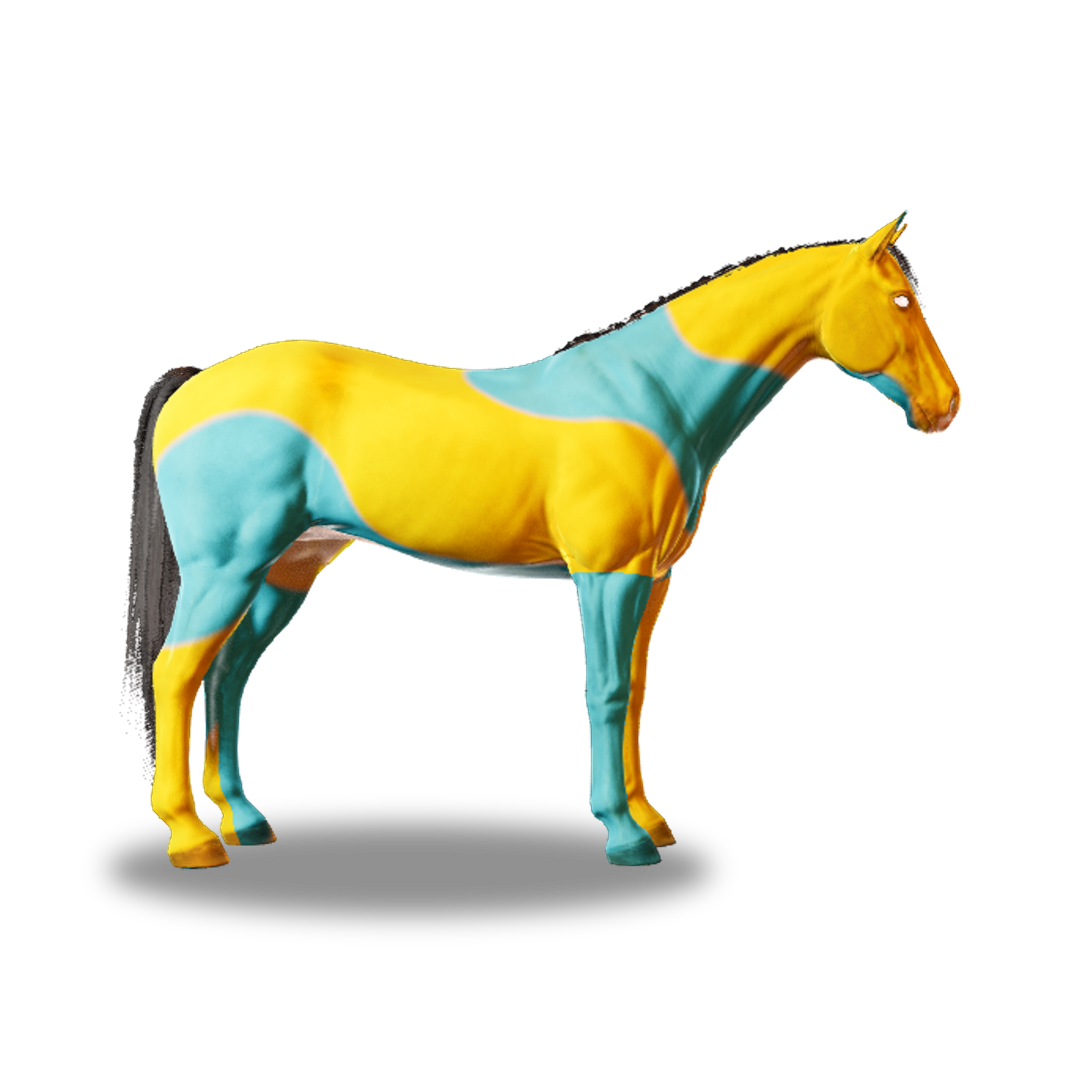 Pinto I
Golden on Crystal BlueBred, not minted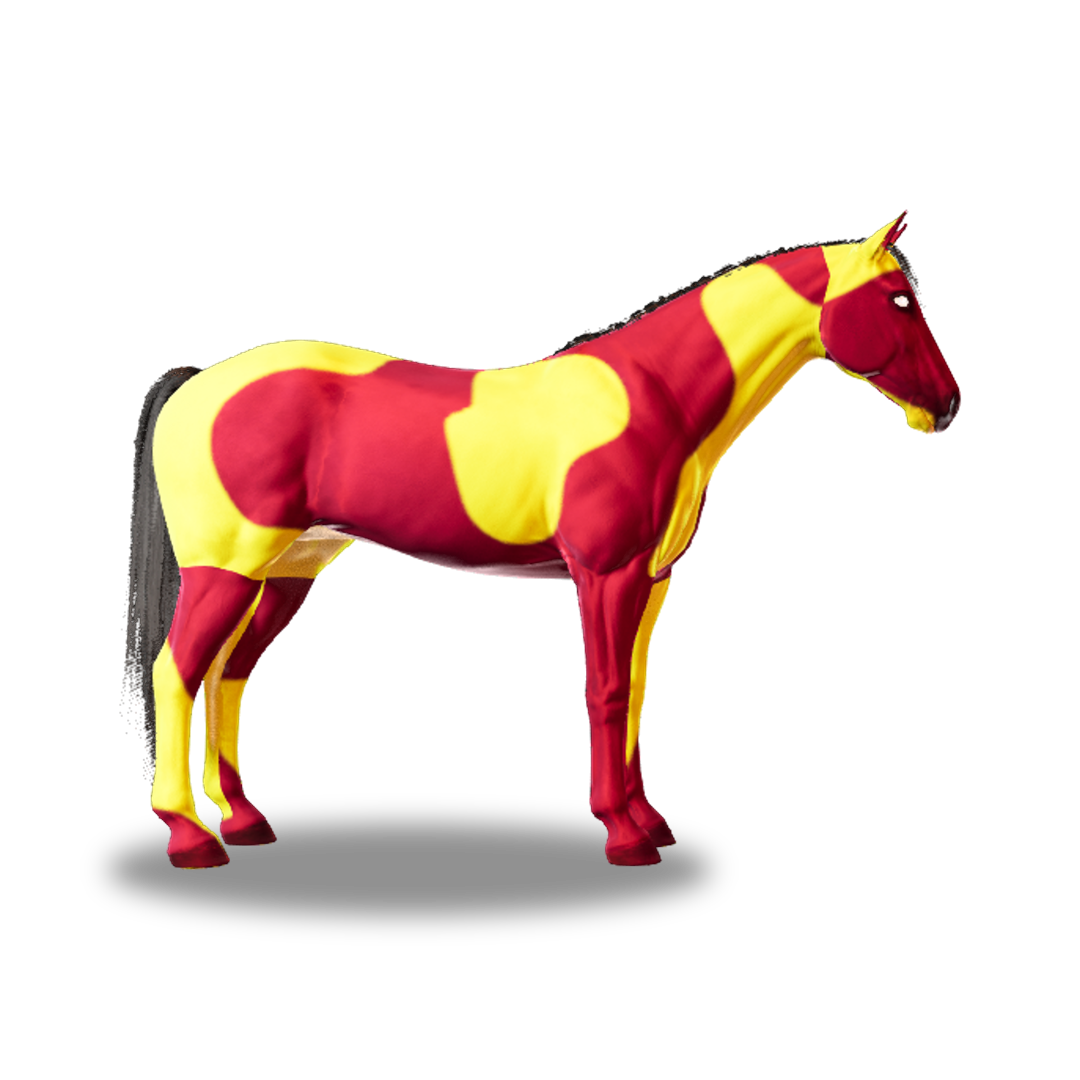 Pinto II
Canary Yellow on Vivid BurgundyBred, not minted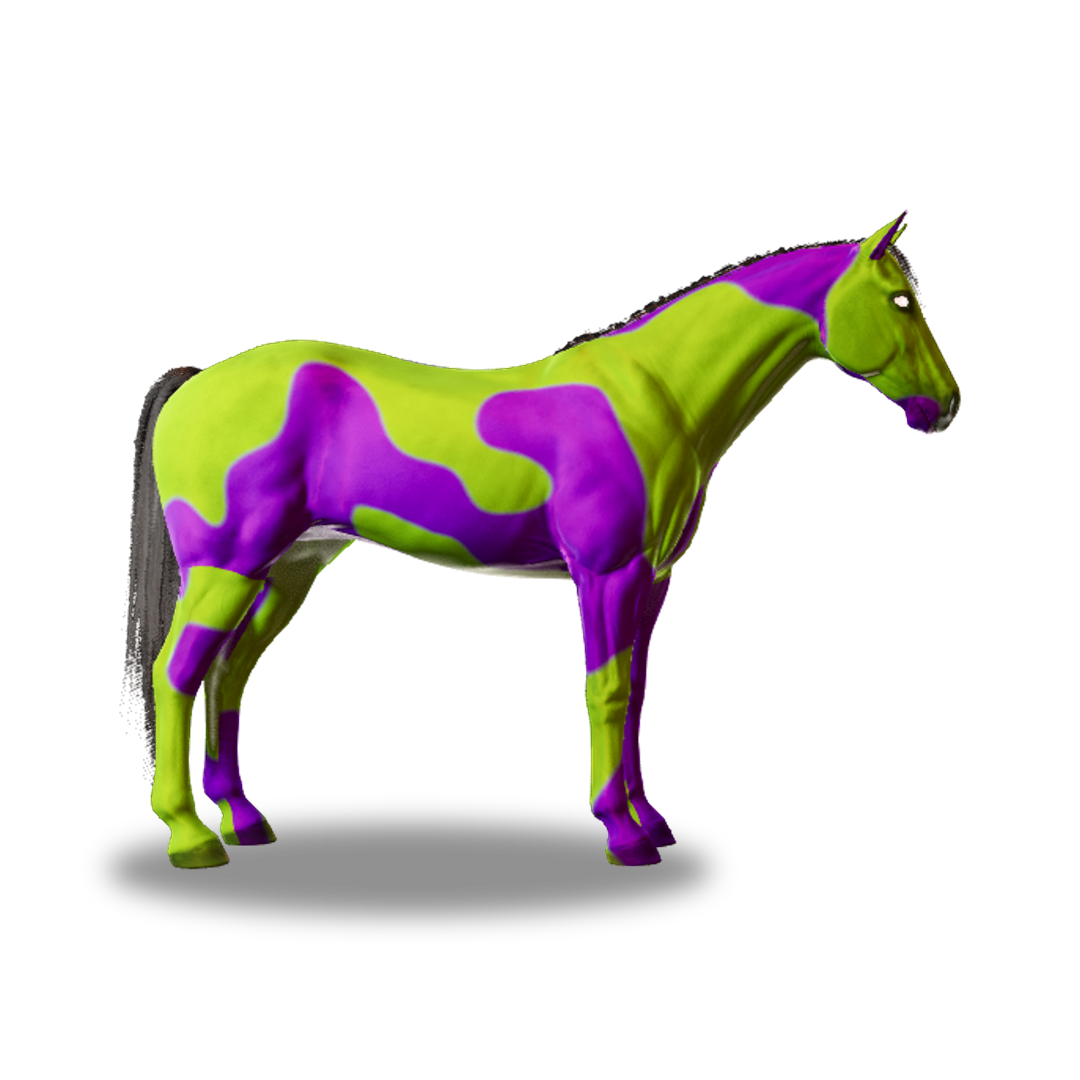 Pinto III
Violet Blue on Dark LimeBred, not minted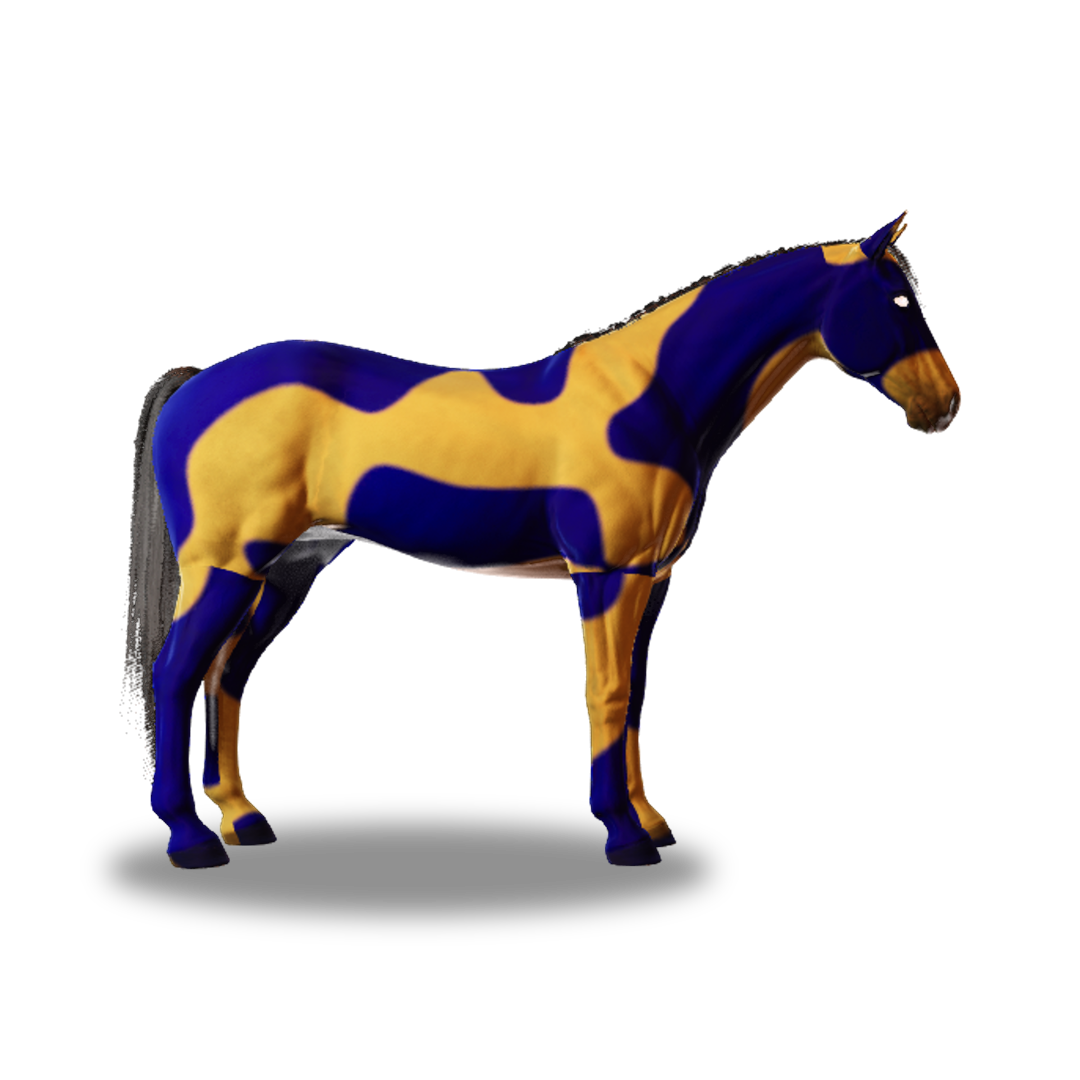 Pinto IV
Dark Blue on Old GoldBred, not minted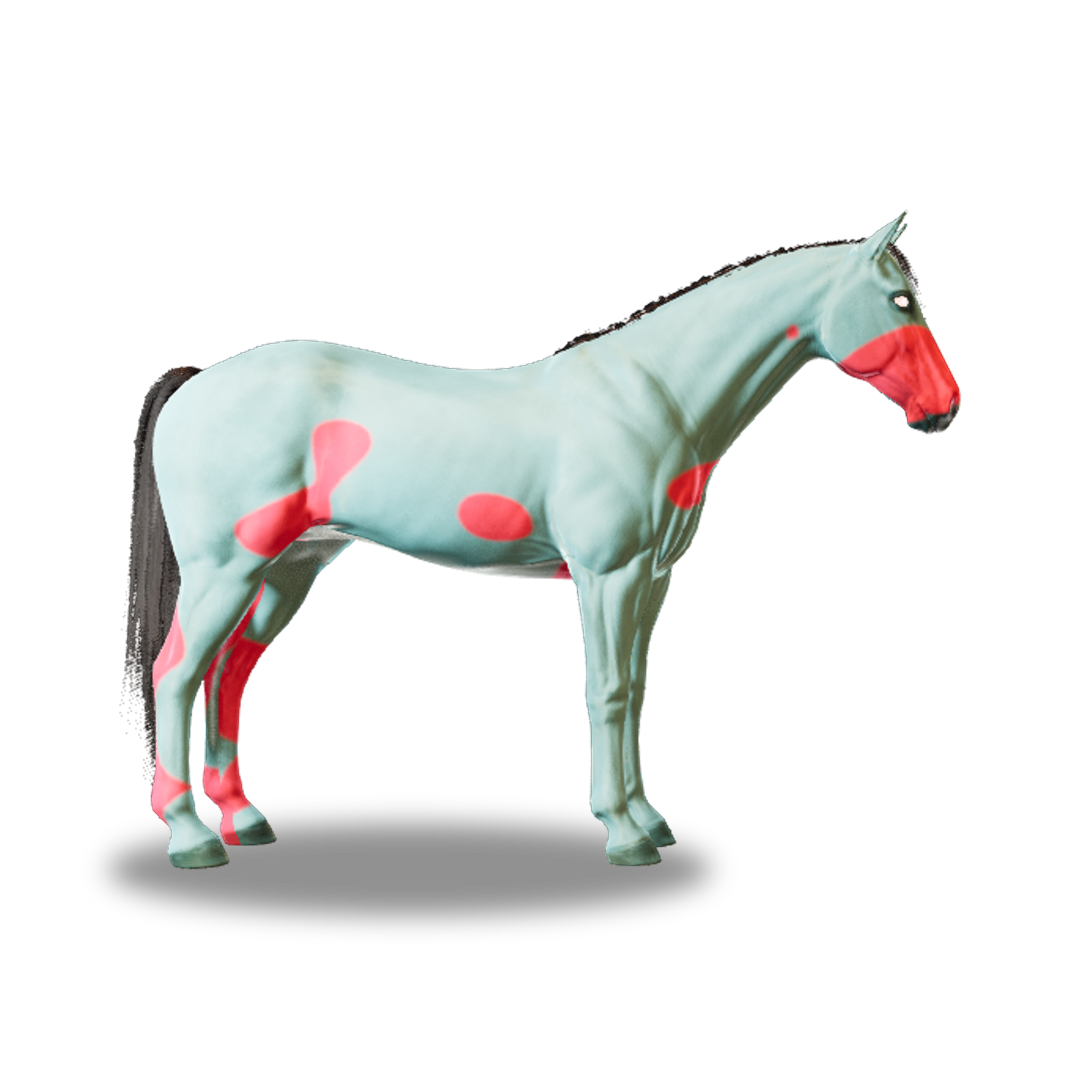 Splash I
Watermelon Pink on Blue LagoonBred, not minted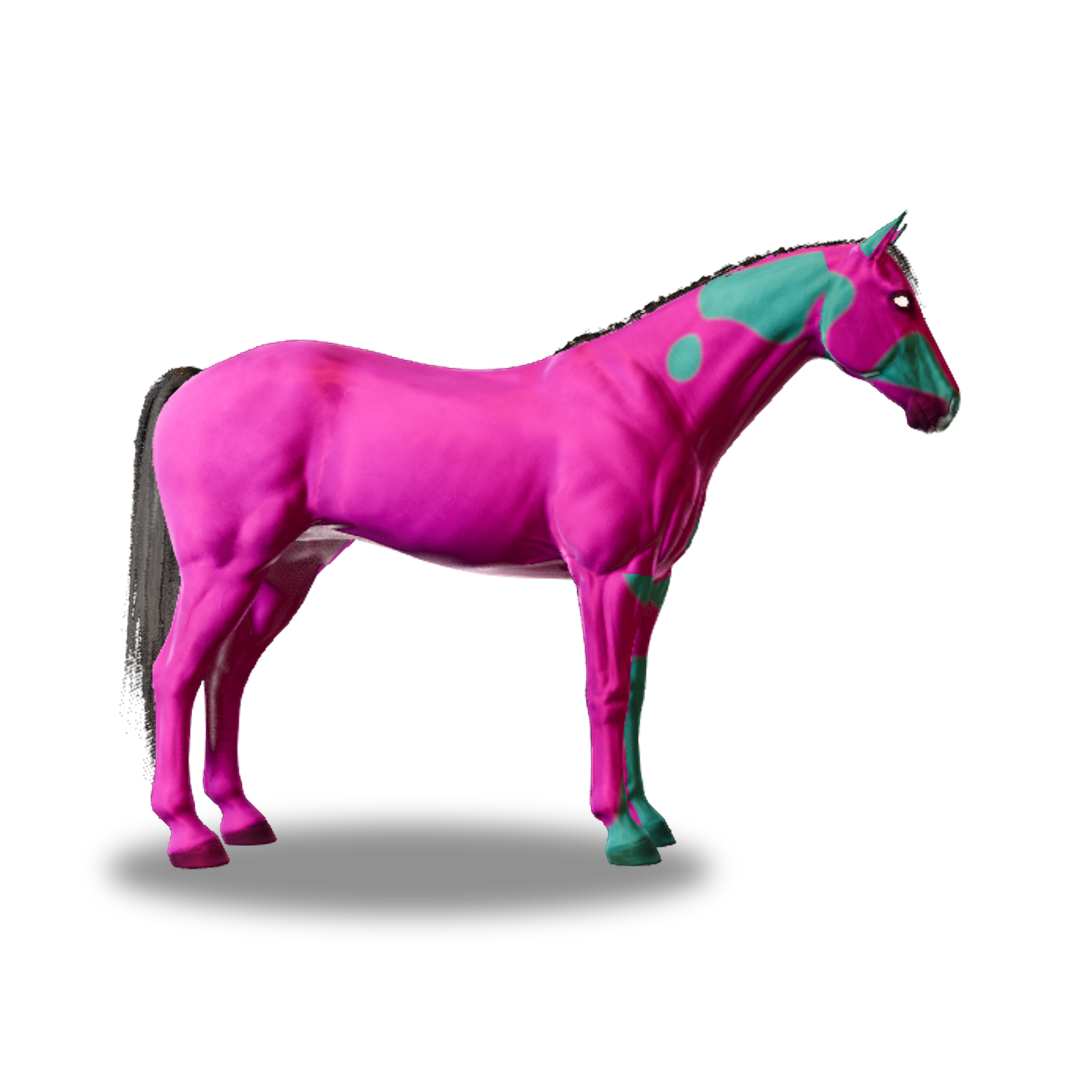 Frosted I
Light Sea Green on MulberryBred, not mintedThe colour planets · 73 coats
Seven planets, seven colour families — Neptune blues, Uranus greens, Mars reds, Mercury browns, Saturn golds, Venus pastels, Jupiter violets. Rarity runs in four tiers: 34 Common, 21 Uncommon, 12 Rare, and 6 Super Rare.
Mercury · 13 coats
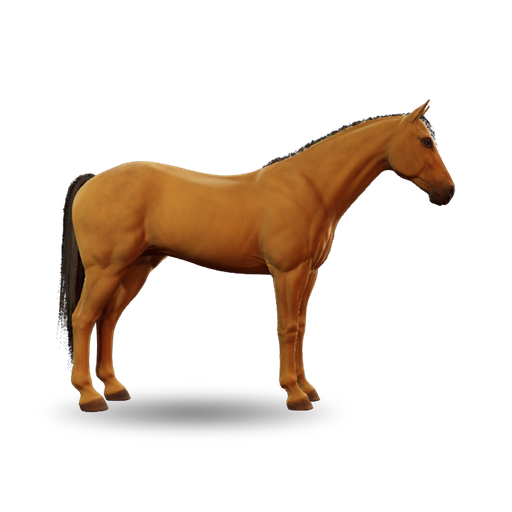 Bronze
#b07f35Super Rare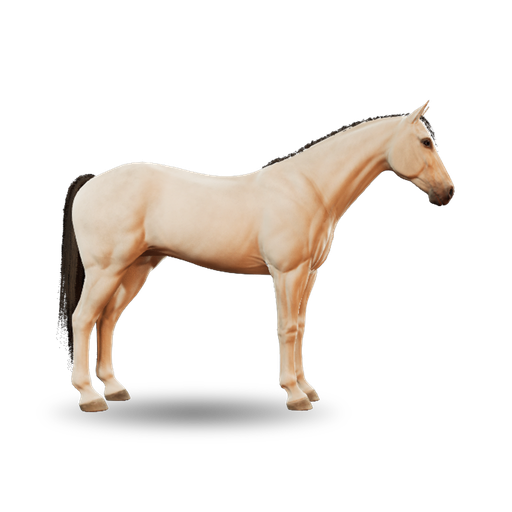 Pearl Bush
#e5deceRare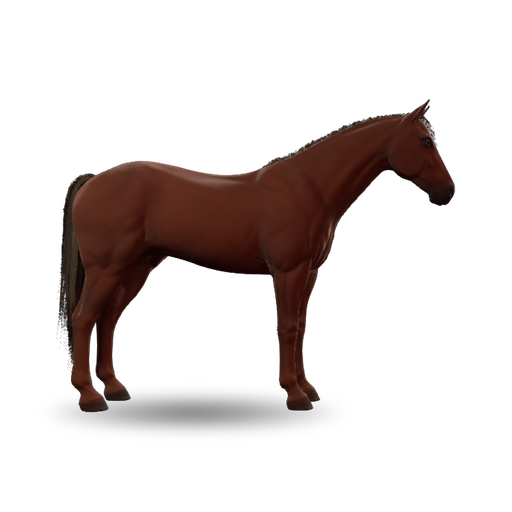 Saddle Brown
#583101Rare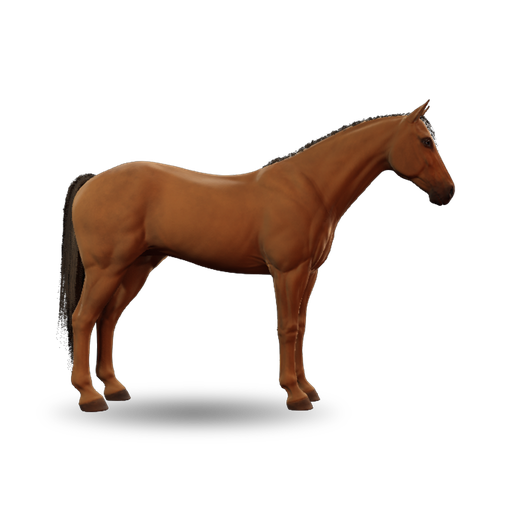 Sorrel
#8b5e34Uncommon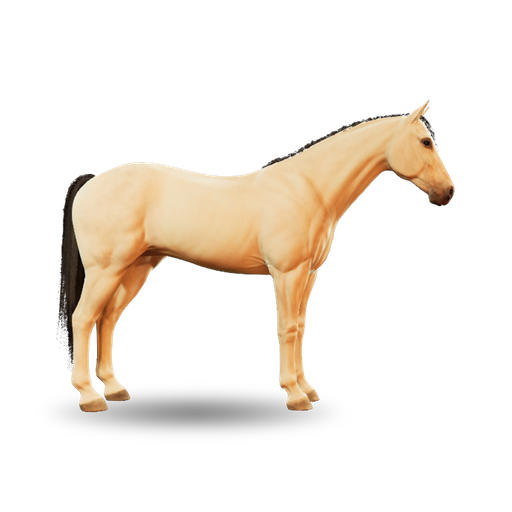 Dairy Cream
#f9e4c0Uncommon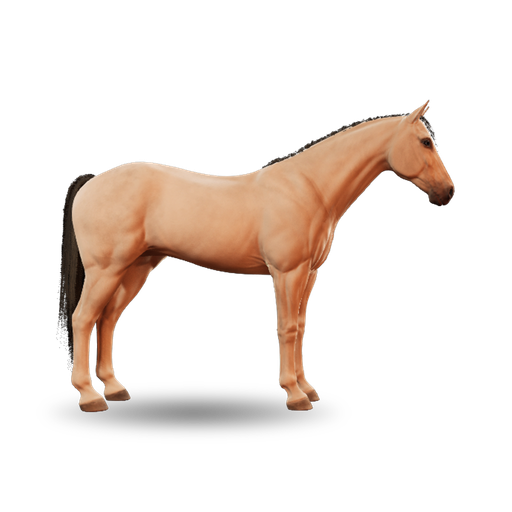 Vanilla
#dcbda1Uncommon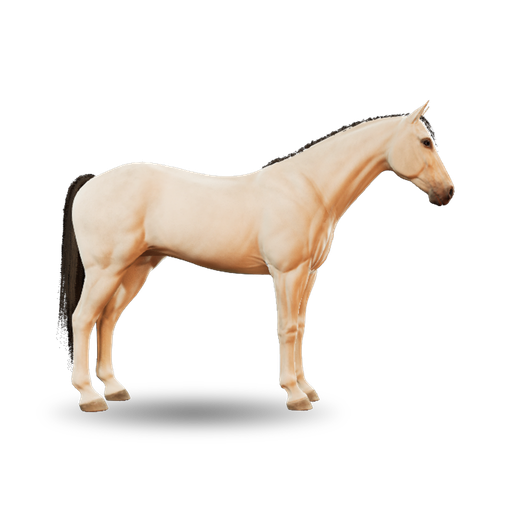 White Rock
#f0e7d6Uncommon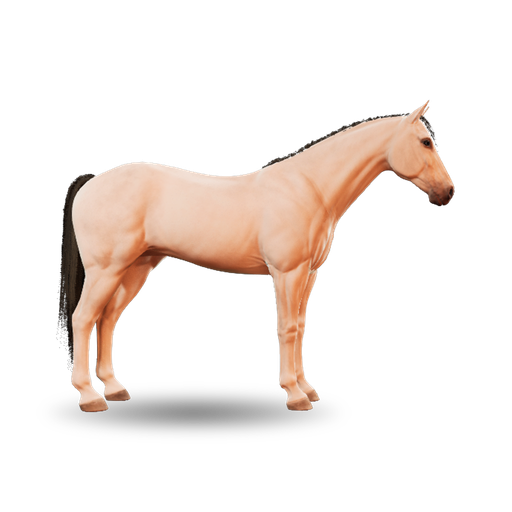 Almond
#f6dacaCommon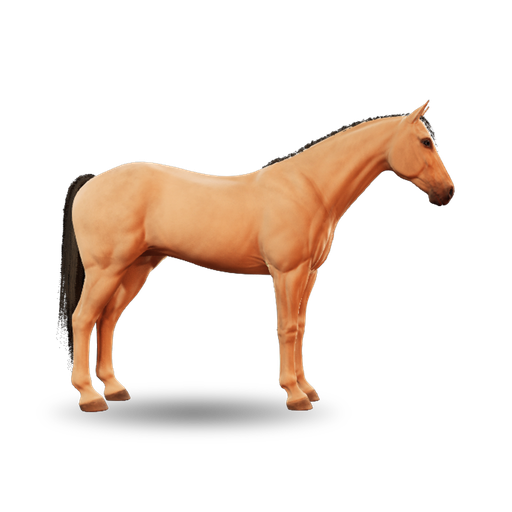 Brandy
#e7bc91Common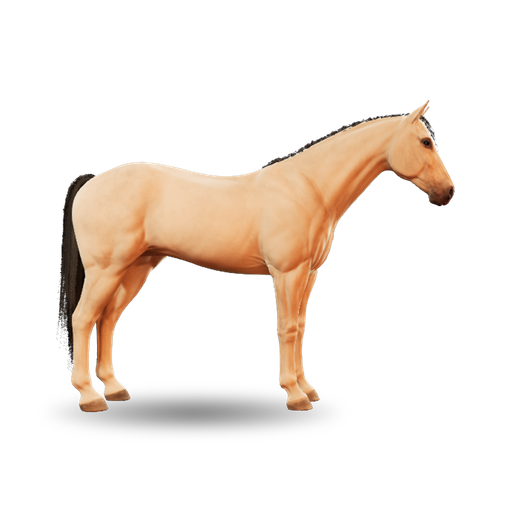 Light Apricot
#f3d5b5Common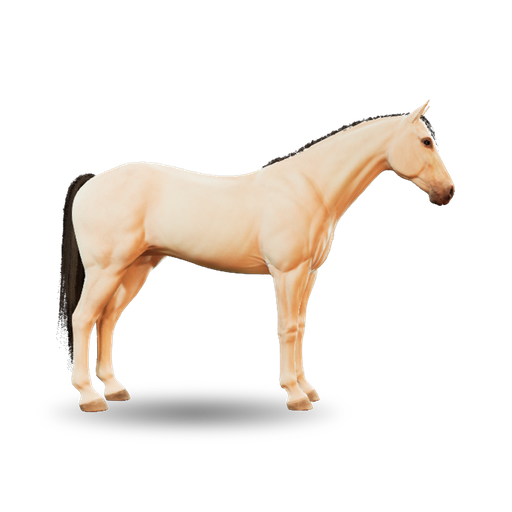 Meringue
#ffedd8Common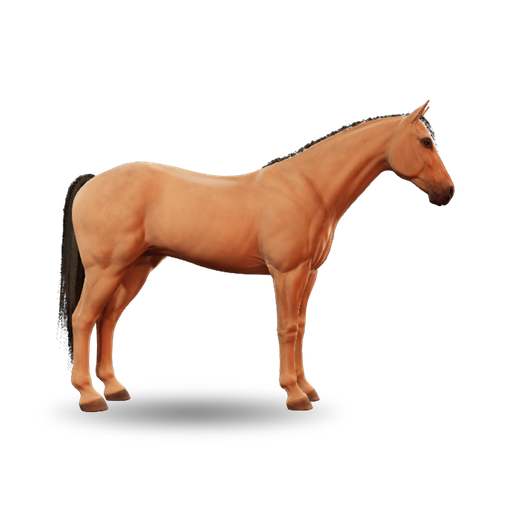 Pinkish Tan
#d4a276Common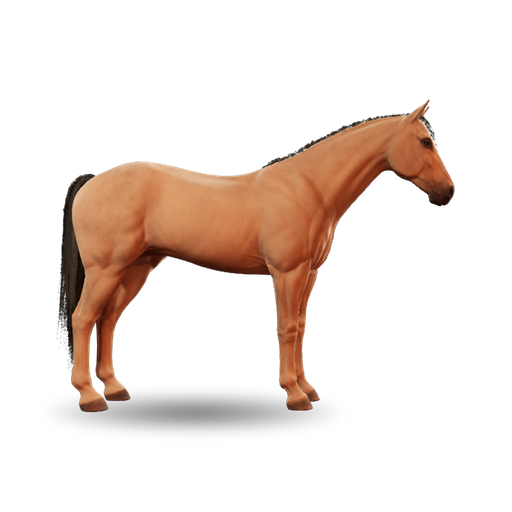 Whiskey
#ce9d73CommonVenus · 10 coats
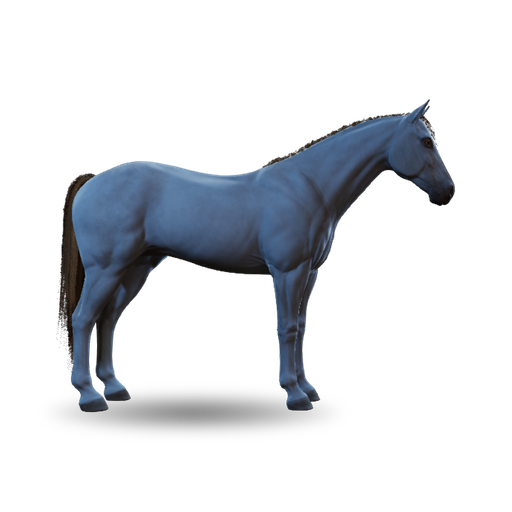 Dusk
Dusk#5580aaSuper Rare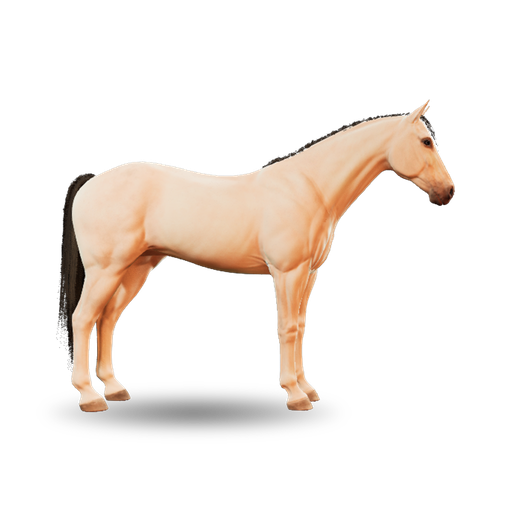 Tequila
#fde4cfRare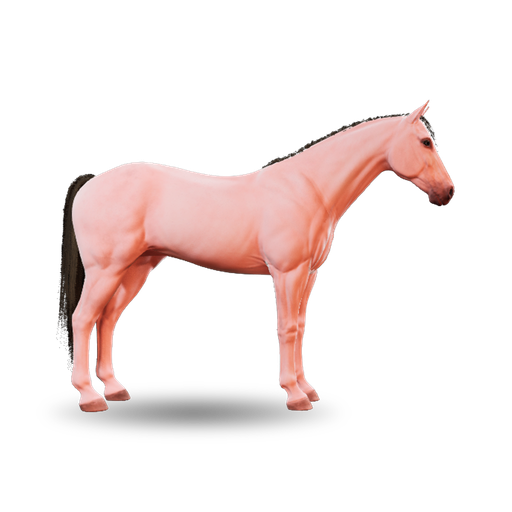 Blush
Blush#ffcfd2Uncommon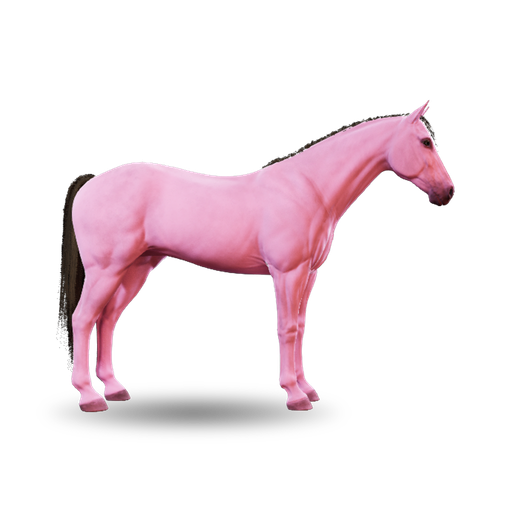 Electric Lavender
#f1c0e8Uncommon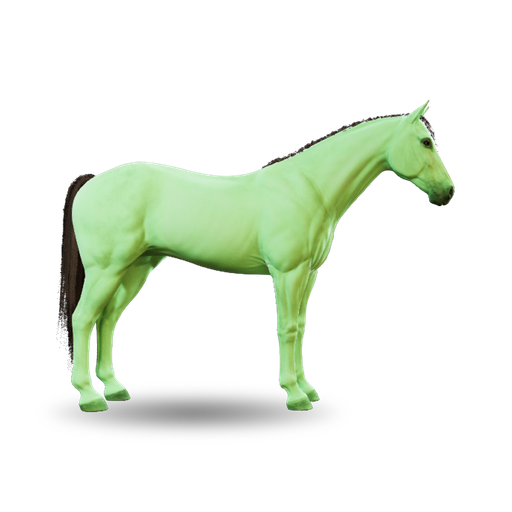 Light Mint
#b9fbc0Uncommon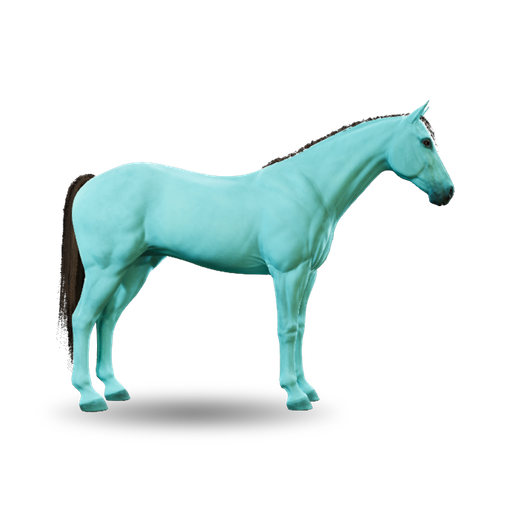 Blue Lagoon
#8eecf5Common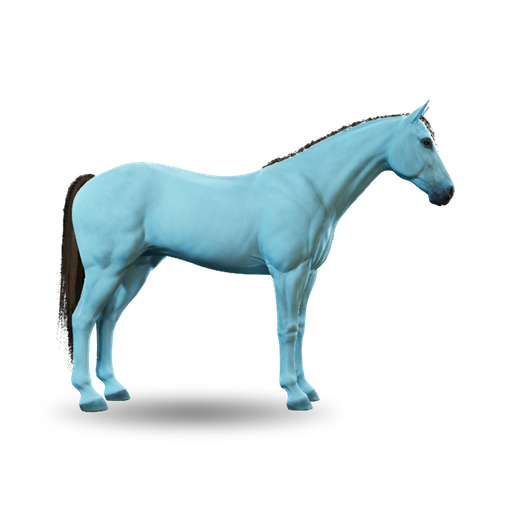 Cloud Blue
#90dbf4Common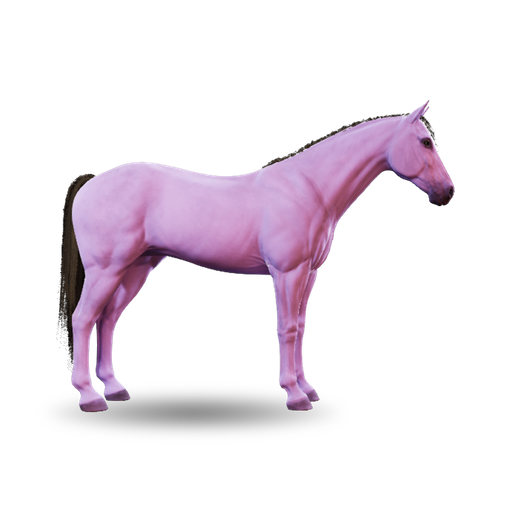 Light Violet
#cfbaf0Common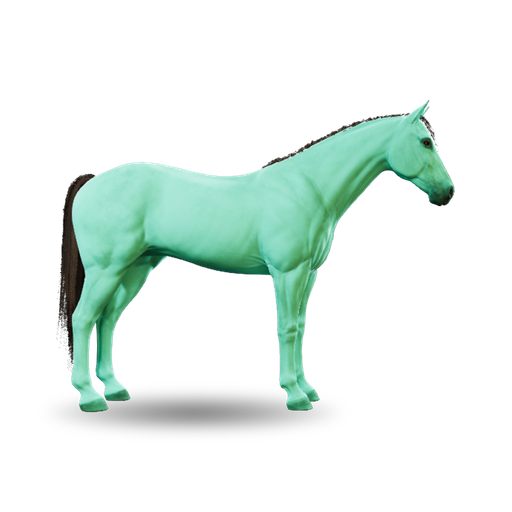 Magic Mint
#98f5e1Common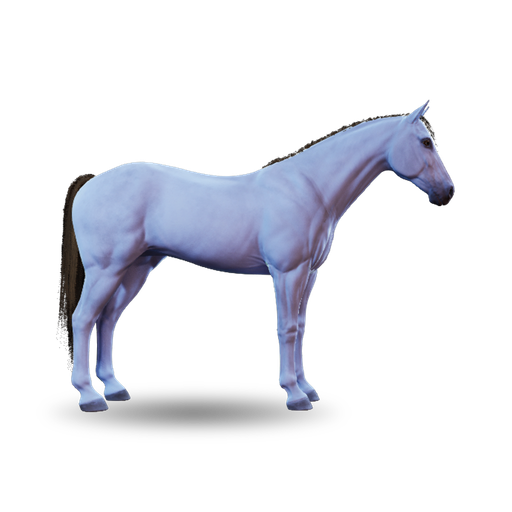 Pastel Blue
#a3c4f3CommonMars · 10 coats
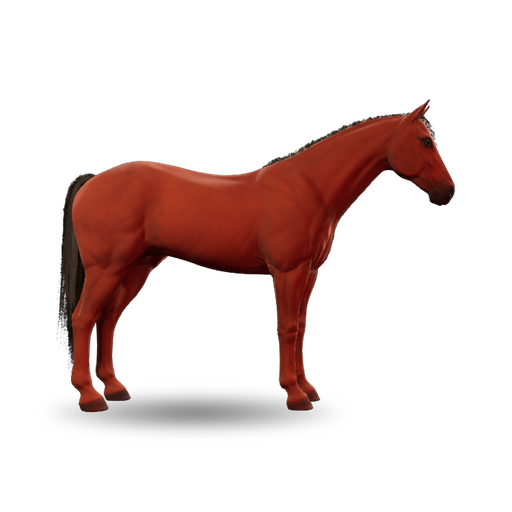 Iron Oxide
#993d00Super Rare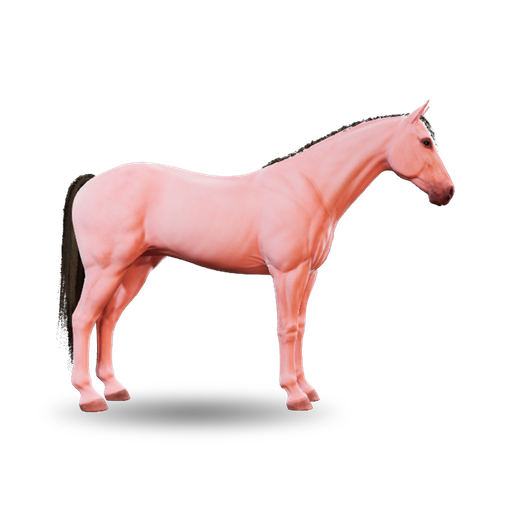 Pastel Pink
#ffccd5Rare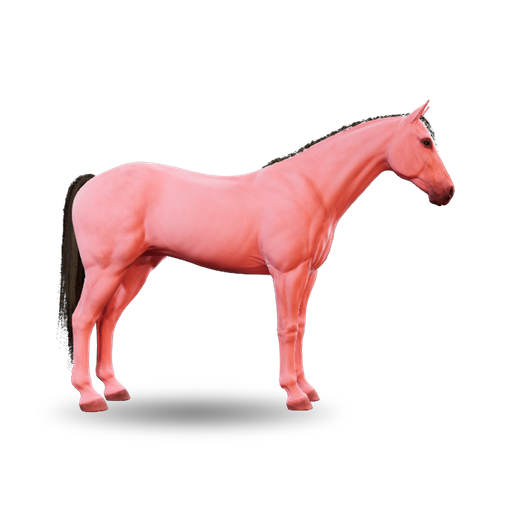 Soft Pink
#ffb3c1Rare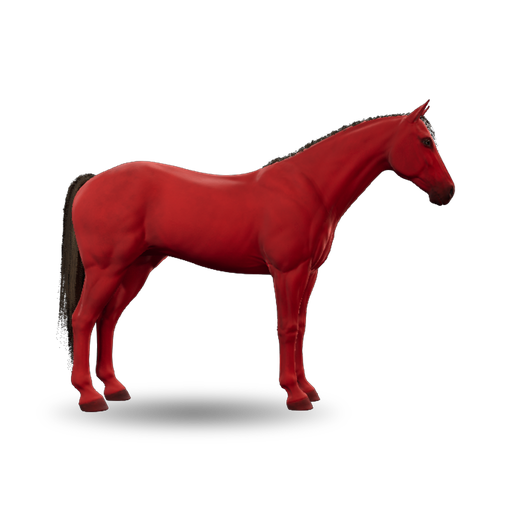 Red Brown
#a52a2aUncommon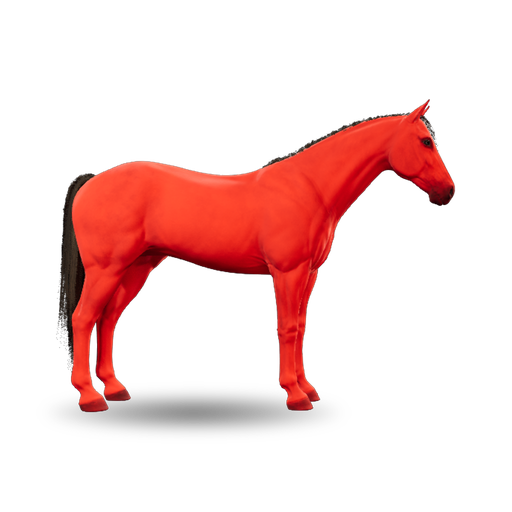 Red Orange
#ff4433Uncommon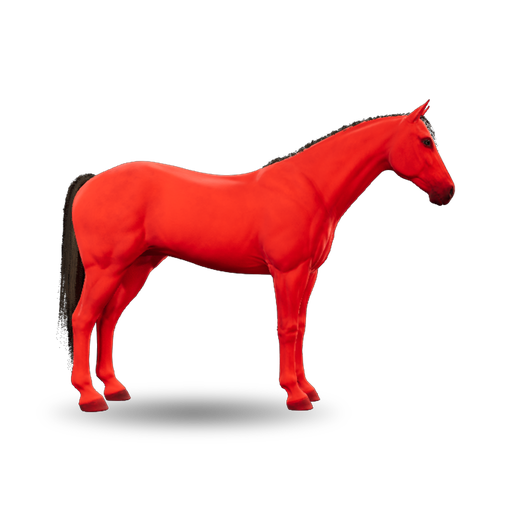 Signal Red
#ff0000Uncommon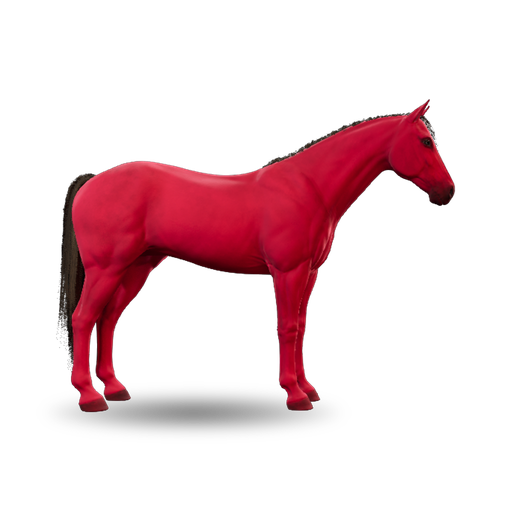 Bright Maroon
#c9184aCommon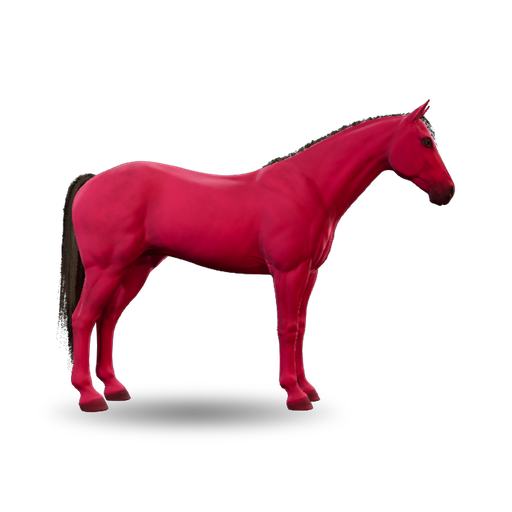 Raspberry
#c21e56Common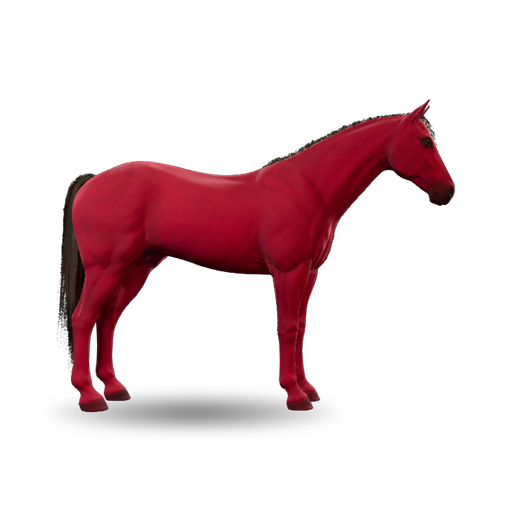 Vivid Burgundy
#a4133cCommon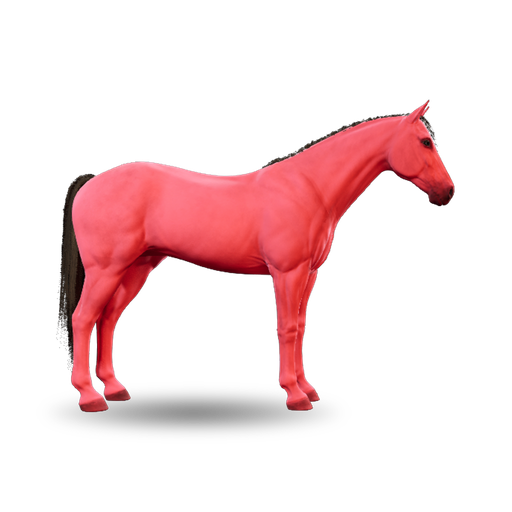 Watermelon Pink
#ff758fCommonJupiter · 9 coats
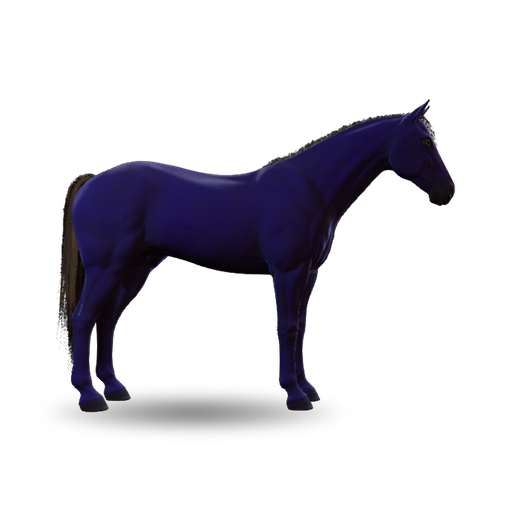 Dark Blue
#03045eRare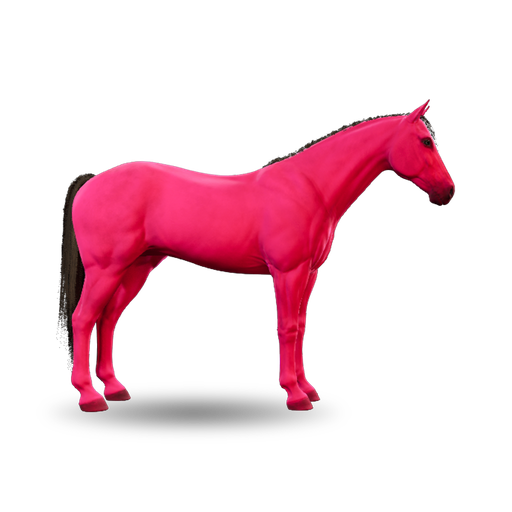 Deep Pink
#f72585Uncommon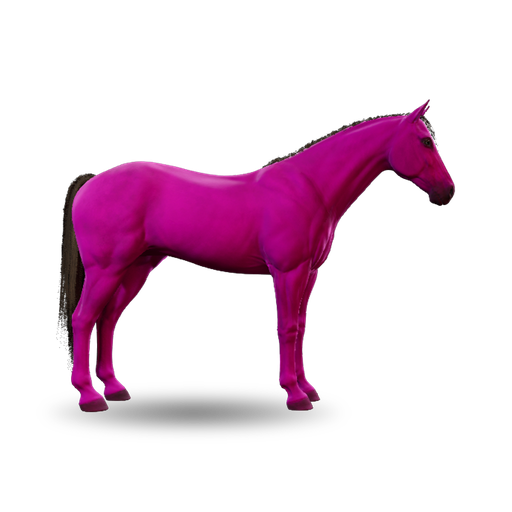 Mulberry
#b5179eUncommon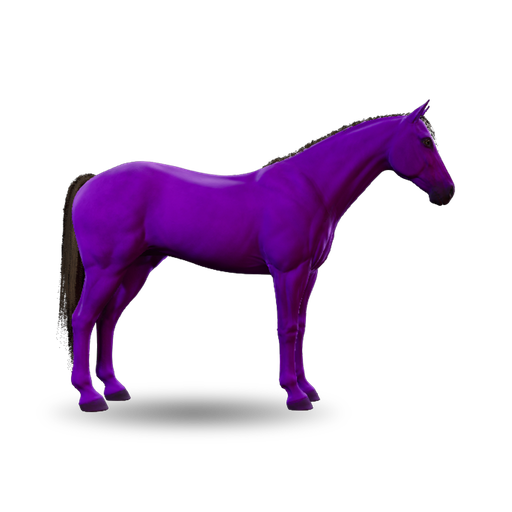 Violet Blue
#7209b7Uncommon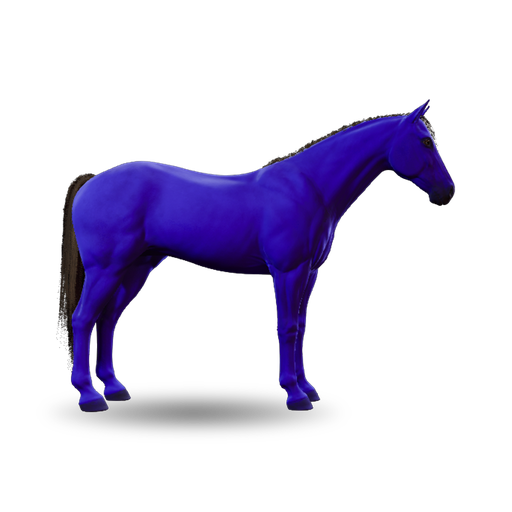 Blue Purple
#3f37c9Common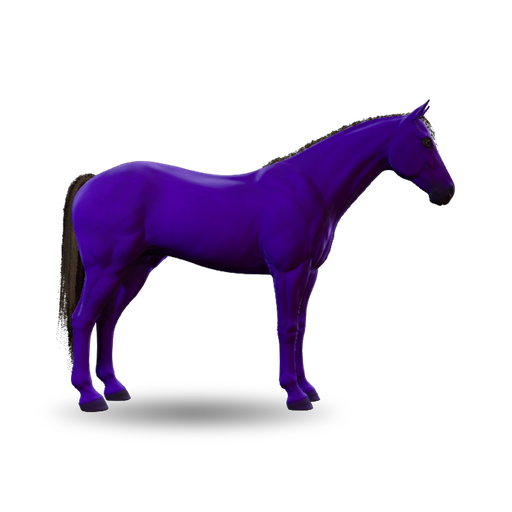 Daisy Bush
#480ca8Common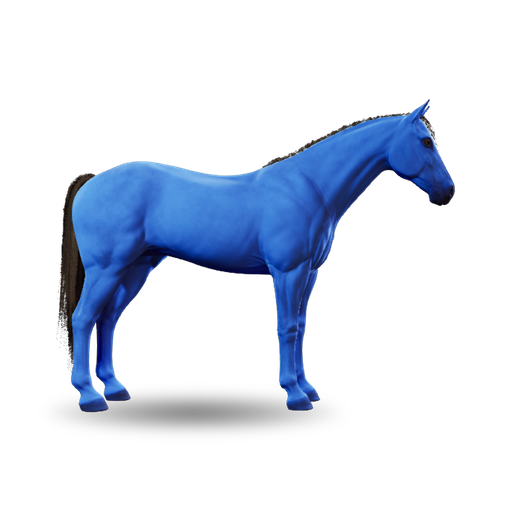 Dark Sky Blue
#4895efCommon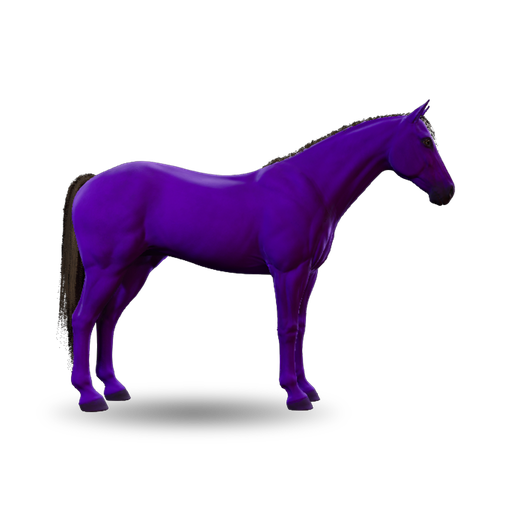 Deep Violet
#560badCommon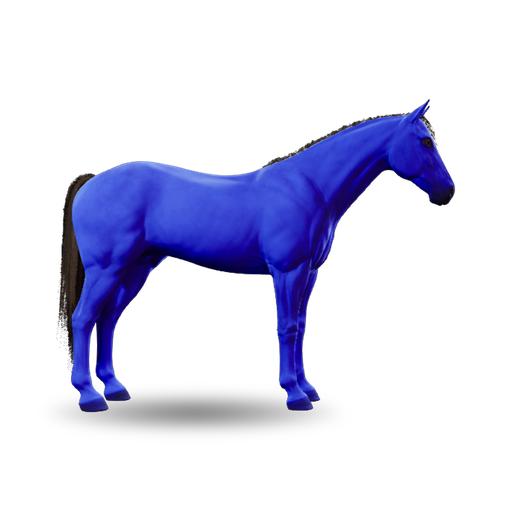 Ultramarine Blue
#4361eeCommonSaturn · 10 coats
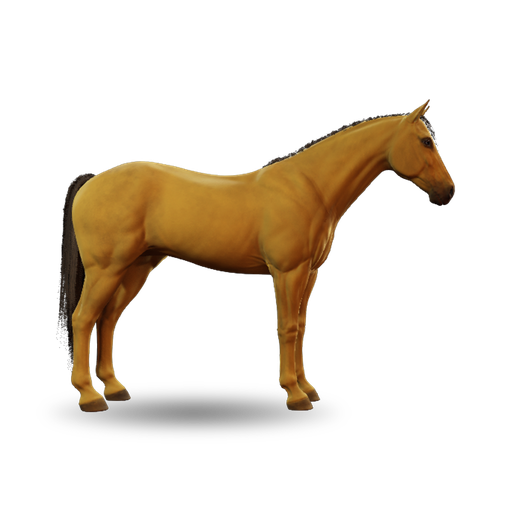 Old Gold
#b08f36Super Rare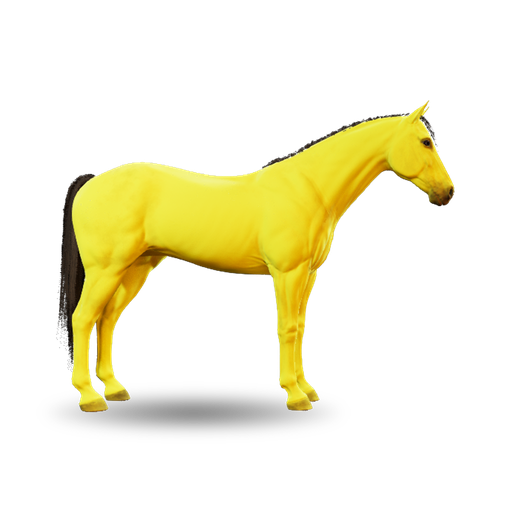 Canary Yellow
#ffff3fRare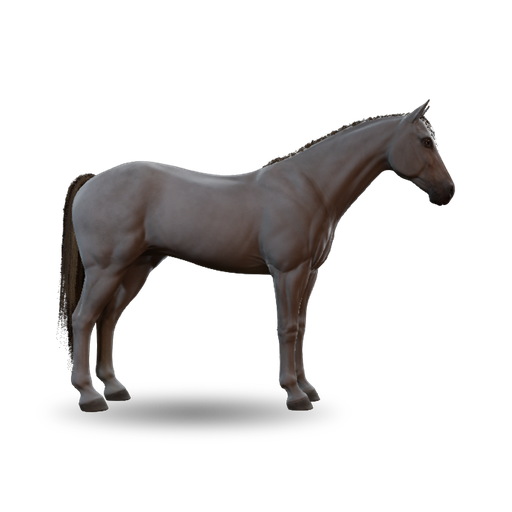 Pale Sky
#6c757dRare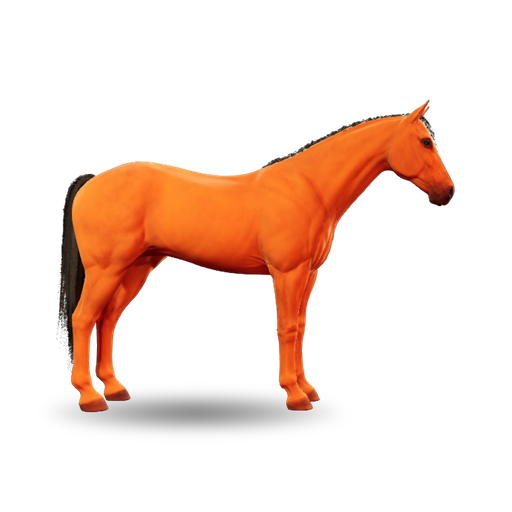 Dark Orange
#ff8800Uncommon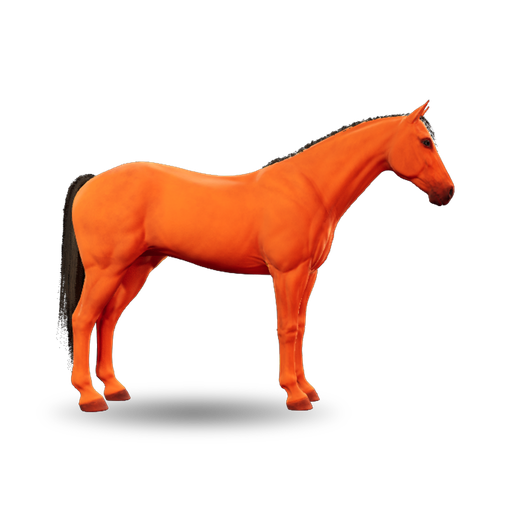 Gold Drop
#ff7b00Uncommon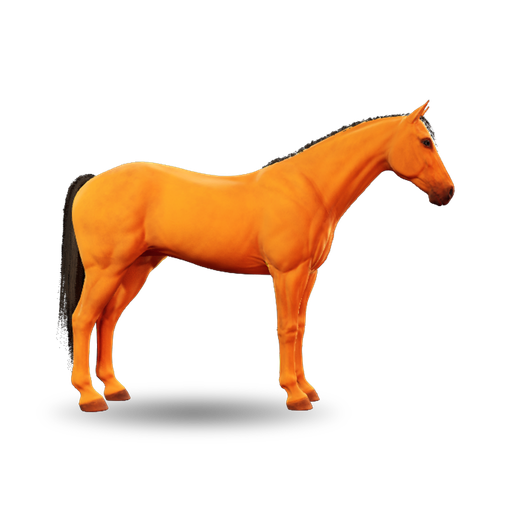 Orange Peel
#ffa200Uncommon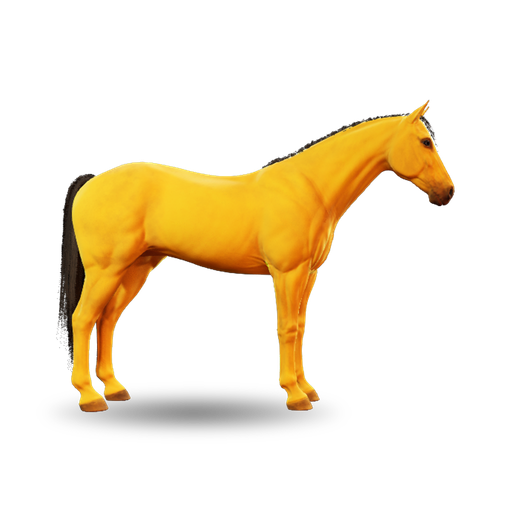 Golden
#ffd000Common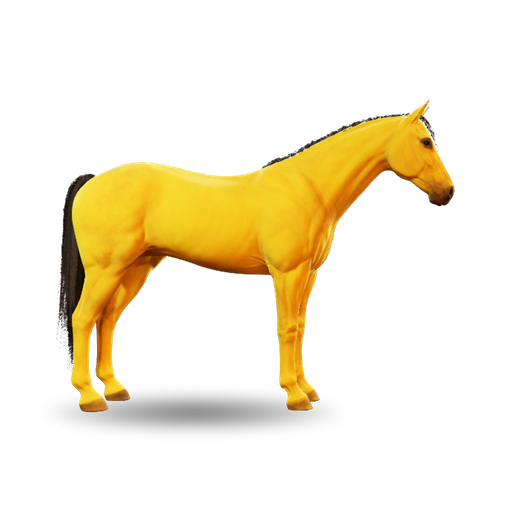 Golden Yellow
#ffdd00Common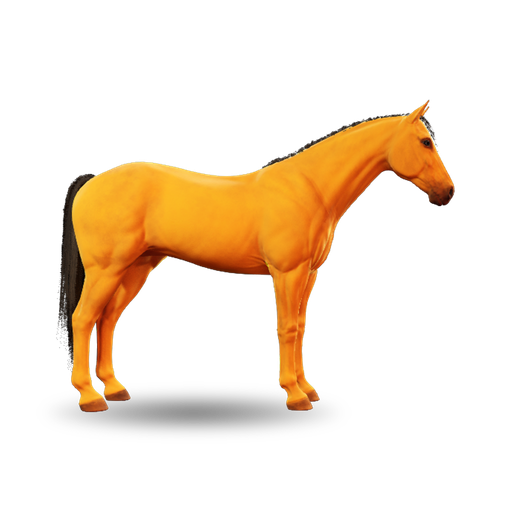 Selective Yellow
#ffb700Common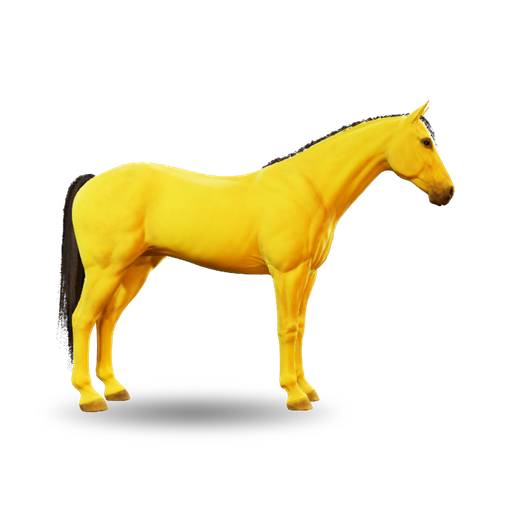 Solar Flare
#ffea00CommonUranus · 12 coats
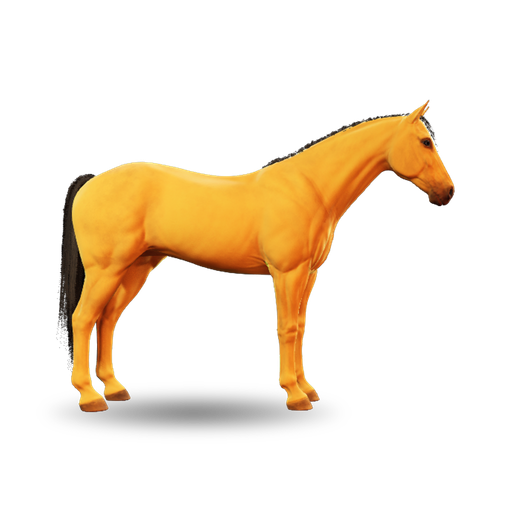 Amber
Amber#ffc649Super Rare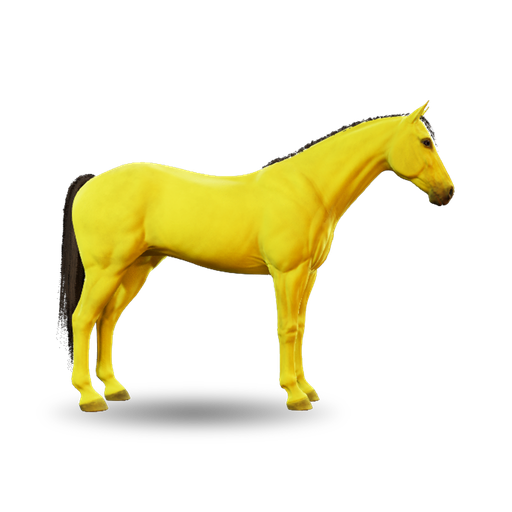 Aureolin
#eeef20Rare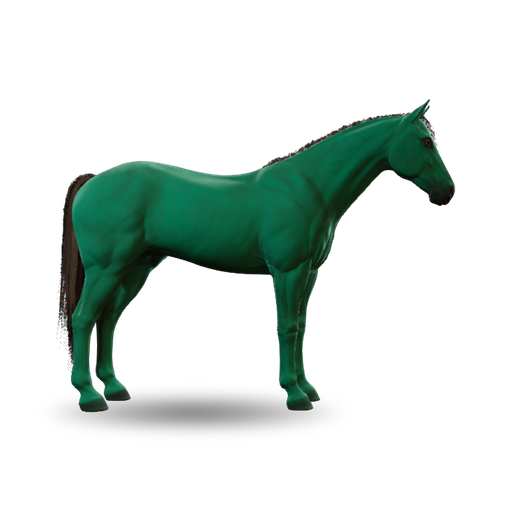 Deep Sea
#007f5fRare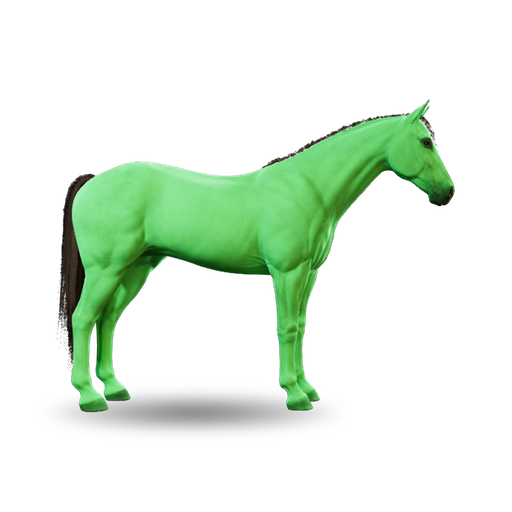 Algae Green
#80ed99Uncommon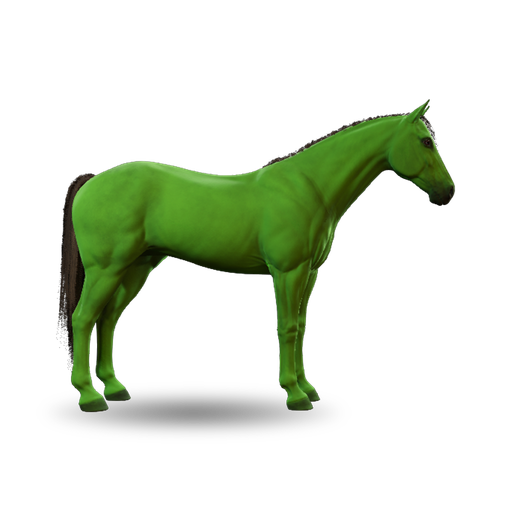 Apple
Apple#55a630Uncommon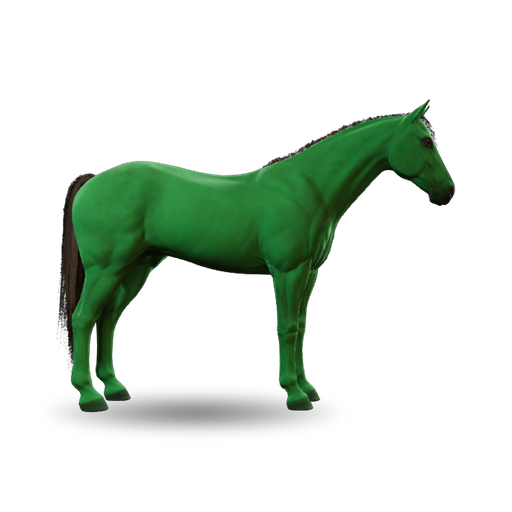 Sea Green
#2b9348Uncommon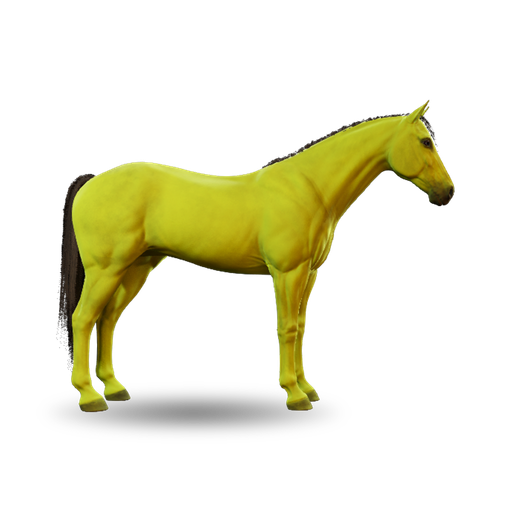 Citrine
#bfd200Common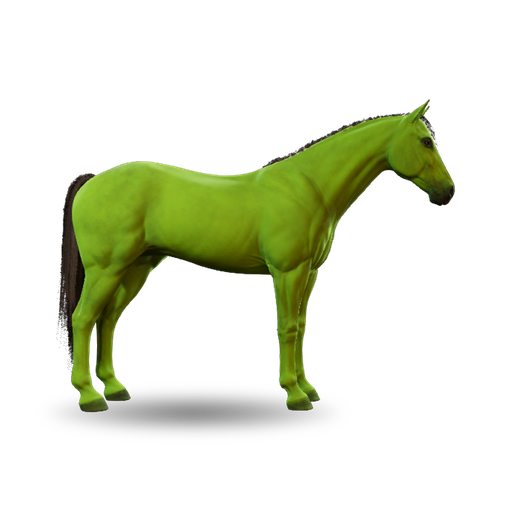 Dark Lime
#80b918Common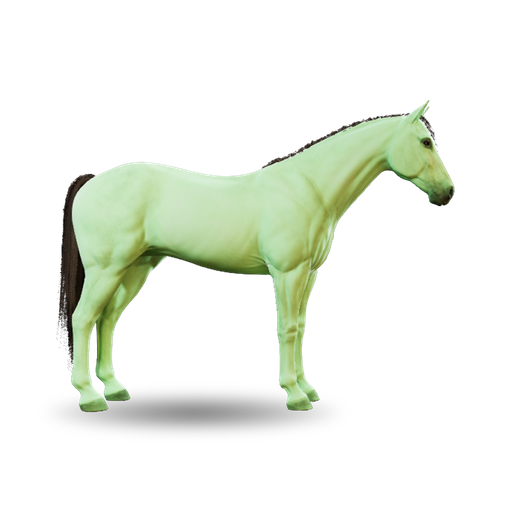 Light Jade
#c7f9ccCommon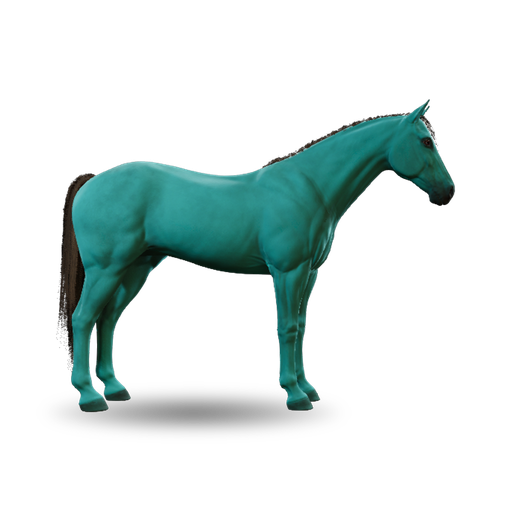 Light Sea Green
#38a3a5Common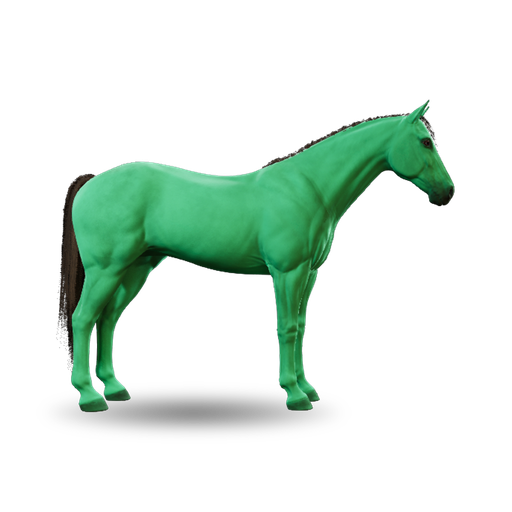 Paris Green
#57cc99Common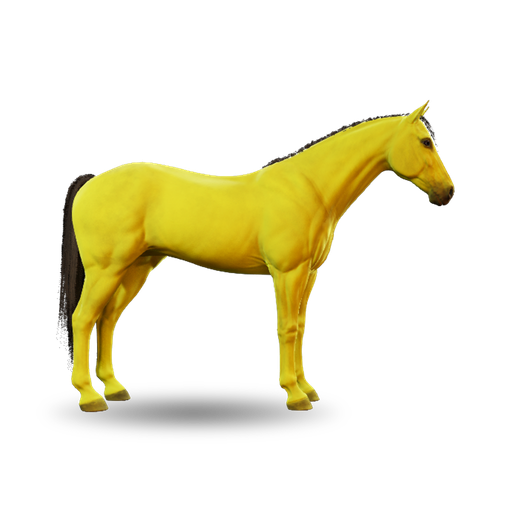 Sulphur
#dddf00CommonNeptune · 9 coats
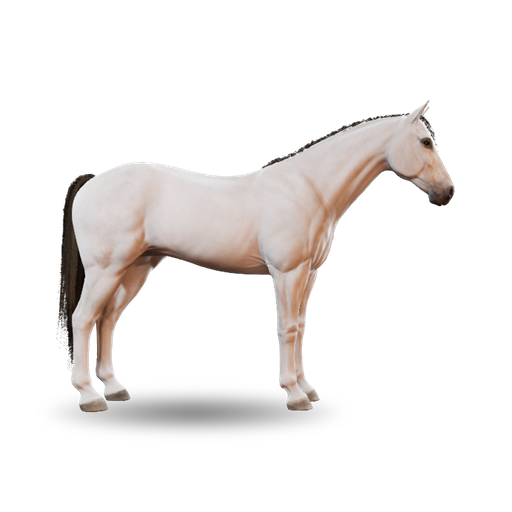 Platinum
#dee2e6Super Rare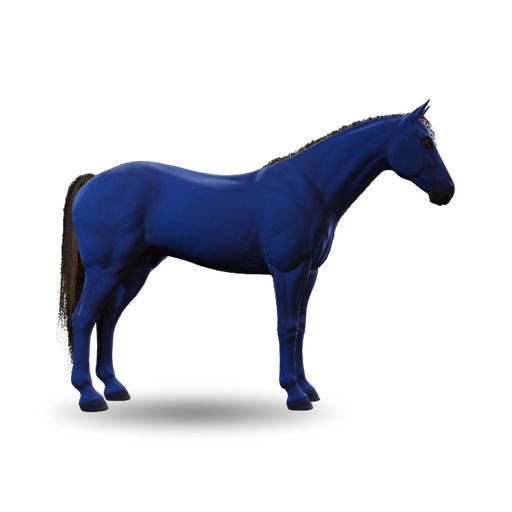 Congress Blue
#023e8aRare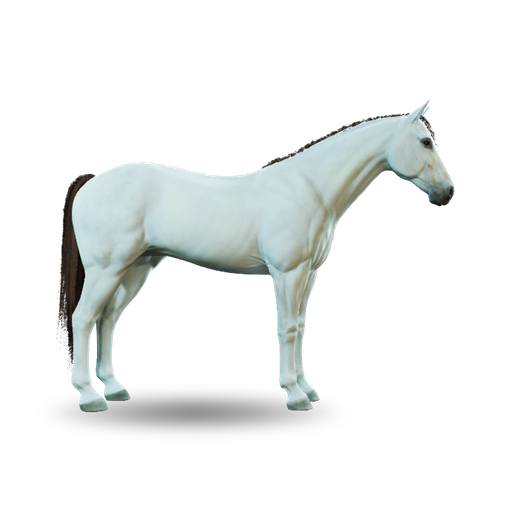 Mint Tulip
#caf0f8Rare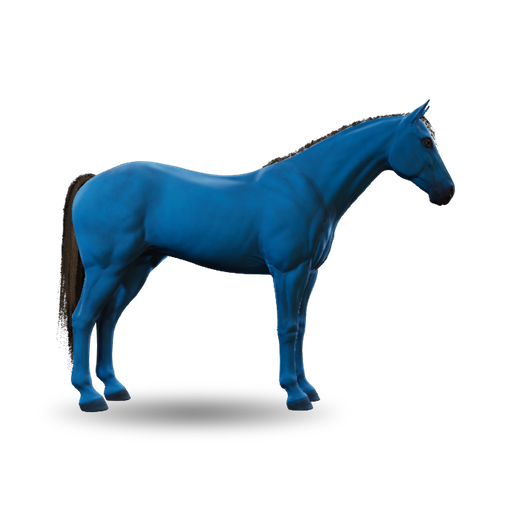 French Blue
#0077b6Uncommon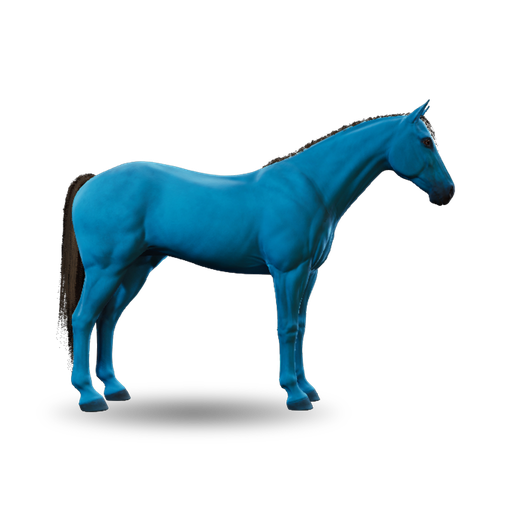 Rich Electric Blue
#0096c7Uncommon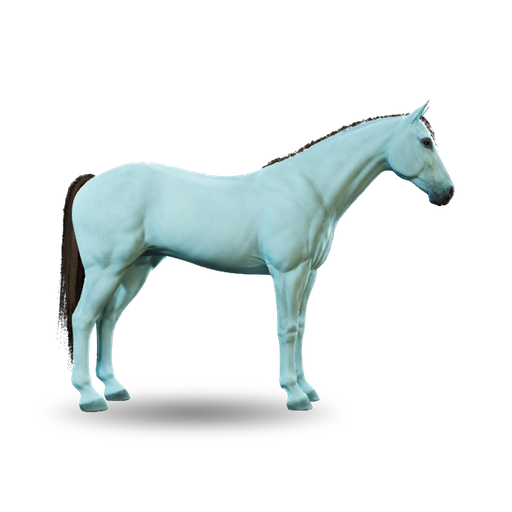 Blizzard Blue
#ade8f4Common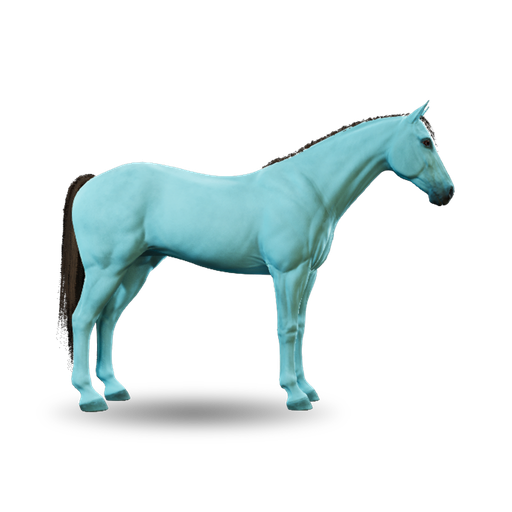 Columbia Blue
#90e0efCommon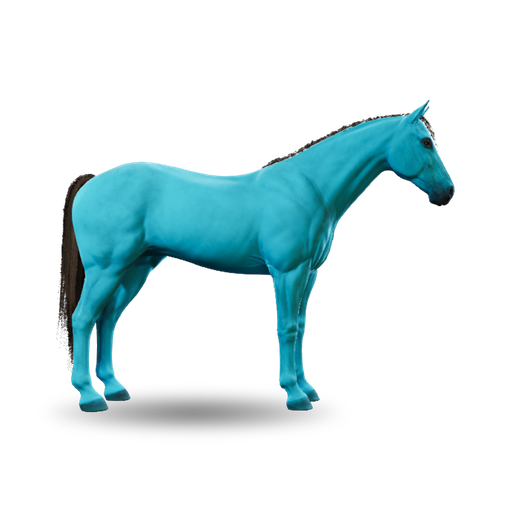 Crystal Blue
#48cae4Common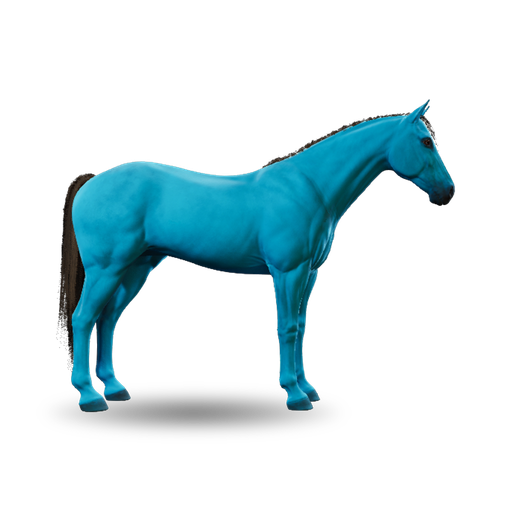 Pacific Blue
#00b4d8CommonWhat breeding does to a coat
Everything above is the genesis mint — the horses that exist because we made them. Every horse after that comes from breeding, and its coat is decided by its parents and its blood, not by us.
Blood decides how broken the colour is
A horse's coat tells you what it is. The purer the blood, the more solid the colour — the King and Queen are pure black and pure white, and no horse in the game is purer than they are. As blood dilutes down the generations, colour breaks up into patches.
So a foal that rolls up toward Hyperion tends toward a cleaner, more solid coat. A foal that settles lower carries more broken colour: pinto patches, leopard spotting, roan ticking, a blanket over the hindquarters. You can read a horse's approximate breeding from across a paddock, which is exactly how it works with real bloodstock.
Face and leg markings are the exception. A blaze, a star, a pair of socks — these are ordinary breed characteristics and say nothing about ancestry. Any horse can carry them at any bloodline.
Colour in a marking can only be bred
At genesis every marking is white. Nothing you can buy in the mint has a coloured spot.
Breeding is the only way a marking takes on colour, drawn from what the parents carry. That is why a horse with gold patches on a blue coat cannot be bought at any price — somebody bred for it, across generations, and the pedigree proves it.
How large the space actually is
Each coat gene — base colour, pattern, mane, eyes, and the colour of each marking — is inherited separately, a coin flip between the parents. The palette they draw from is closed and fixed, and it is worth being precise about its size rather than impressive about it:
| Marking designs (the body art itself) | 96 |
| Pattern states — 1 clean, 96 singles, 89 pairs | 186 |
| Mintable coat colours | 78 |
| Mane colours · eye colours | 6 · 5 |
Everything beyond those 186 pattern states is recolouring: the same body art in a different colour. That is real variation — a gold blaze on a blue coat is not a white blaze on a bay — but it is not new artwork, and we are not going to pretend otherwise.
Counting colourways, a horse with white markings can look 435,240 different ways. Once a marking can carry its own inherited colour, drawn from a palette that excludes the coat's own, the combinations reach 1,252,073,160.
Read that second number for what it is: a combination count, not a gallery. It is the ceiling of what the system can express, not a promise of a billion distinguishable horses. The honest headline is the one above — 96 marking designs, 186 patterns, 78 coats.
The palette itself never grows. Breeding invents no new colour: every coat a foal can wear is already on this page. Super Rare colours can never arrive by mutation, only by inheritance — their population can hold or shrink, never expand.
Three steps, and you cannot skip one
How a horse looks is decided by how many colours its line has absorbed, and a line absorbs them one at a time. This is the whole of it:
One colour — a matched pair breeds true. Red on red gives red. Blue on blue gives blue. Always, with no roll and no exception. The markings are there, but they are the same colour as the coat, so the horse reads as solid. That guarantee is what makes line-breeding worth doing: you know exactly what you are getting.
Two colours — the second parent shows. Put a red mare to a violet stallion and the foal carries both. Sometimes it comes out solid like its mother, sometimes solid like its father, and sometimes it wears one as its coat and the other as its markings. That third outcome is the two-colour horse: gold spots on a blue coat, and the spots name the other parent.
Three colours — the far end. Take a two-colour horse and breed it to a third colour, and the line is now carrying more than a coat can show plainly. That is when the body patterns arrive — brindle striping, marbling, belted bodies, the coats no genesis horse wears. They are not handed out and they cannot be bought. They are what a third colour entering a pedigree looks like.
So a solid horse tells you its parents matched. A two-tone horse tells you they did not. A brindle tells you somebody kept going. Nothing about the coat is decoration — it is the record.
A foal's bloodline is drawn against the published odds at the moment the cover is booked — a fixed table, set before anyone pays, with structural limits no roll can cross. The appearance rolls above follow the published inheritance rules from the parents' own coats.
Twenty of the combinations
None of these can be bought. Every one has to be bred. They are drawn from the 186 pattern states and the colour palette above — the combination space runs to 1,252,073,160, though what makes each of these distinctive is the body art and the colours it carries, not the size of the number. Here are twenty.
Two colours — what breeding does with an inherited palette
These are step two: one parent's colour as the coat, the other's as the markings. A marking takes its colour from what the parents carry. Gold spots on a blue coat means a Saturn horse somewhere in the pedigree; the coat is the receipt.
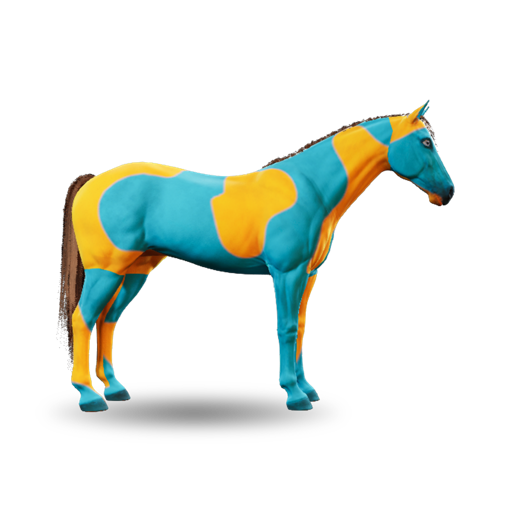 Crystal Blue
Pinto II · Golden markingsPale mane · Blue eyes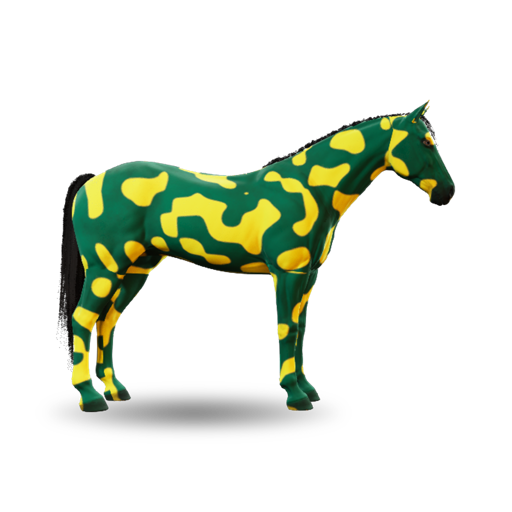 Deep Sea
Leopard II · Canary Yellow markingsBlack mane · Yellow eyes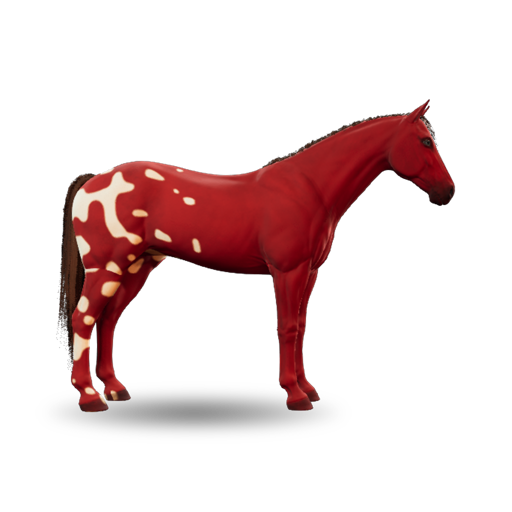 Red Brown
Blanket II · Meringue markingsSorrel mane · Gray eyes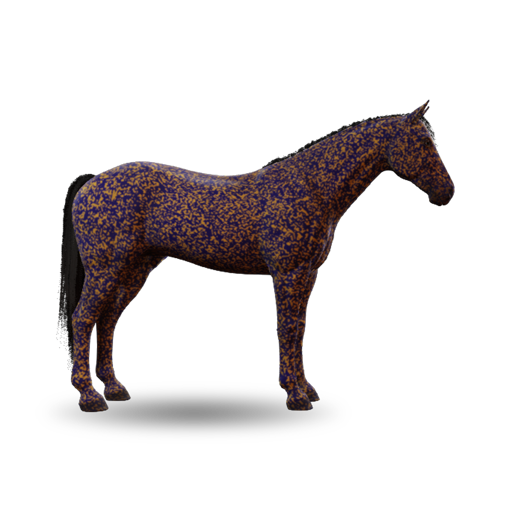 Old Gold
Roan III · Dark Blue markingsBlack mane · Black eyes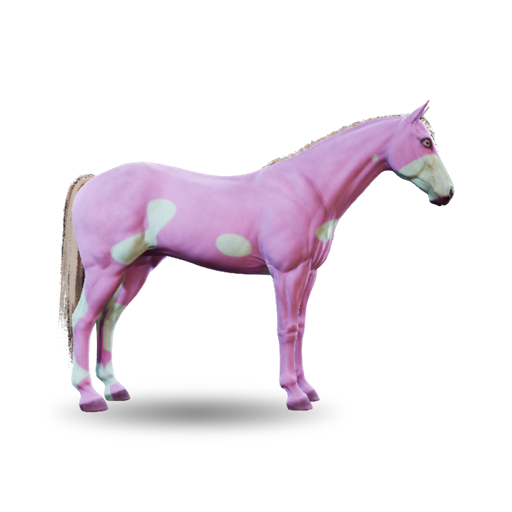 Light Violet
Splash I · Mint Tulip markingsWhite mane · Blue eyes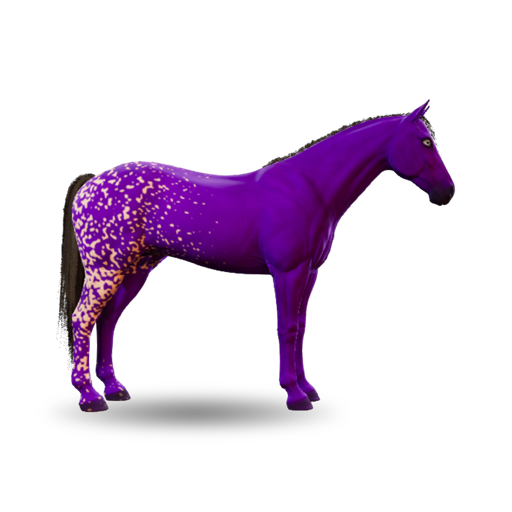 Violet Blue
Rabicano I · Almond markingsGray mane · Pale eyes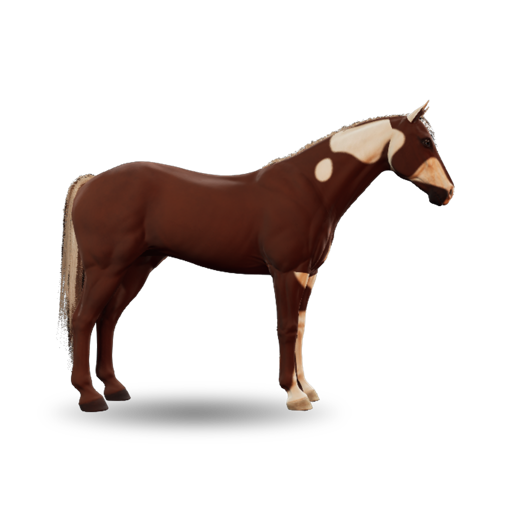 Saddle Brown
Frosted I · Pearl Bush markingsCremello mane · Black eyes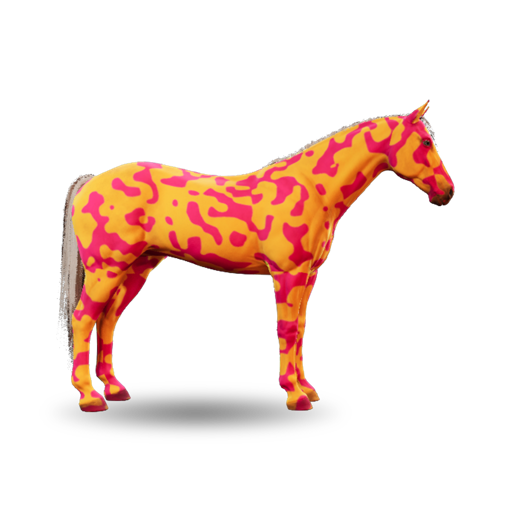 Amber
AmberLeopard III · Deep Pink markingsWhite mane · Yellow eyes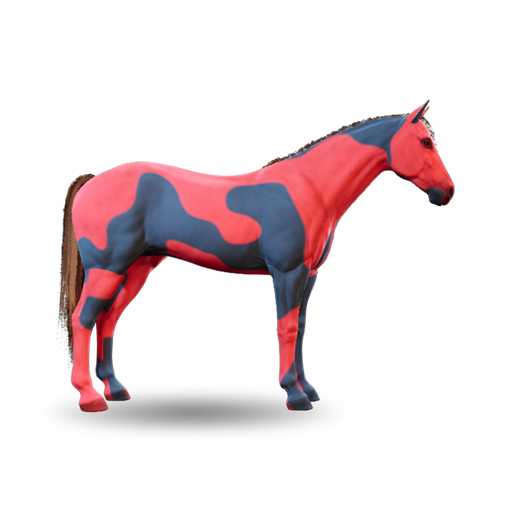 Watermelon Pink
Pinto III · Dusk markingsPale mane · Black eyes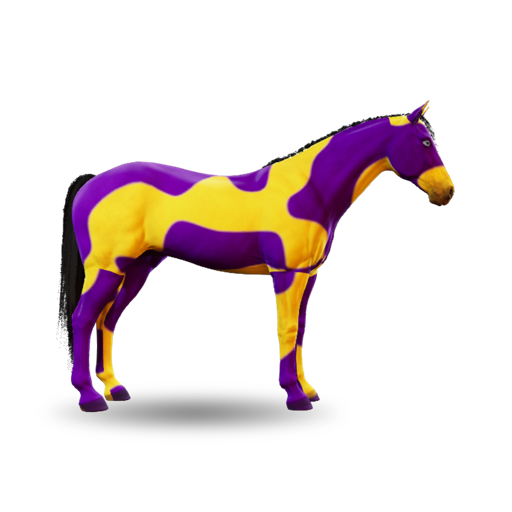 Solar Flare
Pinto IV · Violet Blue markingsBlack mane · Blue eyesAnd the far end of the space
Deep in a pedigree, on an invented-colour coat, patterns appear that no genesis horse ever wore — brindle striping, marbling, belted bodies. A horse like this is not rare because we said so. It is rare because somebody spent generations getting there.
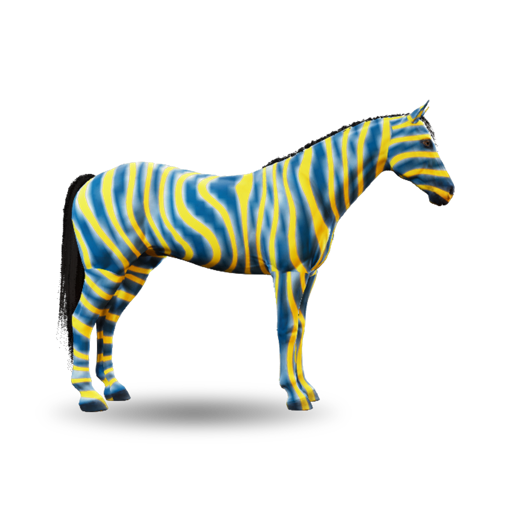 French Blue
Brindle_02 · Canary Yellow markingsBlack mane · Yellow eyes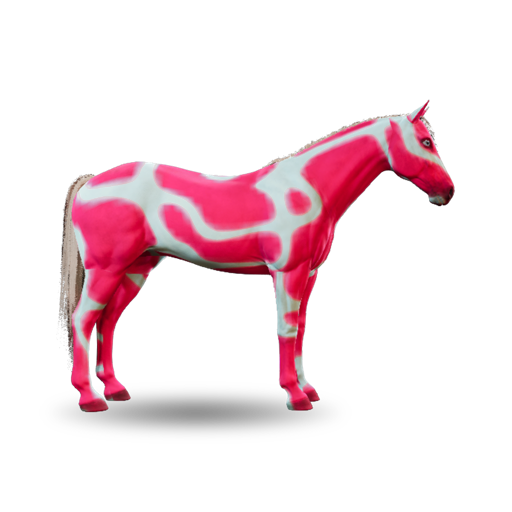 Deep Pink
Marble_03 · Mint Tulip markingsWhite mane · Blue eyes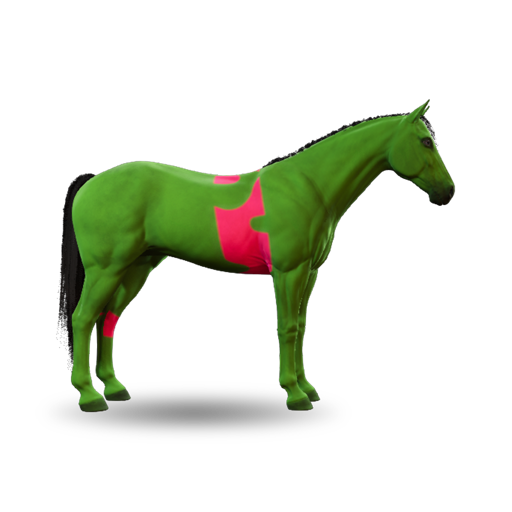 Apple
AppleBelt_02 · Deep Pink markingsBlack mane · Gray eyes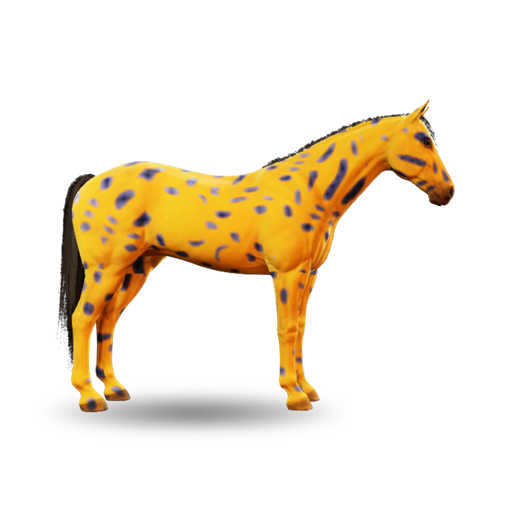 Golden
Dapple_02 · Dark Blue markingsGray mane · Black eyes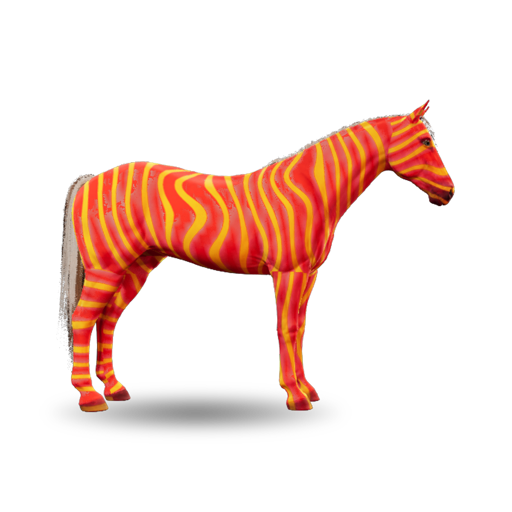 Signal Red
Brindle_06 · Golden markingsWhite mane · Yellow eyes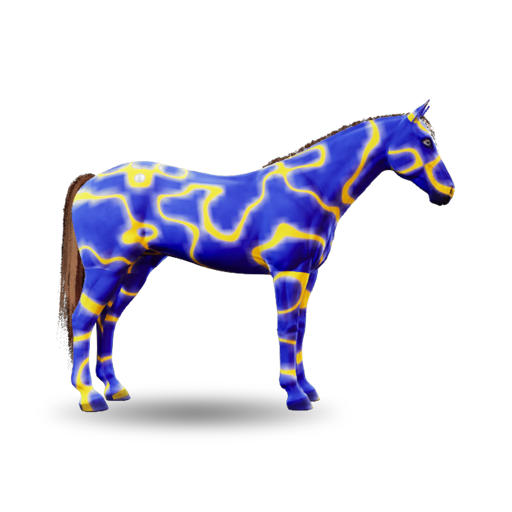 Ultramarine Blue
Marble_01 · Canary Yellow markingsPale mane · Blue eyes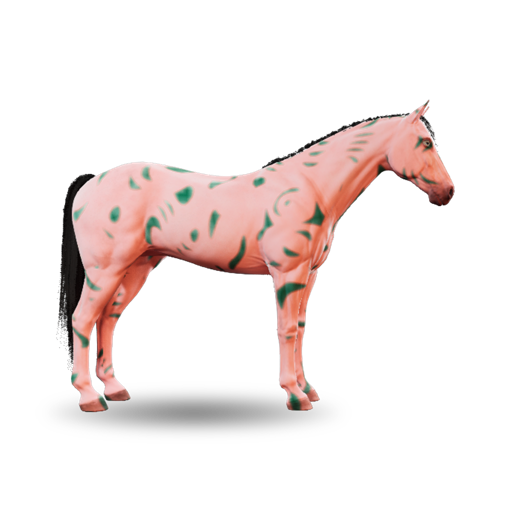 Blush
BlushDapple_05 · Deep Sea markingsBlack mane · Pale eyes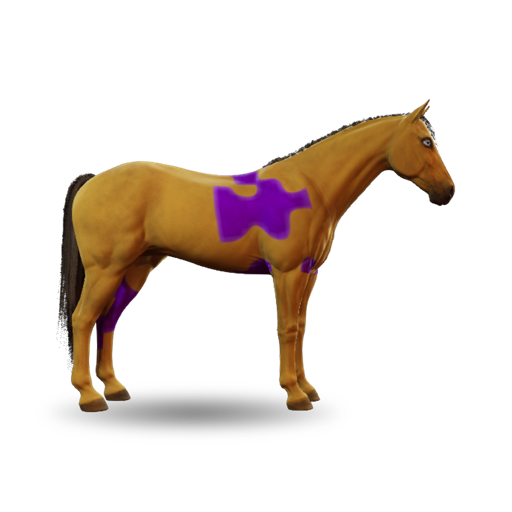 Old Gold
Belt_04 · Violet Blue markingsGray mane · Blue eyes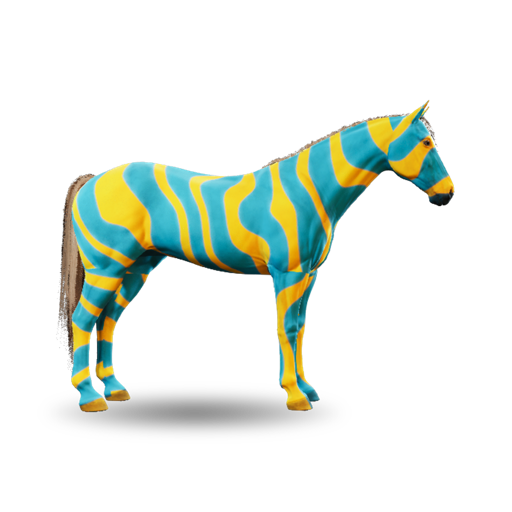 Crystal Blue
Brindle_04 · Solar Flare markingsCremello mane · Yellow eyes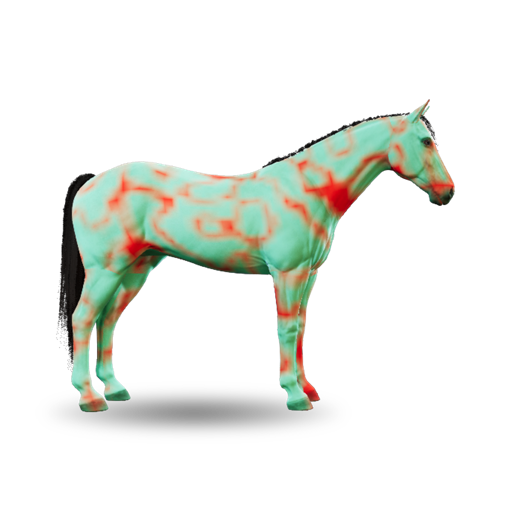 Magic Mint
Marble_05 · Signal Red markingsBlack mane · Gray eyes